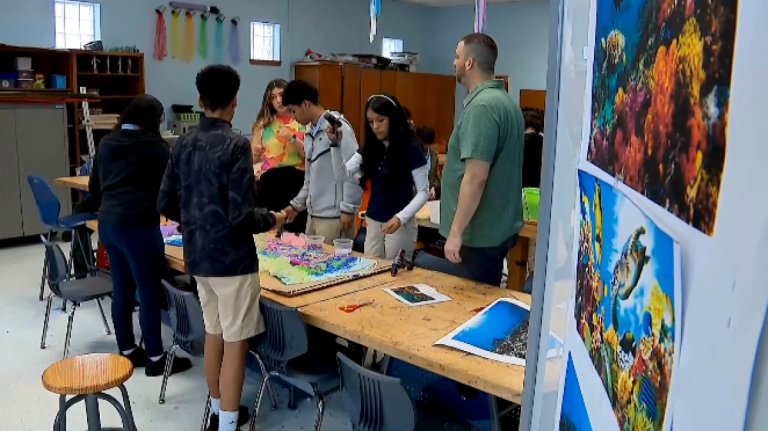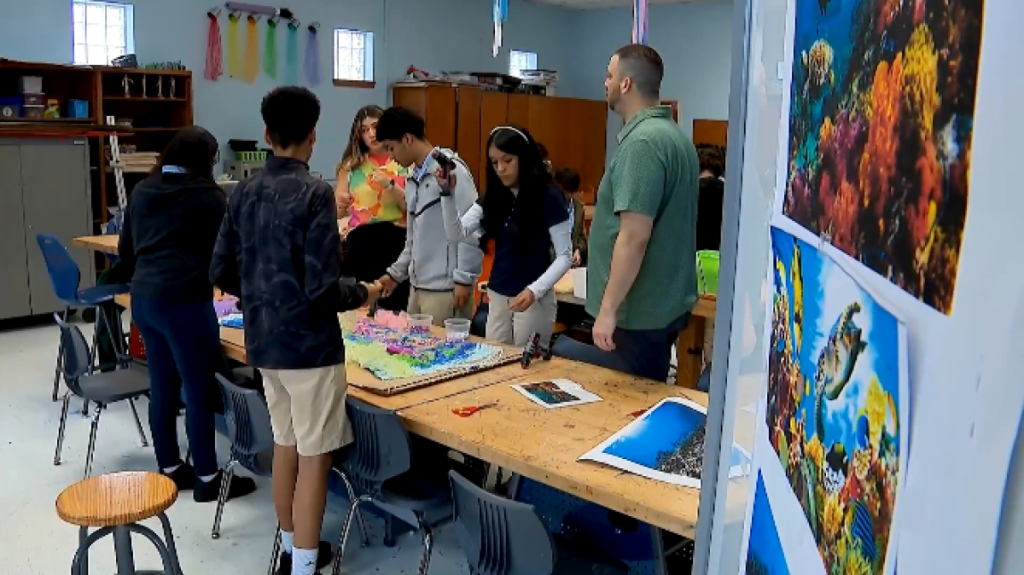
At JW Ray Learning Center in Dallas, students and two teachers are blending art, science and history to tackle ocean conservation through hands-on projects that now hang at Dallas City Hall. Science teacher Chris Venable and art teacher Carla Renteria guide 8th graders like Allison Martinez and Taye Larocca as they turn shells, fishing line and weaving traditions into statements about marine life. The work connects local kids to global issues while making their learning visible in the city they call home.
The classroom feels like a lab and a studio at once, with paint next to microscopes and looms beside field guides. Kids are encouraged to bring what excites them and to follow it into research, craft and public display. That mix of curiosity and craft gives the project an urgency that a worksheet never could.
“It’s both equally important. It’s good to have a creative to show in an artistic way, but it’s also scientifically what’s happening in the real-life world,” said Allison Martinez, a student in the class. Her words cut to the core of the program: equal parts art and evidence. Students learn to show what science means, not just recite facts.
The pieces don’t shy away from tough details. The students embed fishing line and shells into their canvases to illustrate entangled wildlife and changing shorelines. That tactile choice forces people to see the texture of the problem, not just hear about it.
“It’s representing the marine life and how it was before it was being destroyed and before the overfishing happened and before they were all over and destroyed, and it’s just showing the beauty of the ocean and how it is before it is destroyed,” Martinez said. The repetition in her sentence gives the image weight, like a chorus insisting that loss was preventable. Her art and explanation together make the message hard to ignore.
Students bring surprising knowledge into the mix, connecting modern issues to old practices. “I knew that people put like big nets in the ocean, but I didn’t know they put fish back in the oceans,” said Taye Larocca, another student. That curiosity drives questions about sustainability, policy and human behavior that go beyond the paintbrush.
Teachers design projects that pull from global history as well as local ecology, teaching Mayan weaving techniques alongside lessons on marine ecosystems. The result is a layered education: craft skills, cultural awareness and environmental science stacked into a single piece of art. The classroom becomes a place where history and habitat meet and students can practice civic voice.
“Anything like this that you have, where it’s tying that educational information into something they’re putting their hands on and creating themselves, it really sticks in their memory and they’ll carry it forward,” said Chris Venable, the science teacher. That carrying forward matters when the students take their work to public spaces. Displaying the art at Dallas City Hall turns classroom lessons into citywide prompts for conversation.
Carla Renteria sees the artworks as tools for civic engagement as much as personal expression. ” When they realize that they have the voice and art can be as a vehicle, it can be used as a tool to help them spread awareness to the issues that are happening today, I think that’s what’s the most powerful thing,” said, Carla Renteria, the art teacher. Her focus is on empowerment: giving middle schoolers a platform where their concerns become visible and persuasive.
When the pieces hang in a public building, they act like invitations. Visitors encounter woven fishing line, collected shells and written reflections that link a Dallas classroom to the wider ocean. For the students, the display is proof that local effort can amplify global problems in ways that change minds and, someday, choices.