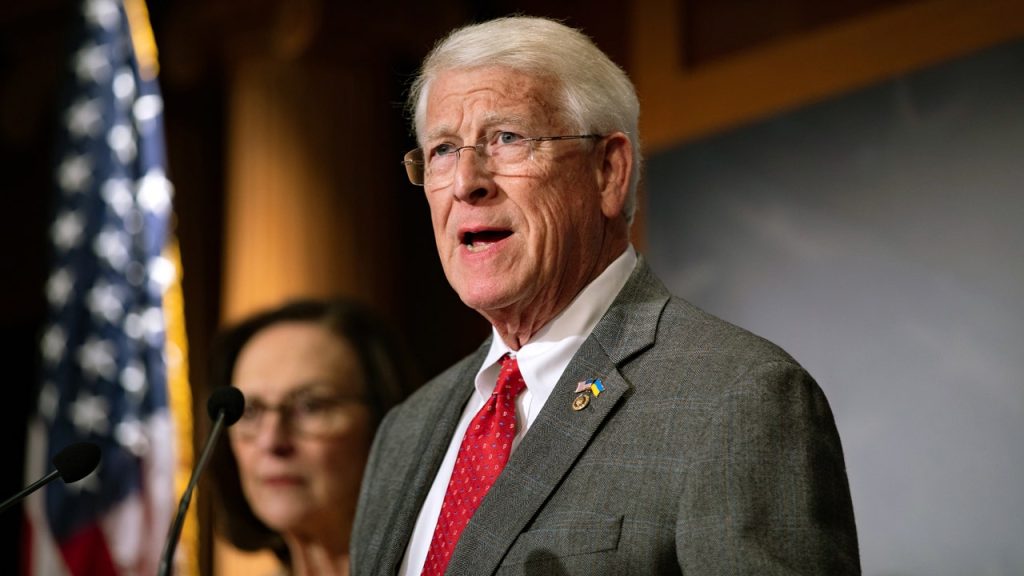
Sen. Roger Wicker of Mississippi is publicly pushing President Donald Trump to keep military pressure on Iran rather than accept what he calls a weak deal, while Senator Marco Rubio admits there has been “some progress” in talks but warns nothing is final. The White House, negotiators in Washington, and backchannel players like Pakistan’s Field Marshal Asim Munir are all moving pieces in a high-stakes moment that could shape U.S. strategy on Iran, the Strait of Hormuz, and the region at large.
Roger Wicker’s statement landed like a shot across the bow within Republican national security circles, blunt and unapologetic. “We are at a moment that will define President Trump’s legacy,” Wicker said, framing this as a legacy-defining choice between sustained pressure and what he fears will be a toothless agreement. He argued the president’s instincts favor finishing the job in Iran but warned advisers are nudging him in the opposite direction.
Wicker didn’t mince words about the military option he prefers. “Our commander-in-chief needs to allow America’s skilled armed forces to finish the destruction of Iran’s conventional military capabilities and reopen the strait,” he said, laying out a clear preference for decisive action over a negotiated pause. He added that chasing a bad deal “risks a perception of weakness” and insisted, “We must finish what we started.”
That kind of rhetoric exposes a split among Republicans who agree on the Iranian threat but differ on how to eliminate it. Some want the full weight of U.S. military power used until Iran’s conventional and nuclear capabilities are rendered impotent. Others, including figures close to the administration, are willing to explore diplomacy if it meaningfully and verifiably curtails Tehran’s nuclear program and its ability to threaten shipping routes.
Marco Rubio’s comments show the administration’s diplomatic track is not dead, but fragile. “There’s been some progress,” Rubio said Thursday. “I wouldn’t exaggerate it. I wouldn’t diminish it.” He balanced caution with a sliver of optimism, adding, “We’re not there yet,” and “I hope we get there,” language that keeps the door open for a deal while warning against premature celebration.
Rubio spelled out the technical, thorny issues that could scuttle any agreement fast. “The issue of highly enriched uranium has to be discussed. Its disposition has to be dealt with. And of course, the issue of future enrichment has to be dealt with as well,” he said, pointing to the parts of any deal that would determine whether it’s durable or only cosmetic. Those are not small policy debates; they are the core of how we prevent Iran from crossing a nuclear threshold.
The Strait of Hormuz remains a central bargaining chip and a security worry. Rubio noted that discussions involving the strait have been part of broader negotiations, signaling how Tehran could leverage control of a vital shipping lane to extract concessions. Republicans arguing for continued pressure say letting Iran think it can disrupt global commerce and get away with it would be a strategic mistake.
President Trump himself has sounded pragmatic about timing, signaling a willingness to wait if that avoids bloodshed. “If I can save war by waiting a couple of days, if I can save people being killed by waiting a couple of days, I think it’s a great thing to do,” he said recently, underlining a preference for avoiding unnecessary conflicts while leaving all options on the table. That approach keeps the pressure game complex: maintain military readiness while keeping negotiators working.
Outside the U.S., Pakistan’s military chief, Field Marshal Asim Munir, visited Iran in what has been read as backchannel diplomacy to ease tensions. The trip fueled speculation that Islamabad may be quietly mediating between Washington and Tehran, trying to create breathing room that could lead to an agreement or at least blunt an imminent clash. Such regional diplomacy matters because it can buy time or provide cover for face-saving steps on both sides.
Those diplomatic moves coexist uneasily with hawkish voices at home who believe talks will collapse or only deliver window dressing. “We’re dealing with a very difficult group of people,” Rubio said. “It may not” happen He emphasized the president “has other options” if diplomacy breaks down and made clear Trump still prefers a negotiated solution if it produces a good deal.
The dynamic is political as well as strategic. For Republicans, the stakes include credibility on national security and the broader message Washington sends to allies and enemies. Pressuring the administration in public is a risky move, but hawks argue it’s necessary to prevent a return to the weak constraints they say defined past accords and emboldened Tehran.
On the ground, U.S. military posture, covert capabilities, and allied moves are all part of the leverage the administration can wield. If negotiations produce meaningful limits on Iran’s enrichment and stockpiles, Republicans who want results could accept a deal that verifiably reduces threat vectors. If not, Wicker and like-minded conservatives are clear: keep pushing militarily until Iran’s strategic military and nuclear capabilities are neutralized.
What plays out next will depend on a short list of specific outcomes: whether Tehran agrees to meaningful limits on enriched uranium, whether inspectors get unfettered access, and whether Iran’s ability to project power in the Gulf is genuinely curtailed. In the meantime, Washington’s mix of diplomacy and pressure will determine whether this moment becomes a legacy-defining success or a missed opportunity that leaves Iran’s capability intact.