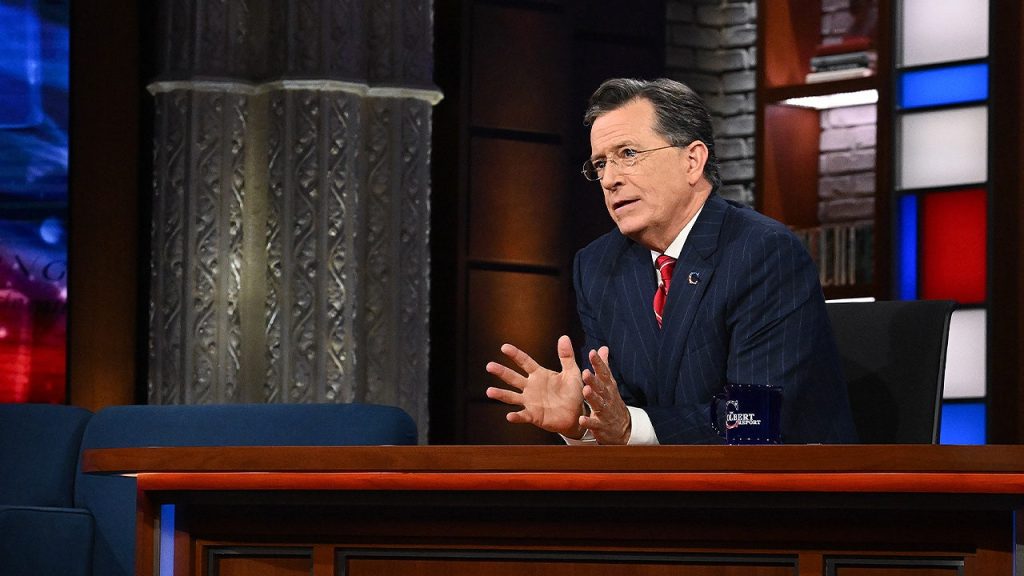
I’ve known Stephen Colbert for years, interviewed him on and off, and watched his move from Comedy Central to CBS play out in full view of the country; this piece tracks his rise, his turn into full-throated partisan comedy, the clash with corporate power around Paramount and CBS, and why his cancellation feels like political payback as much as it does a business decision.
I first met Colbert when he was getting an eight-week tryout to host his own show at Comedy Central, and he was quick on his feet and genuinely funny in a way that suggested real star power. We traded jabs once when he lampooned a report I had done, and I returned the favor with the line “It’s about time someone took on Stephen Colbert. This guy – a fake anchor if ever there was one – has been maligning hard-working journalists for too long. Journalists like me… Well, two can play this game, buddy.” That back-and-forth was theater, but it also showed how late night has always mixed friendship with performance.
Colbert moved to CBS and for a while he soared, especially after embracing a sharper political voice that aggressively targeted Donald Trump and his allies. He even called Trump “the Antichrist,” then said he was joking, and the audience ate it up. That political positioning bought Colbert cultural cache but it also turned half the country into a permanent exit ramp from his audience.
What changed everything was corporate maneuvering that looked less like programming and more like payback. Colbert accused the network of accepting “a big fat bribe” after CBS paid to settle a lawsuit tied to a “60 Minutes” segment, and that allegation landed as Paramount was waiting on regulatory approval for a deal involving Warner Bros. Discovery. Within days of approval, Paramount cut Colbert loose without consulting him about trimming staff or restructuring the show, and the timing made the dismissal look political not purely financial.
Paramount is linked to Larry and David Ellison, and their relationship with Trump is part of the context that fuels the skepticism. When the owner-friendly move was announced, Trump said “I absolutely love” the decision, which only added to the sense that this was retaliation rather than plain accounting. For viewers who see politics in corporate decisions, the sequence of events reads like a payback playbook.
Colbert’s farewell weeks became a national spectacle with a who’s who of friendly celebs showing up in the Ed Sullivan Theater. Guests included Tom Hanks, Oprah Winfrey, Julia Louis-Dreyfus, Jon Stewart, Steven Spielberg, Bruce Springsteen and David Letterman, who helped him theatrically smash the CBS eye logo off the roof. Those tributes were warm, but you could also feel the network trying to wrap a graceful bow around a mess that never looked tidy behind the scenes.
The economics are real, and they matter. The CBS late-night slot hemorrhaged tens of millions and the audience for 11:35 p.m. shows is a sliver of what it used to be in the Johnny Carson era, even if Colbert and Jimmy Kimmel still drew decent quarters of viewers compared with cable history. Byron Allen is set to replace the slot with a prerecorded show and is paying CBS for the airtime, which shows just how much the old model has shifted from prestige programming to a ledger decision.
All of this points to a bigger truth about late night itself: the format is brittle in a world where clips, podcasts and social platforms win the first pass at attention. The late-night monologue used to be appointment TV, but now the real life of those bits is on phones and feeds the next morning. Colbert is talented and will land on his feet, yet his exit feels like the end of an era and a reminder that entertainment and politics are inseparable in a way that cost viewers and talent a long-term future.