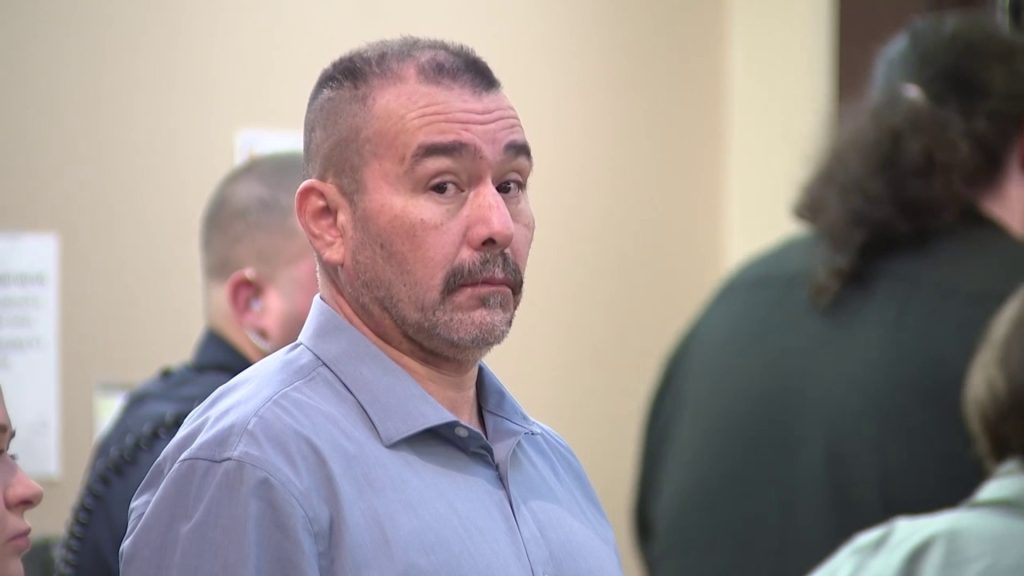
In San Antonio, Bexar County Judge Joel Perez declared a mistrial in the murder case of Eric Vasquez, 48, after jurors could not reach a verdict in the fatal shooting of Jay Morales, 41, which occurred on Jan. 21, 2025. The San Antonio Police Department investigated the incident on Spring Hurst Drive and the courtroom drama unfolded over two days of deliberations. This article walks through what happened in court, the basics of the police account, and why the jury deadlock leaves the case unresolved for now.
The trial centered on a confrontation on the Northwest Side that police say began as a traffic argument and escalated into violence when both men pulled firearms. Officers were called to the 6700 block of Spring Hurst Drive around 6 p.m., and they found Jay Morales suffering from multiple gunshot wounds to the upper torso. Morales was taken to a nearby hospital in critical condition and was later pronounced dead, turning a traffic dispute into a homicide investigation.
Eric Vasquez, the defendant, has consistently maintained that he acted in self-defense and his attorneys argued that point before jurors in Bexar County’s 437th Criminal District Court. Judge Joel Perez oversaw the proceedings as witnesses recounted the sequence of events and forensic evidence was reviewed, but the evidence left jurors divided on whether Vasquez’s use of force was legally justified. After lengthy deliberations that began late Monday, the panel could not agree on a unanimous verdict.
Jurors were sequestered during their initial deliberations Monday evening and then resumed work the following morning, an indication of how seriously the court took the process and how sharply jurors differed in their view of the evidence. The sequestering underscored the emotional weight of the case and the desire to prevent outside influence, yet even isolation could not bridge the gap among jurors. With no consensus, Judge Perez had to declare a mistrial, which pauses a legal conclusion but does not drop the charges.
The police account described a back-and-forth exchange on the roadway that ended with Morales stopping his vehicle and opening his trunk, at which point both men were seen holding firearms. Investigators concluded Vasquez fired at Morales and struck him multiple times, and those shots proved fatal. The precise dynamics of who fired first and the perceived threat each man faced were central to the prosecution and defense narratives, and they proved difficult for jurors to reconcile beyond a reasonable doubt.
Prosecutors had asked jurors to view the shooting through the lens of murder charges, arguing that the facts supported a criminal verdict, while defense lawyers painted a picture of a split-second decision made under perceived mortal danger. The legal threshold for conviction required jurors to be convinced beyond a reasonable doubt that Vasquez was not justified in defending himself, and that standard can be hard to meet when witness memory, stress, and chaotic moments collide. That tension between proof and doubt is often what turns close cases into hung juries.
The mistrial leaves several practical outcomes on the table: prosecutors can seek a retrial, adjust charges, or potentially negotiate a plea, while defense counsel can push for dismissal or argue against retrying the case. For the Morales family, the lack of a verdict means no closure, and for Vasquez it means legal uncertainty and the possibility of facing the same high-stakes trial again. Either path forward will involve weighing the strength of the evidence, trial resources, and the desires of the families involved.
Beyond the courtroom, the case renewed local concerns about road rage and aggressive driving in San Antonio, where traffic disputes can escalate dangerously within seconds. Community leaders and law enforcement often point to education and de-escalation as preventative measures, but incidents like this underline how quickly ordinary moments can turn lethal. The conversation about public safety and personal responsibility continues even while the legal process waits for a next move.
For now, Bexar County’s court calendar will reflect a unresolved verdict and legal actors must decide the next steps in a charged and sensitive matter. Judge Joel Perez’s mistrial declaration does not erase the events of Jan. 21, 2025, nor does it close the door on future prosecution, so both the Morales and Vasquez families remain in a difficult holding pattern. As investigators, attorneys, and community members react, the case stands as a reminder that some courtroom battles end not with a final answer but with the question of whether to try again.