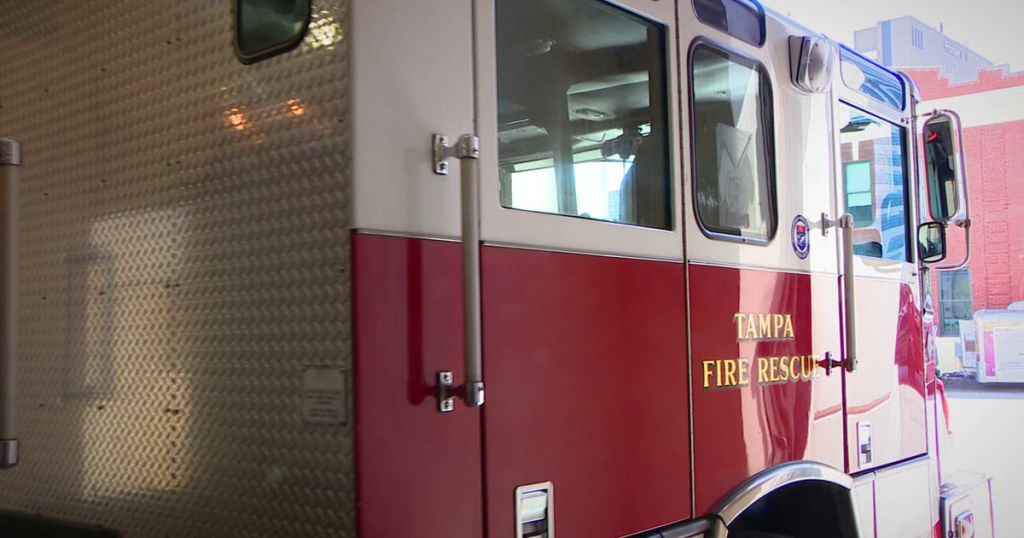
The Tampa firefighters union, Tampa Firefighters Local 754, is pressing city leaders over slow emergency response times and the recent relocation of a unit from New Tampa to Ybor City. Union president Nick Stocco and City Council member Luis Viera say data show travel times well above NFPA 1710 standards, and Chief Barbara Tripp is expected to brief council about coverage in New Tampa and the K-Bar Ranch area. The dispute centers on whether growth and call volume justify moving resources or whether new units are the right answer for safety and equity across the city.
The union published station-by-station travel time figures that raise red flags for residents and elected officials. NFPA 1710 sets an industry benchmark of four minutes for first-arriving fire units to reach 90 percent of incidents, yet the union’s numbers show every Tampa station missing that mark. Stations 20 through 23 in and around New Tampa are the most concerning, reporting average travel times from roughly nine and a half minutes to more than ten and a half minutes.
Local leaders say Tampa’s rapid growth has stretched resources thin, and the numbers back that up in plain terms. Nick Stocco has been clear about the trend, noting that as the region expands, response times have trended upward. Stocco says fire resources haven’t been able to keep up with the region’s growth, at times.
Tension spiked when a unit was shifted away from Station 23 in New Tampa to a busier area of the city. “Just this past Sunday, one of the units was relocated from Station 23 that services New Tampa, and the relocation of that unit was relocating down to Ybor City,” Stocco said. The move has residents worried that coverage in sprawling suburban neighborhoods will erode while denser districts get more resources.
City officials argue that some neighborhoods produce more calls, which affects where units are deployed during peak demand. Stocco pushed back with a distinction that gets to the heart of the problem: “In New Tampa, it’s more of a geographical issue,” Stocco said. “There’s more distance and more area to cover in the urban area, than the inner-city. The urban core is more of a density issue.”
Tampa City Council member Luis Viera said the relocation highlights the need for a broader conversation about funding and staffing for Tampa Fire Rescue. “I think there is a larger discussion we have to have, which is on available resources for Tampa Fire Rescue, and why are we to the point where we’re taking a vehicle out of New Tampa,” Tampa City Council member Luis Viera said. “Where four out of five of the stations with the longest response times are from New Tampa.”
Union leaders and some council members want the focus shifted from shuffling existing apparatus to adding units where growth demands them. “We hope that there’s advocacy for additional units,” Stocco said. “In an environment where we’re seeing longer response times by year, we should be adding units and not relocating units.” That argument frames the issue as one of capacity planning: add to the fleet to serve a growing population rather than redistribute scarce vehicles.
The immediate next step is a briefing at the Tampa City Council meeting where TFR Chief Barbara Tripp is scheduled to present response time data and coverage plans for New Tampa and the K-Bar Ranch community. Council members will be watching for details on call volume, staffing levels and any proposed shifts in deployment strategy. Officials say they will review the data and consider whether to push for more units, new station locations or other changes to restore quicker response times across the city.