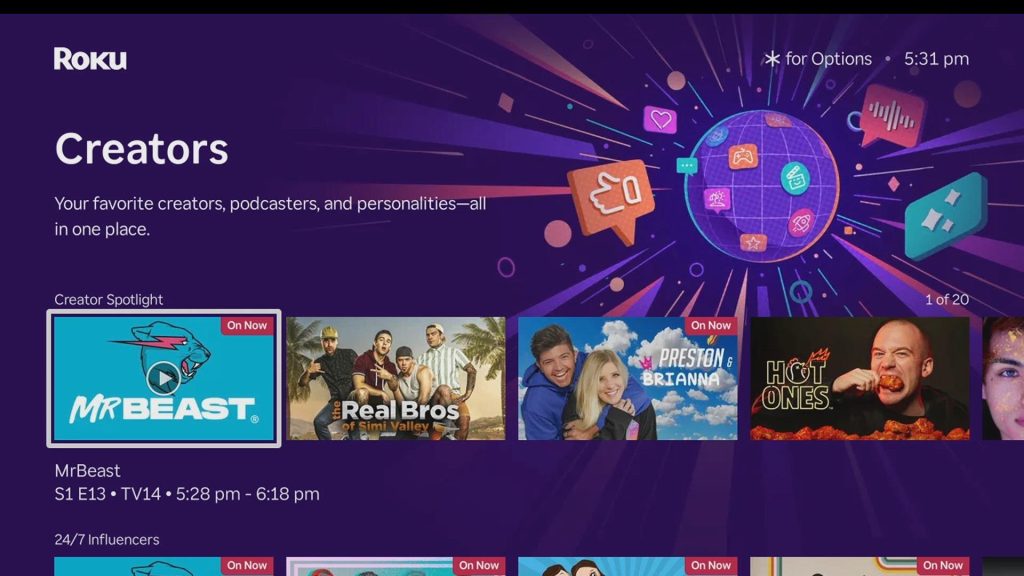
Roku is rolling out a new destination inside The Roku Channel called the Creator hub, a centralized spot for creator-led programming and FAST channels. The move highlights Roku’s strategy to expand ad-supported choices and give independent producers a clearer path to audiences on Roku devices. This article explains what the Creator hub is, how creators and viewers benefit, and why this matters for the streaming landscape.
Roku Introduces `Creator’ Hub
The Creator hub is positioned as an entertainment destination inside The Roku Channel that gathers creator channels, original short-form drops, and FAST channels from independent producers. Roku frames the hub as a place where creators can showcase serialized content, niche programming, and specialty channels without getting lost in an app store shuffle. For viewers, it promises easier discovery of offbeat shows, hobbyist networks, and up-and-coming hosts who might otherwise be buried on larger platforms.
At its core, the Creator hub leans into the FAST model — free ad-supported streaming television — which has proven to be a major growth engine for platforms that prioritize broad reach over paid subscriptions. FAST channels let creators monetize via ads while keeping access simple for audiences, and Roku is leveraging The Roku Channel as a distribution spine to amplify that effect. That means creators who sign on can potentially reach tens of millions of Roku devices without having to negotiate device-by-device distribution deals.
From a creator’s point of view, the hub reduces friction. Instead of building a standalone channel app, smaller studios and content creators can route their FAST channel into this curated space and tap Roku’s discovery features. Roku’s ecosystem also includes ad tech and analytics, which creators can use to understand who watches, when they watch, and how ad breaks perform. The net result is a faster route to both eyeballs and revenue, especially for niche creators who thrive on passionate, smaller audiences.
For viewers, the appeal is discovery and variety. The Creator hub brings together programming that ranges from DIY and local sports to specialty talk shows and themed movie channels, and places it in a single landing zone inside The Roku Channel. That reduces the search burden and makes it more likely that casual viewers will stumble onto new voices. Roku can surface creator content via recommendations and slot curated lists on the hub homepage, which helps channels gain momentum without heavy marketing budgets.
Roku’s strategy here is pragmatic: expand low-cost offerings that keep users engaged on the platform while expanding ad inventory for partners and advertisers. More creator channels equals more ad impressions, which supports the economics of free services. Advertisers get access to targeted audiences across a diverse set of creator channels, and creators get paid without forcing viewers behind paywalls or subscriptions.
The Creator hub also changes the competitive map a bit. Platforms like Pluto TV and Tubi built early momentum with channel-style programming and aggregation, and Roku is now sharpening its edge by focusing specifically on creator-driven FAST channels within The Roku Channel. That focus gives independent producers an option that blends platform reach with a curated presentation, and it gives Roku another product to sell to advertisers looking for scale and variety in ad-supported streaming.
Operationally, success will depend on the onboarding experience for creators and the discovery tools Roku deploys for viewers. Creators will need clear revenue splits, reliable ad-delivery systems, and straightforward publishing tools to commit their best content to the hub. Viewers will need intuitive navigation and recommendation signals that actually surface high-quality creator work rather than random uploads. If Roku nails those pieces, the Creator hub can become a regular stop for audiences hunting fresh, personality-driven content.
Roku built its reputation on simplicity and a broad device footprint, and the Creator hub taps both strengths to widen its content catalog without bloating subscription choices. For creators, it offers reach and monetization; for viewers, it offers discovery and variety; for advertisers, it supplies incremental scale. The move is a logical extension of Roku’s push to make The Roku Channel more than a catch-all and to position the platform as a true marketplace for both major studios and independent creators.