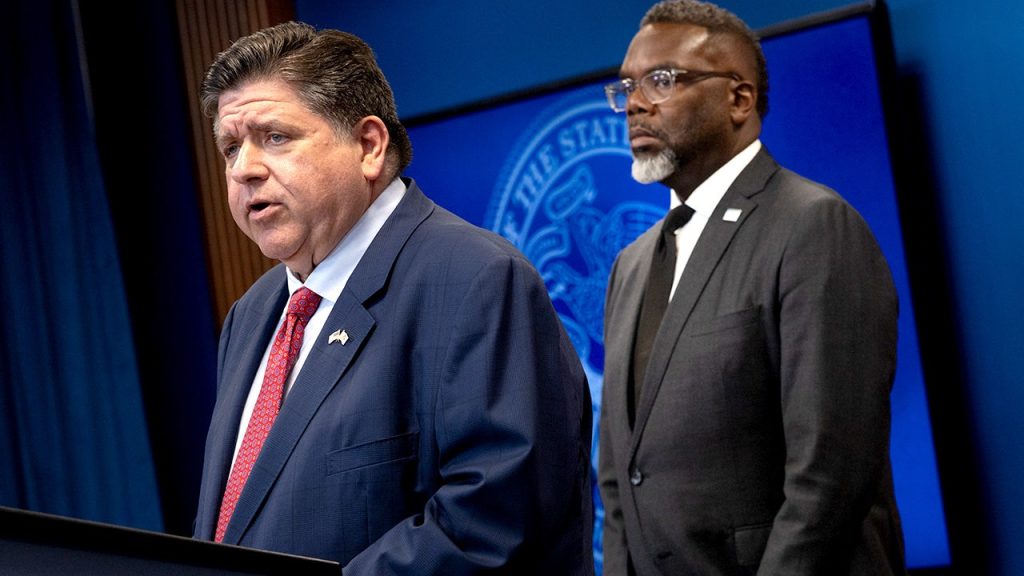
Governor JB Pritzker took aim at Chicago Mayor Brandon Johnson in Springfield, arguing the mayor has produced “no plan” to keep the Chicago Bears in the city as negotiations heat up and potential landing spots like Arlington Heights and Hammond, Indiana, loom. Pritzker framed his objections around protecting Illinois taxpayers while saying he’d prefer the team stay in Chicago, and the mayor’s office fired back with a statement insisting the city wants a publicly owned stadium. The clash has drawn local and national attention, with names like Bret Baier appearing in the wider media conversation.
At a press conference, Pritzker was asked about the state of talks and whether the Bears might leave Chicago, and he unloaded in plain terms. “That’s a conversation between those municipalities and the Bears,” Pritzker said. “As to the prospects for a passage of a bill or what might happen with the Bears, I would say I know the mayor has no plan. He has come up with no plan at all about how the Bears would end up in the city of Chicago. So that’s problematic. I’d love them to be in the city, but we are three years in now, and he still has no plan.”
Pritzker also stressed the twin goals he says guide him: keeping the team local if possible and shielding taxpayers from open-ended costs. “I’m fighting hard to make sure that they can do that. And also very importantly, because my North star is protecting the taxpayers of Illinois that we have something that works for the state of Illinois that’s fair as we are being fair with other businesses that want to come to Illinois or expand here, that we’re being fair in the allocation of support for a business expanding in the state while also protecting taxpayers across the state,” he said. That emphasis on fiscal fairness is a standard Republican talking point, even as the governor framed it as his priority.
The Bears reportedly narrowed their options to Arlington Heights and Hammond, Indiana, a reality that heightens the stakes for Chicago political leaders. For locals, the choice is immediate: keep the franchise in the loop or watch it chase stadium deals elsewhere. Pritzker’s comment that the mayor has “no plan” landed as a blunt accusation, one aimed at forcing a clearer public answer from City Hall about what Chicago is willing to commit to and how taxpayers would be treated.
The mayor’s office responded with a formal statement defending its approach and insisting its plan centers public ownership rather than a private stadium model. “For the past two years, the City has continued to advocate for a publicly owned stadium and has not supported the advancement of a privately owned stadium. The City’s proposal remains the only plan centered on public ownership alongside a funding mechanism that does not burden property taxpayers while keeping the Bears in Chicago,” the statement read. That language is crafted to reassure residents worried about property-tax hits while staking out a position of municipal control.
Pritzker characterized the mayor’s timing and style as predictable, suggesting a pattern of grand announcements without follow-through. “This is kind of typical. The mayor has shown up every spring at the end of session to pronounce what he would like to see happen,” Pritzker said. The governor’s dig is political theater with a purpose: force accountability and shape the debate about what, exactly, the city will put on the table to keep a major franchise from relocating.
National attention has followed the squabble, with media figures such as Bret Baier spotlighting the back-and-forth between state and city leaders and the broader questions about public subsidies for sports projects. Meanwhile, the mayor’s office flagged its willingness to work through official channels to lock in a future for the team here. “We look forward to continuing to work with the legislature, the State, and all stakeholders to advance a solution that centers the needs of working Illinoisans while preserving the Bears’ future in Chicago.”