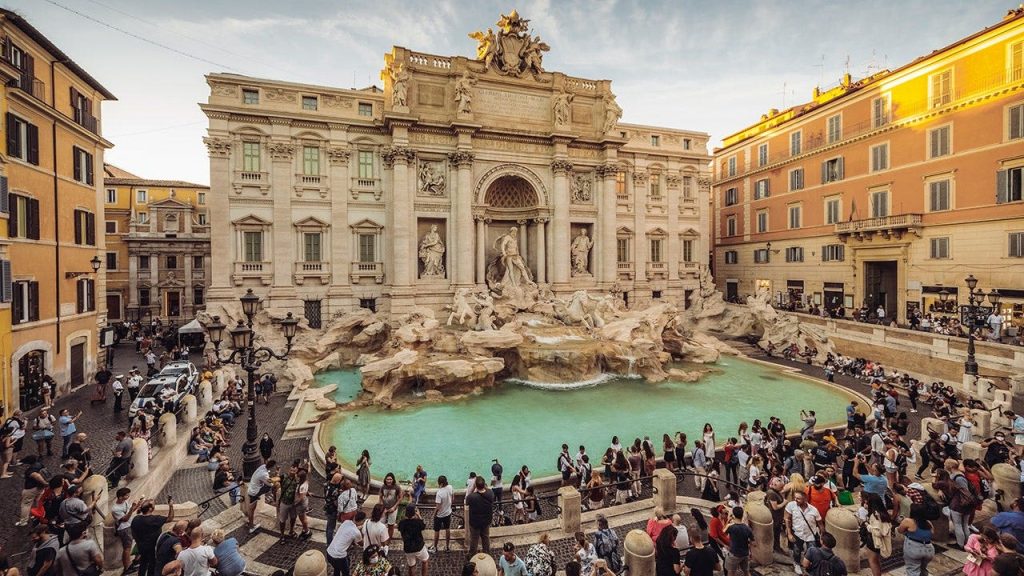
The notorious splash at Rome’s Trevi Fountain involved a 30-year-old visitor from New Zealand who ran, jumped and dove into the fountain while crowds watched; a TikTok clip of the stunt shot to more than 12 million views and officials say the man was fined €500 and banned from the site as debate raged online about respect, crowding and new visitor rules introduced in February 2026.
The video shows the visitor walking backward, then sprinting and diving fully clothed into the Trevi Fountain amid tourists clustered around the historic site. Spectators filmed the incident on their phones as police arrived and ordered the man to leave the water, but he kept moving inside the fountain for a short time before complying. Authorities later handed down a €500 fine and barred him from returning to the monument.
British outlet The Telegraph described the man as a 30-year-old visitor from New Zealand, and the footage that circulated on social platforms ignited quick and fierce reaction. People online tore into the stunt as careless and disrespectful toward one of Rome’s most treasured landmarks. The clip’s virality fed a broader cultural conversation about how visitors behave at iconic places and how social media can turn a moment into a spectacle.
Comments on Reddit and other forums captured two opposing impulses: amusement at the audacity and anger at the disregard for rules and history. One user wrote, “Sorry, Italian bros. Some of us missed the respecting places lesson,” while another posted, “Obviously didn’t get the ‘when in Rome do as the Romans do’ memo.” Other voices urged harsher penalties, with one commenter saying, “If I was the Italian authority, I would make an example out of this guy,” signaling frustration that a fine might not be enough to deter repeat incidents.
The Trevi Fountain draws massive daily crowds and has long been vulnerable to this kind of episode despite strict regulations and stepped-up security. City officials have grappled with waves of tourists who treat the area like a stage rather than a preserved public monument, and repeated entries into the fountain prompted calls for firmer management. The pattern of incursions has pushed local authorities to experiment with new measures intended to protect the artwork and the experience of visitors who come to admire it.
Beginning in February 2026, Rome instituted a small entry fee for foreign visitors aiming to limit overcrowding and reduce risky behavior at the site. The fee is one component of a broader strategy to regulate foot traffic at hotspots that attract tens of thousands of people on busy days and more than 9 million visitors per year. Officials say the measures are meant to preserve the fountain and the surrounding neighborhood, and to discourage stunts that can damage stonework or create unsafe situations for bystanders.
There’s a practical side to the debate as well: the volume of visitors makes policing every infraction hard, and the city has to decide how visible enforcement should be. Fining and banning an individual sends a message, but it does not erase the footage already circulating online or the precedent of copycat behavior. Local authorities face the challenge of blending deterrence, education and crowd control while keeping access open to the many who travel to Rome to see the fountain respectfully.
For many, the fountain’s allure comes from its cinematic history and its place in Rome’s urban fabric, which makes these incidents feel like more than mere youthful mischief. The Trevi Fountain has provoked passionate defenses from residents and historians who see the structure as fragile and deserving of protection. At the same time, tourists continue to arrive in droves, and managing that demand without shutting people out is an ongoing balancing act for city planners.
The recent viral episode is another in a string of confrontations between popular culture and preservation, and it has intensified discussion about how best to handle tourism at fragile sites. Officials hope that financial and logistical controls, along with visible enforcement, will cut down on dangerous or disrespectful conduct. Meanwhile, the footage remains a potent reminder that what happens in a few seconds online can prompt policy shifts and public outcry that reverberate far beyond a single splash.