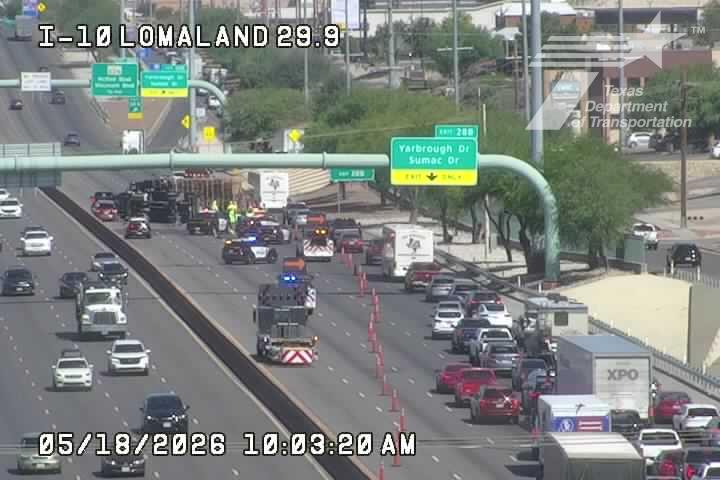
El Paso, Texas saw a disruptive morning crash on I-10 West at Yarbrough that forced the Texas Department of Transportation to close the left three lanes and sent three people to area hospitals, according to initial reports from local authorities. El Paso police took the call at 8:39 a.m., and crews remained on scene with no clearing time available early in the response. The incident created heavy backups and a tense start to the commute for drivers heading westbound through central El Paso.
The collision itself triggered immediate lane closures that cut traffic flow dramatically on one of the city’s busiest corridors. When left lanes are taken out of service on I-10 West, vehicles funnel into fewer lanes and speeds drop sharply, often leaving first responders working shoulder-to-shoulder with stopped traffic. Drivers in the area reported long delays and slow-moving congestion as tow trucks and emergency vehicles navigated the scene.
Texas Department of Transportation crews were listed as handling the traffic control portion of the response while El Paso police coordinated the investigation and emergency services. That kind of split is typical: TxDOT manages lane closures and signage while police document the crash and direct initial traffic control. With three people transported to hospitals, ambulances and medical personnel were a key part of the operation on-site.
No details were immediately released about the condition of the individuals who were taken to hospitals, and officials on scene advised motorists to avoid the area if possible. Investigations into crashes often take time, especially when multiple lanes are closed and debris needs to be cleared safely. Drivers should expect staged closures and intermittent lane moves until towing and cleanup are complete.
For commuters, the timing was particularly bad. The 8:39 a.m. call came right in the middle of the morning rush, when westbound traffic into El Paso tends to be heavier. Even short-duration lane closures on I-10 can stretch into long backups because nearby on- and off-ramps feed vehicles into reduced-capacity zones. Traffic maps and local radio updates are the best real-time tools while crews work to reopen lanes.
Beyond immediate delays, crashes like this one have ripple effects across adjacent streets as drivers reroute to avoid congestion. Neighborhood arterials and parallel highways can see sudden surges in volume as navigation apps push traffic away from the scene. That redistribution often causes slower traffic and increased risk on roads not engineered for sustained heavy loads.
Emergency responders typically follow a set sequence: secure the scene, triage and treat any injured people, document the crash for investigative purposes, and then remove vehicles and debris. That sequence is careful by design but also time-consuming when multiple lanes are blocked. Clearing lanes while preserving evidence means crews sometimes work under alternating patterns of stop-and-go traffic control.
Motorists approaching a crash zone should slow down, use hazard lights if forced to stop, and avoid rubbernecking, which can cause secondary incidents. If you see emergency workers on foot, give them plenty of space and move over when possible to create a safer operating area. Simple actions from drivers reduce the chance of additional collisions and help crews finish the job faster.
City and state officials often remind drivers that patience is part of traveling through an urban area during peak hours, and that planning alternate routes on days with heavy incidents can save significant time. In El Paso, that might mean using local surface streets or adjusting commute times when there’s a major closure on I-10. Those choices can ease pressure on the main freeway and let first responders work with fewer interruptions.
Investigations into the cause of such crashes take into account vehicle positions, skid marks, witness statements, and any available surveillance or dashcam footage. El Paso police will compile those elements to determine what happened and whether citations are appropriate. Until that process is complete, the exact chain of events and contributing factors remain under review.
The safety message from incidents like this is consistent: stay alert, expect delays, and prioritize caution when passing through any active crash scene. Local officials aim to reopen lanes as quickly and safely as possible, balancing traffic flow with the needs of the injured and the work of emergency crews. Drivers who plan for the unexpected can reduce stress and keep themselves and responders safer on the road.
Reports from the scene stressed that updates would follow as tow operations and investigative work progressed, and that crews were focused on restoring normal traffic patterns. For now, motorists were asked to steer clear of the affected stretch of I-10 West at Yarbrough and follow guidance from law enforcement and TxDOT until the roadway is cleared.