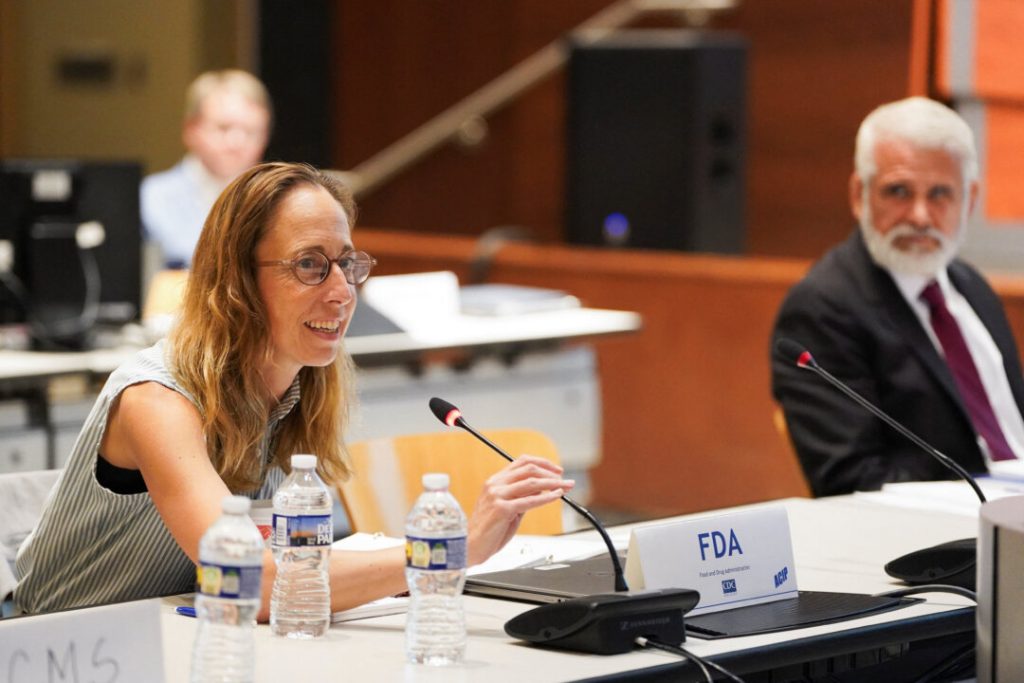
Tracy Beth Hoeg, the acting director of the Food and Drug Administration’s drug research center, has publicly said she was fired from her position in Washington, D.C., sparking questions about leadership changes inside the agency and what the move means for drug oversight and public health policy.
Hoeg’s announcement landed quickly in public conversations because she was a visible figure at the FDA’s center focused on drug research. Her role involved directing scientific reviews and helping set priorities for drug development and safety oversight. When someone in that seat departs abruptly, it raises immediate concerns among industry watchers and health advocates about continuity and institutional knowledge.
The immediate facts presented by Hoeg are straightforward: she said she was fired from her position. Beyond that claim, official details released by the agency remain limited, so the public record is thin on the precise reasons for her departure. That gap in information leaves observers to focus on the practical consequences rather than motives, at least for now.
Leadership changes at the FDA can ripple outward fast because the agency evaluates therapies, advises on clinical trials, and sets standards that affect patients and companies alike. Staff transitions at senior levels often slow reviews, shift priorities, or change how risk-benefit conversations are framed internally. For scientists and manufacturers waiting on decisions, uncertainty at the top translates into practical headaches on timelines and planning.
People inside and outside government will be watching how the FDA manages the immediate handoff of responsibilities. Acting leaders, interim committees, or deputies typically fill gaps to keep work moving. But even temporary pauses can matter when applications for new drugs or label changes are time-sensitive and tied to patient needs.
Hoeg’s own career history and professional contacts matter in this story because senior agency officials often carry institutional credibility that helps move complex projects forward. Loss of that credibility can slow collaborative efforts between the agency and external researchers. Professional networks built over years do not transfer overnight, and rebuilding trust takes time.
Beyond the internal mechanics, the optics of a firing at the FDA invite broader scrutiny. Stakeholders will ask whether the decision reflects a shift in policy emphasis, a response to a specific disagreement, or routine personnel turnover being framed as something more consequential. Each interpretation carries different implications for researchers, lobbyists, and public health advocates tracking the agency.
The practical question for patients and clinicians is whether any current reviews or safety monitoring activities will be disrupted. In many cases, career staff and established procedures maintain continuity, but every organization relies on leadership to set priorities and allocate resources. If the leadership change triggers a shift in priorities, those real-world impacts will be the first to show up in timelines or guidance updates.
For the broader regulatory landscape, this moment underscores how staffing decisions inside federal agencies can matter politically and operationally. Even when the work is technical and science-driven, personnel moves can reframe public debate about transparency, independence, and the pace of innovation. Observers interested in the FDA’s future direction will be watching which officials step into the gap.
At the same time, it’s important to remember that personnel shifts are part of how government agencies evolve. New leadership can revitalize priorities, bring fresh perspectives, and reorder workflows in ways that ultimately benefit oversight. The key is whether incoming leaders preserve scientific rigor while improving the agency’s ability to respond to pressing health needs.
Until more official detail is released, most of what matters will be practical and procedural: who takes over, how the agency reallocates responsibilities, and whether ongoing reviews continue on schedule. For now, Hoeg’s statement that she was fired from her position is the central fact, and its ripple effects will determine how significant this moment becomes for the FDA’s work going forward.