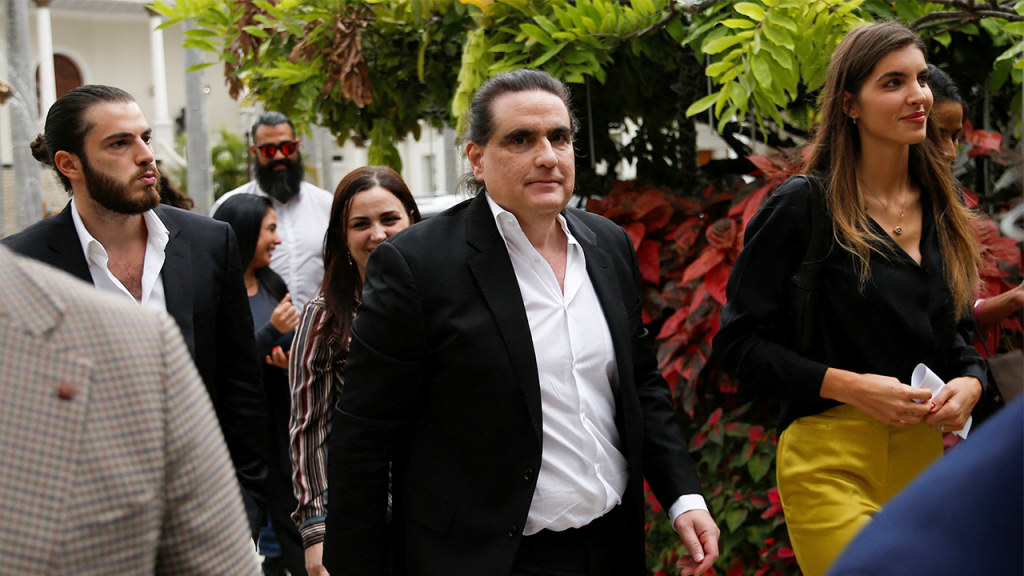
Alex Saab, a 54-year-old Colombian businessman tied closely to Nicolás Maduro, has reportedly been deported after his February arrest in a joint U.S.-Venezuelan operation. The move follows a controversial 2023 pardon and swap by Joe Biden and comes amid new cooperation between U.S. authorities and interim Venezuelan leader Delcy Rodríguez. Saab’s fate could reshape the Manhattan drug case against Maduro and expose long-running allegations about financial corruption and bribery networks.
The arrest and deportation matter because Saab has been a central figure in the tunnel between Maduro’s inner circle and international money flows. U.S. officials long labeled him Maduro’s “bag man,” and investigators say that role gave Saab visibility into how cash moved through the regime. That visibility is the reason his transfer back toward U.S. custody matters so much now.
Saab’s 2023 pardon by Joe Biden was controversial from the start, focused narrowly on a 2019 indictment over unbuilt housing projects. Critics argued the swap let a key actor walk away from other, broader allegations. Republican critics see the latest arrest as proof the initial deal left loose ends and urgent legal questions unresolved.
Sources say Saab maintained covert contact with U.S. law enforcement for years, including the DEA, and those contacts reportedly helped expose corruption in Maduro’s circle. That cooperation, if confirmed in court, could provide prosecutors with an inside view of bribery schemes tied to food import contracts. For Republicans watching the case, inside testimony would be a rare win against a brutal regime.
Maduro’s own capture earlier this year in a January U.S. military operation set the stage for a cascade of legal and diplomatic moves. Maduro now faces drug conspiracy charges in Manhattan, and any testimony from Saab would be potentially explosive. The U.S. government is clearly leveraging whatever intelligence and cooperation it can to build a solid prosecution.
Venezuela’s interim leader, Delcy Rodríguez, appears to be cooperating with U.S. authorities in ways that would have seemed impossible a short time ago. Rodríguez reportedly stripped Saab of his cabinet role after the Maduro raid, cutting him off from the formal channels he once used to route foreign investment. That internal shift in Caracas is playing into the larger legal puzzle surrounding Saab and Maduro.
Saab’s 2020 detention on bribery accusations included allegations that he siphoned hundreds of millions of dollars out of Venezuela. Those claims, tied to procurement and import deals, have hung over him even as legal papers focused on other narrow counts. Prosecutors in Washington have made it clear there are active investigations beyond the one-time pardon.
The Venezuelan immigration authority was careful in public language, confirming a “Colombian citizen” was being removed to satisfy U.S. criminal probes while avoiding local legal constraints on extraditing nationals. That choice highlights how Caracas navigates its own laws while cooperating on politically sensitive moves. It also underscores the awkward legal and diplomatic lines officials are walking.
If Saab is returned to U.S. custody, he could become a star witness against Maduro, supplying firsthand details about bribery and money-laundering networks. Witness testimony from a former confidant would be hard for defense teams to neutralize, especially if backed by documents and transaction tracing. Republican prosecutors and lawmakers would view that as a decisive development.
Questions remain about where Saab will be held and how quickly the U.S. will press charges or seek formal extradition. The Department of Justice has not publicly answered inquiries about the operation or the detainee’s status. Saab’s lawyer, Neil Schuster, also has not issued a public comment, leaving many procedural details in limbo.
The broader political context matters: Biden’s earlier decision to swap and pardon Saab is now being reevaluated in light of these new actions. For conservatives, the episode reinforces concerns about deals that appear to prioritize short-term outcomes over long-term accountability. This latest arrest could be seen as a corrective, but it also raises questions about what was lost when the pardon was granted.
The interplay between U.S. military action, criminal prosecutions, and diplomatic cooperation with Venezuelan officials is unusual and delicate. Each move carries legal consequences and geopolitical risks, but also the potential for dismantling criminal networks tied to Maduro. Observers in Washington will be watching how evidence and witness cooperation are marshaled in court.
As the case unfolds in Manhattan and behind closed doors in Caracas, the stakes are clear: accountability for alleged corruption, disruption of criminal financing, and clarity about who in Venezuela’s elite bears responsibility. Saab’s status now matters not just as an individual legal matter but as a possible key to unraveling broader schemes. What happens next will shape both the criminal case and how U.S. policy toward Venezuela is judged.
The tale of Alex Saab is a reminder that high-stakes geopolitics and criminal investigations intersect messily, and that decisions in Washington can have long aftershocks. For many Republicans, this new development vindicates calls for a tougher, clearer approach to dealing with authoritarian regimes and the corrupt actors that prop them up. The courtroom in Manhattan may end up being where the larger story finally gets told.