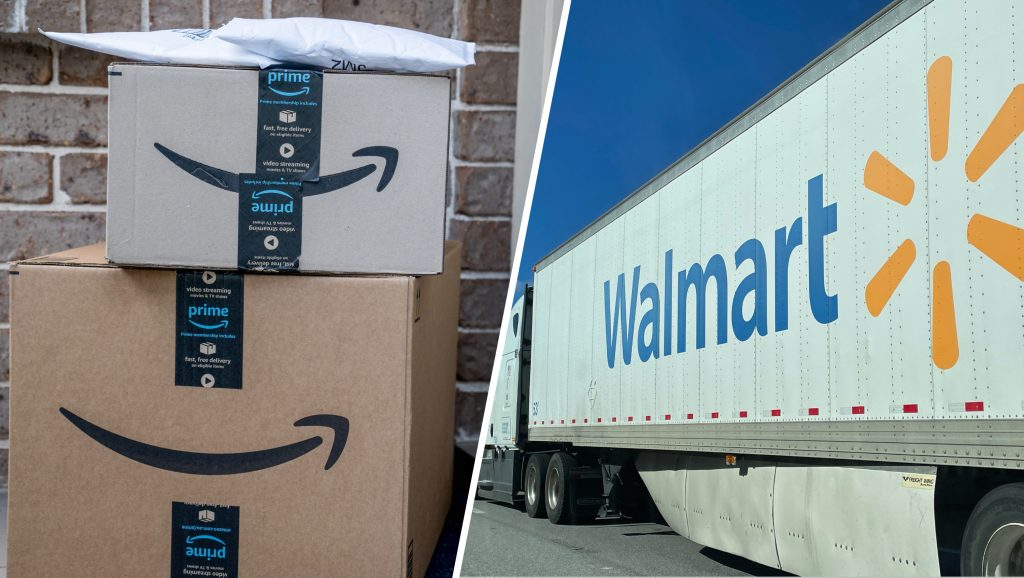
Walmart and Amazon are racing to speed up online deliveries across rural America, aiming to tap into a vast, under-served market that analysts value in the trillions. The battle plays out from Walmart’s Bentonville roots to Amazon’s new stations in places like Roanoke, Virginia, and distant towns such as Lewes, Delaware; Padre Island, Texas; and Abbeville, Louisiana. Executives including Andy Jassy and local managers like Patrick Hamilton and Dalton Klinger are betting that faster service and smarter logistics will turn scattered customers into steady shoppers.
Walmart starts with a unique footprint: about 90% of U.S. residents live within 10 miles of a Walmart, and nearly half of its full-service Supercenters sit in towns under 20,000 people. That physical presence gives Walmart a ready network to convert foot-traffic reach into delivery speed and loyalty. The company has pushed automation and mapping shifts to make stores act more like local fulfillment centers, pulling fast-moving items for same-day orders.
Amazon answered with a multi-billion dollar push to shrink delivery times for smaller towns and rural communities, spending about $4 billion to reach 4,000 locations with same- or next-day options. The company says the average monthly number of customers getting same-day drops doubled in 2025 compared with the prior year. Amazon is leaning on AI demand forecasting and micro hubs to close the distance between warehouses and porch steps.
Analysts at Morgan Stanley and consulting firms such as McKinsey have refocused attention on rural consumers as incomes and spending power rise. McKinsey notes rural median household income climbed roughly 43% from 2010 to 2022, hitting near $60,000, while Morgan Stanley estimates rural shoppers spend as much as $1 trillion a year on retail goods outside of cars and gasoline. That scale explains why big retailers now treat these areas as prime territory, not afterthoughts.
The last-mile challenge in rural zones is real: drivers travel farther between stops, roads can be narrow or unpaved, and low stop density drives up labor and fuel costs per package. At the same time, the pandemic-era shift to remote and exurban living has expanded demand in places up to 60 miles from city cores. With more households expecting fast deliveries, the economics of rural logistics are finally turning in favor of investment.
Competitive pressure comes from more than just Amazon and Walmart. Dollar General scaled same-day delivery to the vast majority of its stores, and Tractor Supply is beefing up direct delivery for heavy items like fence panels and riding mowers. Dollar General reported that more than 80% of its same-day orders arrived in an hour or less, a performance leaders see as essential to keep shoppers from defecting.
Walmart’s approach blends its physical strengths with automation. Stores now use robotic systems to pick and pack orders from compact storage zones stocked with top-selling items. Managers like Doug Sanders say those systems helped a Bentonville-area store push grocery delivery radiuses from about 10 miles to as much as 30, and a hexagonal mapping system has allowed service areas to include fringe pockets that ZIP-code boundaries used to leave out.
Amazon leans on smaller, purpose-built stations and contractor-led delivery networks, sending boxes from large fulfillment centers to local hubs for final sorting. Holly Sullivan, Amazon’s vice president of worldwide economic development, has framed the goal as cutting typical delivery times from up to five days down to fewer than two. That formula depends on placing infrastructure close enough so gig drivers can serve both city and countryside routes efficiently.
Local examples show the shift working. Patrick Hamilton, manager of a newly opened station in Roanoke, Virginia, says his facility dispatches tens of thousands of packages daily to customers who used to wait much longer. Dalton Klinger, operations manager of the Chamber of Commerce in St. George, Utah, said orders that once took four days now arrive in two. “People are wanting faster deliveries,” he said.
Retailers are also testing futuristic options like delivery drones to bridge long, low-density routes, and they are borrowing tactics from each other. Walmart’s store-centric automation resembles Amazon’s hub model, and both companies are using data mapping and AI to decide which small towns get new services first. The goal is consistent: offer customers the speed they expect without bleeding into unprofitable delivery costs.
The broader logistics landscape matters too: carriers such as FedEx, UPS and the U.S. Postal Service have been trimming or slowing rural routes to cut costs, creating gaps that big retailers can exploit. If Walmart and Amazon can reliably deliver where carriers have retrenched, those shoppers could become loyal buyers for household goods, clothing and electronics previously bought in-person or not at all.
As these changes unfold, executives and local leaders watch whether investment in micro hubs, robots and smarter route mapping can turn scattered rural demand into sustainable revenue. For retailers, the prize is clear: a growing population of remote workers and exurban households who want convenience and speed. For rural customers, the outcome is simpler and immediate: faster access to the products they need.