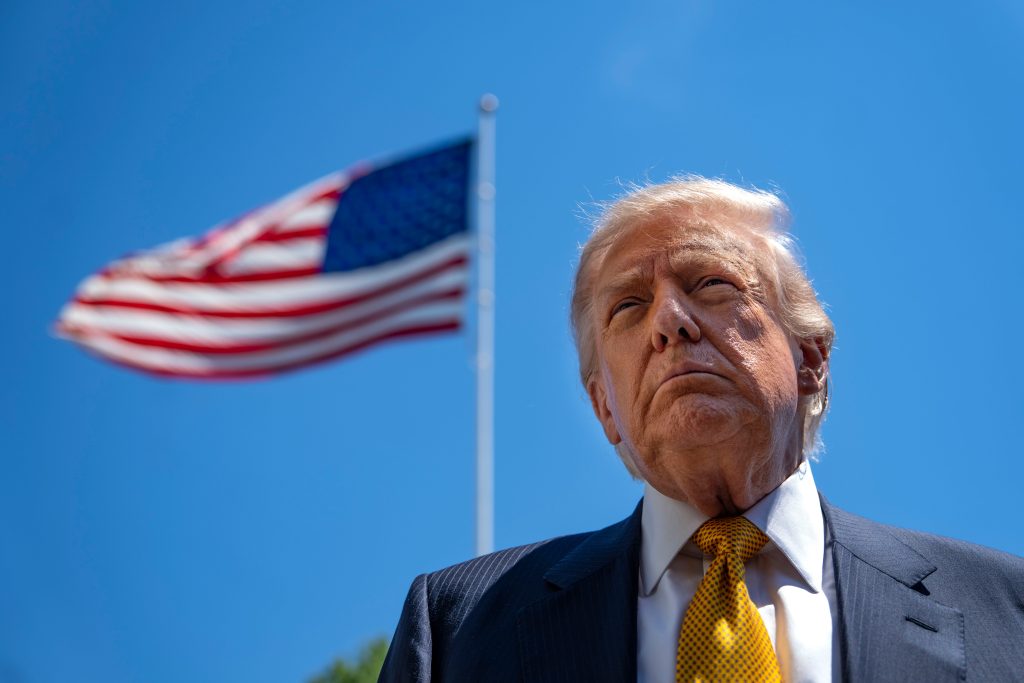
President Donald Trump defended his recent remarks about putting a single priority above short-term costs while negotiating to end the Iran war, telling Fox News’ Bret Baier in China, “That’s a perfect statement, I’d make it again.” The interview touched on the Strait of Hormuz blockade, rising national gasoline prices that have climbed to more than $4.50 a gallon, and the political ripple effects for Republicans as the midterms approach.
Trump doubled down on his earlier line that he wasn’t weighing Americans’ pocketbooks when he described his Iran strategy, saying “even a little bit” wasn’t part of the calculation. He framed that focus bluntly and without apology: “The only thing that matters, when I’m talking about Iran, they can’t have a nuclear weapon.” His message was simple and direct: the existential risk of a nuclear Iran outranks short-term economic discomfort.
He repeated the phrase that drew the headlines: “I don’t think about Americans’ financial situation, I don’t think about anybody. I think about one thing: You cannot let Iran have a nuclear weapon.” That stark clarity is exactly what some voters want from a leader handling a potentially catastrophic threat, and it’s why allies on the right rushed to back him.
The backlash from Democrats was immediate and loud, but many Republicans pushed back hard, arguing that leadership sometimes requires making hard calls that will sting in the short run. Trump used plain language to say there will be “short-term pain” as he presses to end the Iran war and clear the Strait of Hormuz, a choke point that has a direct impact on energy shipments around the globe. From a Republican perspective, choosing national survival over immediate economic comfort is not just defensible, it’s necessary.
On the economics, the Strait blockade has driven up global energy costs, translating into higher prices at the pump for Americans. Gas prices have gone up roughly 50 percent since the U.S. and Israel launched strikes on Iran, with the national average climbing past $4.50 a gallon, according to data from the American Automobile Association. That math stings for families at the pump, but Trump insists the spike is temporary if the conflict is contained and maritime routes reopen.
Trump was unapologetic about tolerating higher fuel costs to head off a nuclear-armed Iran. “When you tell somebody you’re going to pay a little more for gasoline for a very short period of time — because we want to stop the threat of being blown to pieces by a lunatic, by a crazy person using nuclear weapons — everybody says that’s fine,” he said, calling the reporter’s line of questioning a “fake question.” He painted the tradeoff as moral and practical: accept brief sacrifice or risk catastrophic consequences.
He also told viewers he expects the oil market to normalize once the strait is cleared. “Don’t forget, they have a lot of boats that are loaded up with oil that are going to bring the oil out as soon as this is over, and I think it’s going to end fast,” Trump said, suggesting a swift reopening would bring relief at the pump. That projection is part reassurance, part political shield, as Republicans worry about how sustained price pain could affect races across the country.
Republican strategists are indeed bracing for fallout with fragile majorities to defend in November, but Trump made clear electoral calendars won’t dictate his Iran policy. “I’m not going to let the election determine what’s going to happen with respect to Iran, because they cannot have a nuclear weapon,” he said, insisting national security must trump politics. For supporters, that willingness to put principle ahead of poll numbers is a selling point, not a liability.
Whatever you make of the tone, the policy posture is unmistakable: hard line, immediate focus, and a readiness to endure short-term pain for longer-term safety. Trump’s comments and the reaction they’ve sparked make it obvious the debate over risk, cost, and leadership is only heating up as the administration presses to resolve the Iran standoff and reopen vital shipping lanes.