The City of San Antonio and Bexar County are rethinking budgets as property tax growth cools, with County Manager David Smith, BCAD chief appraiser Rogelio Sandoval, Interim Budget Director Alfredo Martinez, and Bexar County Budget and Finance Director Tanya Gaitan all warning of tough choices ahead in San Antonio and Bexar County.
Both the city and county rely on property taxes to fund core services like law enforcement, libraries, parks, and courts, and those revenue streams are showing strain. For the City of San Antonio, property tax revenue accounts for about 28% of the general fund, while Bexar County’s general fund leans roughly 80% on property taxes. That heavy reliance means any softening in valuations quickly becomes a budgeting problem.
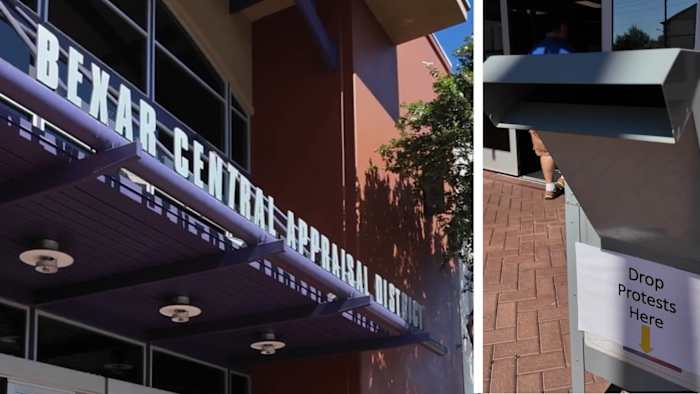
Local appraisals drive the whole picture, and Rogelio Sandoval, chief appraiser at the Bexar Central Appraisal District, says BCAD’s job is to reflect the market and that “this has been one of the years where it has been noticed that it has significantly softened from the prior years.” Home sale prices in Bexar County peaked around 2022 at roughly $345,200 and later eased to about $338,800 in 2025, and BCAD reports the total market value for single-family homes has already fallen by more than $203 million. Sandoval put the shift in stark context: “I haven’t seen a market like this since maybe 2008, 2009, when the housing bubble,” Sandoval told KSAT.
San Antonio’s interim budget team also points to policy changes that chip away at taxable value, such as a new $125,000 exemption for businesses on income-producing personal property and longstanding homestead exemptions for homeowners. Those cuts in taxable base, along with protests by property owners over values, mean neither the city nor the county can lock in final numbers yet. The protest deadline for most property owners was May 15, and BCAD is expected to certify the appraisal roll to taxing units by late July.
The city’s early numbers are already worrying. City staff expect a 2.13% decline in taxable value after protests and exemptions, which, without a rate change, translates directly into less revenue. The general fund has other supports like sales tax and a share of CPS Energy revenue, but a five-year forecast still shows a potential nearly $131 million shortfall in FY 2027 that could swell to $264 million by FY 2031 if the current tax rate of $0.54159 per $100 of value remains unchanged.
Raising the tax rate is legally possible only up to a point: state law normally allows cities to collect up to 3.5% more revenue from existing properties without taking a rate increase to voters. City staff say they don’t yet have certified values to calculate exactly what that would mean in dollars, and San Antonio hasn’t raised its tax rate since FY 1993. Even if the city maximized the rate, staff projections show it would not erase the deficit entirely and the city would still face significant spending gaps.
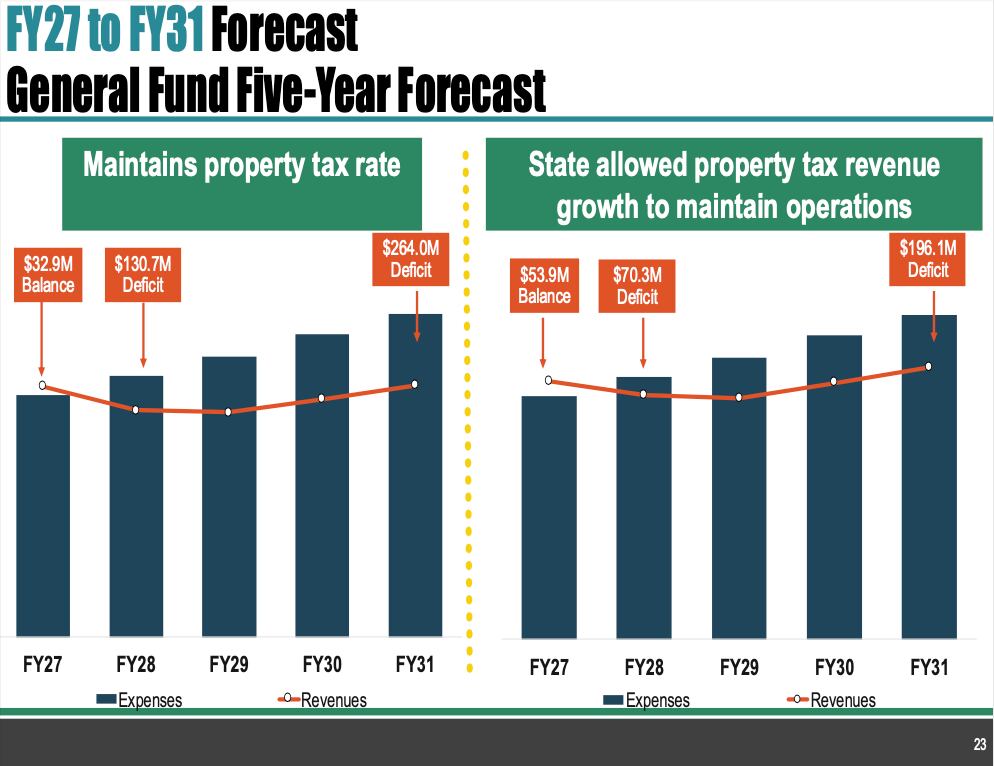
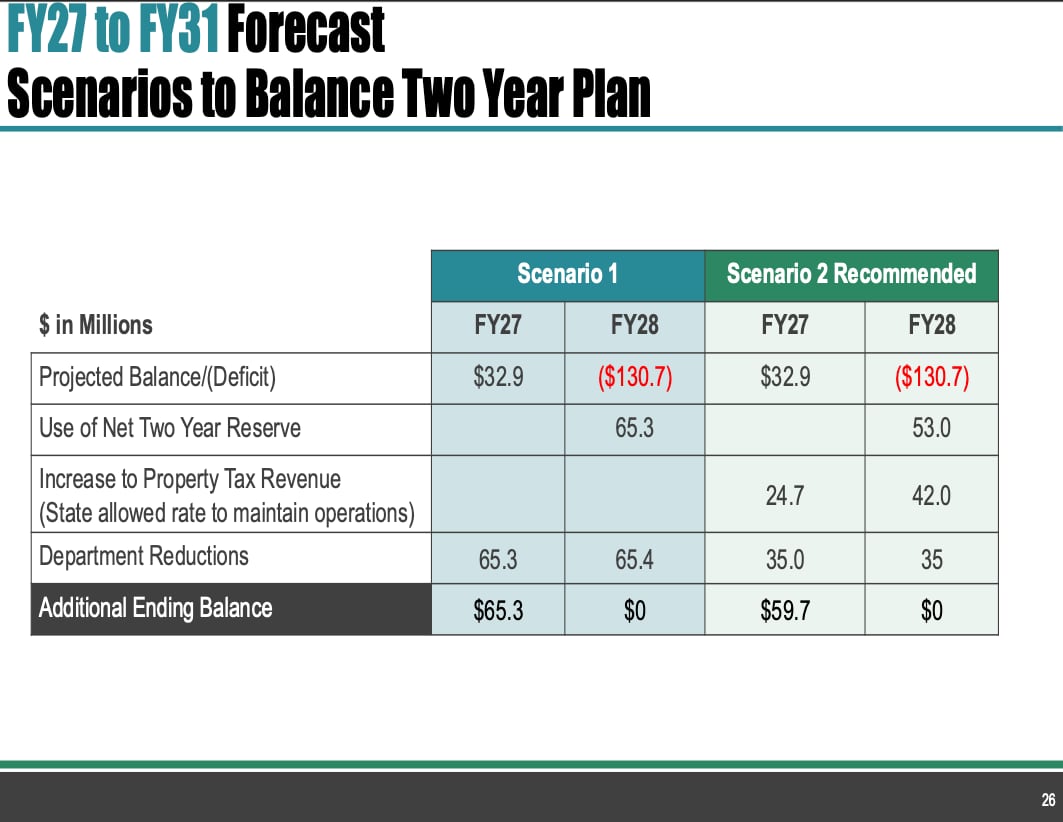
Officials say closing the remaining gap would require tough cuts. Staff noted that even with the maximum allowable tax increase, the city could still need about $70 million in spending reductions over the next two years, and an alternative scenario presented on May 6 showed a plan to close a $130.7 million hole entirely through spending cuts. Where those reductions would land isn’t finalized, though presentation materials point toward trimming “non-core, non-mandated services” while trying to minimize impacts on vulnerable populations.
Bexar County’s forecast looks a bit more buffered but still signals pain ahead. County projections show the general fund avoiding a deficit until FY 2029, at which point a shortfall could reach roughly $145 million. Budget and Finance Director Tanya Gaitan says the county’s sizable fund balance provides a cushion, but it isn’t a long-term solution when revenue growth stalls.
Gaitan described the recent run of rising property values and the choices that followed: “So in the last couple of years, we’ve seen some significant property tax growth, in value specifically. So we were able to grow pretty significantly with brand new positions, new programs for the community,” she told KSAT. “But this year it’s starting to level out, where we’re not going to be able to grow. So the county is used to adding a pretty significant amount. This year, we’re looking to actually slow that down significantly.”
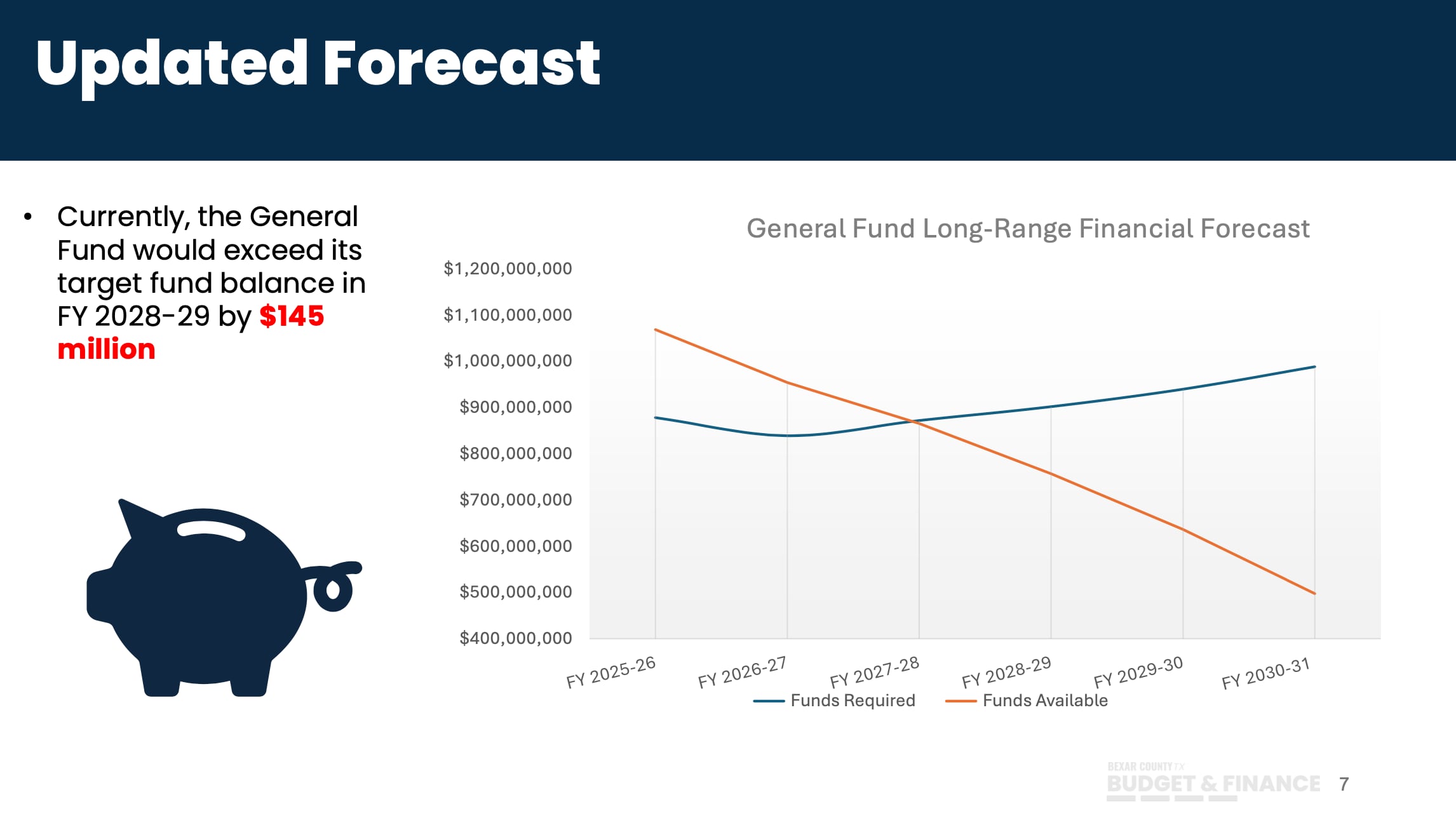
Gaitan told commissioners the county is not actively planning tax increases yet but will pause new spending and assess priorities. Earlier belt-tightening steps listed to the commission included measures many taxpayers will recognize as common fiscal controls:
- No cost-of-living adjustments
- Freeze vacant civilian positions
- No new program changes
- No new capital projects
- Adjust health insurance plans for employees
Both Bexar County and the City of San Antonio use budget years that run from October 1 through September 30, and officials say the next months will be crucial as appraisal rolls are certified and final decisions on rate or cuts loom.