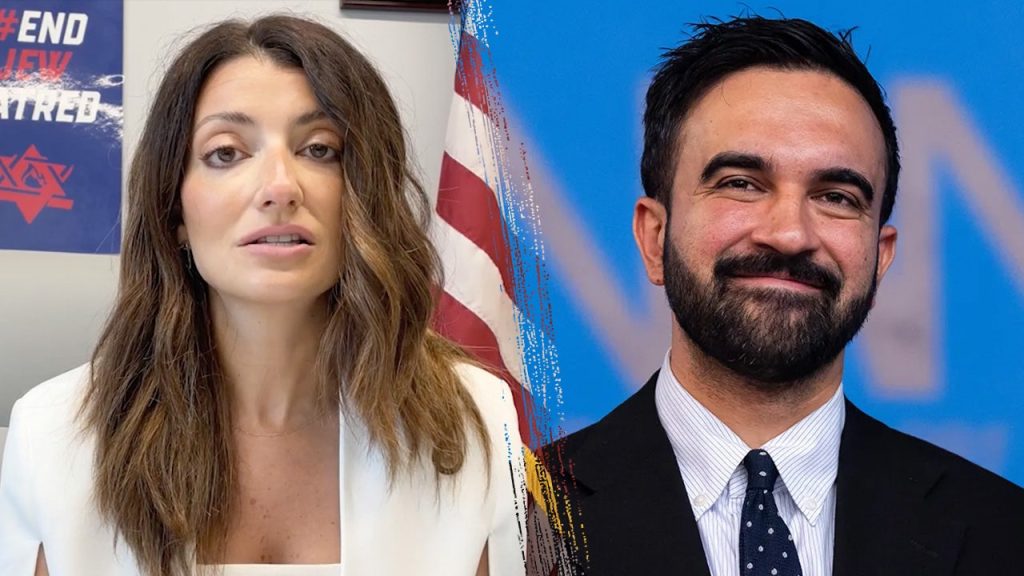
New York City Councilwoman Inna Vernikov is publicly attacking Mayor Zohran Mamdani’s new Mayor’s Office to Combat Antisemitism, arguing it offers no real help as anti-Israel protests have spilled into neighborhoods and near synagogues. Vernikov, who co-chairs a bipartisan antisemitism task force with Councilman Eric Dinowitz, says the mayor’s office lacks basic public tools and that Jewish New Yorkers feel exposed after recent graffiti and demonstrations in Queens, Manhattan and Brooklyn.
Vernikov has been blunt about the office’s shortcomings, saying “Mayor Mamdani continues to gaslight the Jewish community in New York City by creating a black hole of an office — the Mayor’s Office to Combat Antisemitism — an office that has no website, no phone number, no resources.” She told reporters the blank-slate setup leaves people unsure who to contact when they are threatened.
After attending a hearing, Vernikov walked away convinced the office is not living up to its name; “the office does nothing to combat antisemitism,” she said. For a city facing a rise in threats and vandalism, a symbolic title without an active response feels like little comfort to those targeted.
Access problems compound the sense of neglect. Vernikov pointed out, “There’s nobody to reach out to, there’s nobody to talk to. The public has no sense of how this office can help Jewish New Yorkers.” She added that people who do try to get help “really don’t get a response that makes them feel safer or their children feel safer.”
Vernikov serves as co-chair of a bipartisan task force to fight antisemitism alongside Councilman Eric Dinowitz, a separate effort established earlier this year to fill gaps left by the mayor’s office. That task force has pushed for clearer steps and visible protections that some residents say the mayor’s team has not provided.
The city’s page announcing the office lists a listening tour and a handful of public events that officials say will inform a future strategy on antisemitism. The calendar includes community visits and meetings, but critics argue those actions are a poor substitute for a staffed, reachable agency that can coordinate security and responses in real time.
Among the items on the outreach list are Mayor Mamdani’s visits to the Jewish Children’s Museum in Crown Heights, Passover Seders, a food distribution with Chasdei Lev and an Orthodox Community Leaders Roundtable. Those gestures matter to some leaders, but they do not erase concerns that protesters are moving too close to houses of worship and community centers.
Recent weeks have seen swastika graffiti in Queens and protests outside a Manhattan synagogue as well as clashes in a Jewish Brooklyn neighborhood, all of which have unnerved local residents. After the protest outside Park East Synagogue, Mamdani said his administration was committed to ensuring New Yorkers could safely enter or exit a house of worship, while also saying he “firmly” disagreed with the event taking place inside the synagogue — a stance critics read as siding with demonstrators over congregants.
Mamdani has defended his broader critique of some events tied to property sales, saying, “When we have a real estate expo that is promoting the sale of land which includes the sale of land in the occupied West Bank, in settlements that are a violation of international law, that is something that I firmly disagree with.” He added that he saw those land sales as part of an effort tied to displacing Palestinians from their homes.
Many Jewish New Yorkers have told Vernikov they fear for neighborhood safety, and she insists the fight here is about intimidation rather than free speech. “This has nothing to do with the First Amendment. It has everything to do with trying to intimidate and harass Jews, and that’s all these protesters are fighting for,” she said, pushing back on claims that limiting protest locations equals limiting rights.
On policy, Mamdani vetoed a bill that would have created a buffer zone around schools to shield them from protests, even as the City Council approved its own version of a measure to protect houses of worship that the mayor did not veto. The moves have left advocates and elected officials trading sharp public criticism over whether the city is doing enough to protect vulnerable communities.
Mamdani’s office was contacted for comment but did not provide a substantive public response addressing the specific complaints about staffing and direct public contact for the Mayor’s Office to Combat Antisemitism.