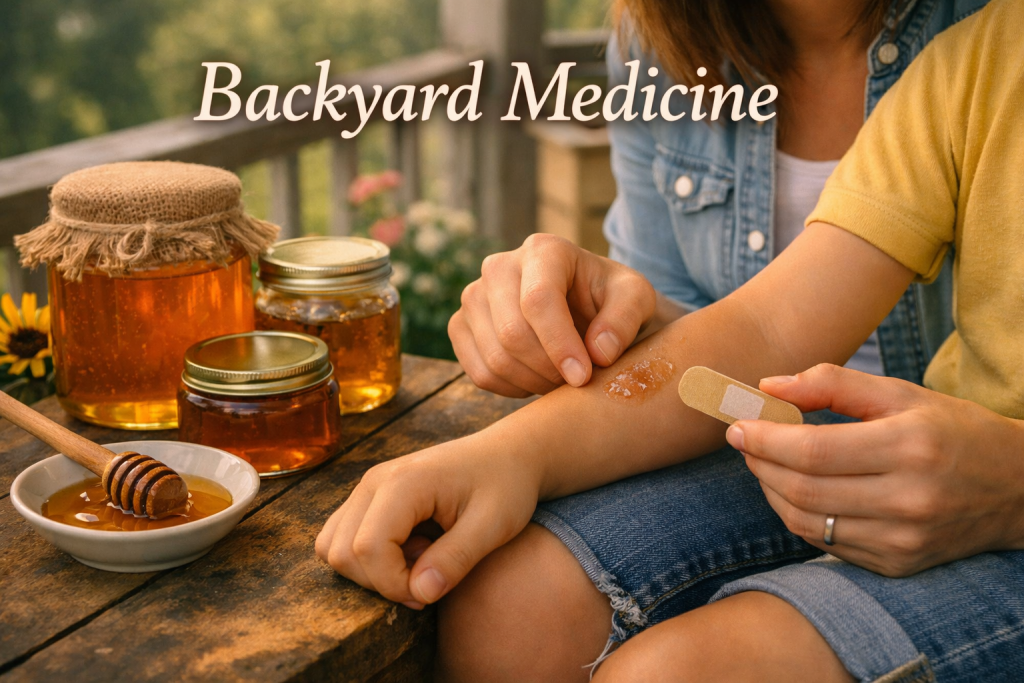
Most people think of honey as a sweet treat — something you drizzle on biscuits or stir into tea. But every now and then, a batch of honey reminds you that nature is doing far more behind the scenes. Last year, when the University of Texas at San Antonio (UTSA) released their statewide honey study, we got one of those reminders.
Because tucked inside the charts and lab results was a simple name: John Wright — and next to it, the scores for honey harvested right from our North Texas backyard. And those scores weren’t just good. They were exceptional.
A Backyard Harvest With Real Medicinal Strength
When you keep bees, you get used to small miracles — watching nectar turn into honey, watching a colony rebuild itself after a storm, watching flowers you didn’t plant become part of your harvest. But seeing your honey measured in a statewide study adds a whole new layer of appreciation.
Because when UTSA tested our honey, the results showed something remarkable: the honey we pulled from our own backyard wasn’t just delicious… it’s naturally potent.
Our honey demonstrated:
- Strong antibacterial strength — 17
- High antioxidant power — 75
- Exceptional biological activity — 80
You don’t need to be a scientist to appreciate what that means. It means our honey carries real, measurable qualities that people usually associate with specialty medicinal honeys — all produced by bees working the land we walk every day.
How Texas Honey Is Beginning to Stand Shoulder‑to‑Shoulder With Manuka
For years, Manuka honey has been the heavyweight champion of medicinal honey — the one people talk about, the one sold in boutique shops, the one wrapped in labels that promise healing and purity. It’s easy to assume that only far‑off places like New Zealand can produce honey with that kind of strength.
But the UTSA study tells a different story.
When researchers lined up all the Texas honey samples — dozens of them from every corner of the state — a pattern started to emerge. Texas honey isn’t just flavorful. It isn’t just local. It’s showing real medicinal promise.
Across the board, many Texas honeys demonstrated strong antibacterial activity, high antioxidant levels, and impressive biological potency. And our honey — with its strong antibacterial score, high antioxidant level, and exceptional biological activity — sits comfortably among the top performers.
That’s the part that makes people pause.
Because it means medicinal honey isn’t something you have to import. It isn’t something that only grows in distant mountains or coastal forests. According to the UTSA research, Texas honey — especially from healthy, diverse forage — can hold its own.
And our backyard honey is part of that story.
It’s proof that powerful, bioactive honey can come from a small homestead, a patch of prairie, a handful of wildflowers, and a beekeeper who pays attention. It shows that Texas isn’t just producing good honey — it’s producing honey with measurable strength, the kind people seek out for wellness and healing.
In other words: You don’t have to travel to New Zealand to find medicinal honey. Sometimes, it’s waiting for you in your own backyard.
Why Local Honey Matters
Raw local honey often costs a little more — and there’s a reason for that. When you buy honey from a local beekeeper, you’re not just paying for sweetness. You’re paying for:
- Purity — honey that hasn’t been overheated, filtered to death, or blended with syrups
- Traceability — you know exactly where it came from and how it was handled
- Freshness — honey that hasn’t sat in a warehouse for months
- Local forage — the unique mix of wildflowers, trees, and native plants that give honey its character
- Natural benefits — the antibacterial, antioxidant, and biological activity that raw honey retains
The UTSA study shows that Texas honey — real Texas honey, harvested by real beekeepers — carries meaningful natural strength. When you choose local honey, you’re choosing those benefits. You’re choosing quality over quantity, and connection over convenience.
And sometimes, you’re choosing a product with genuine medicinal potential.
A Sweet Reminder of What’s Possible
So the next time you twist open a jar of local honey, remember: You’re not just tasting sweetness. You’re tasting strong antibacterial activity, high antioxidant power, and exceptional biological potency — all created by bees working the land you walk every day.
That’s the kind of story worth sharing.
🌿 Stay Connected
Explore more stories and homestead updates at TwoDoves.com. Sign up for the Two Doves Insider newsletter to get seasonal tips, behind‑the‑scenes updates, and many things we like to share delivered straight to your inbox.
And if you’d like to dive deeper into the science behind all of this, UTSA’s Honey Pathways Research Program publishes ongoing studies, charts, and statewide results that highlight just how powerful Texas honey can be. It’s a great resource for anyone curious about the growing field of medicinal honey and the role our local bees are playing in it.