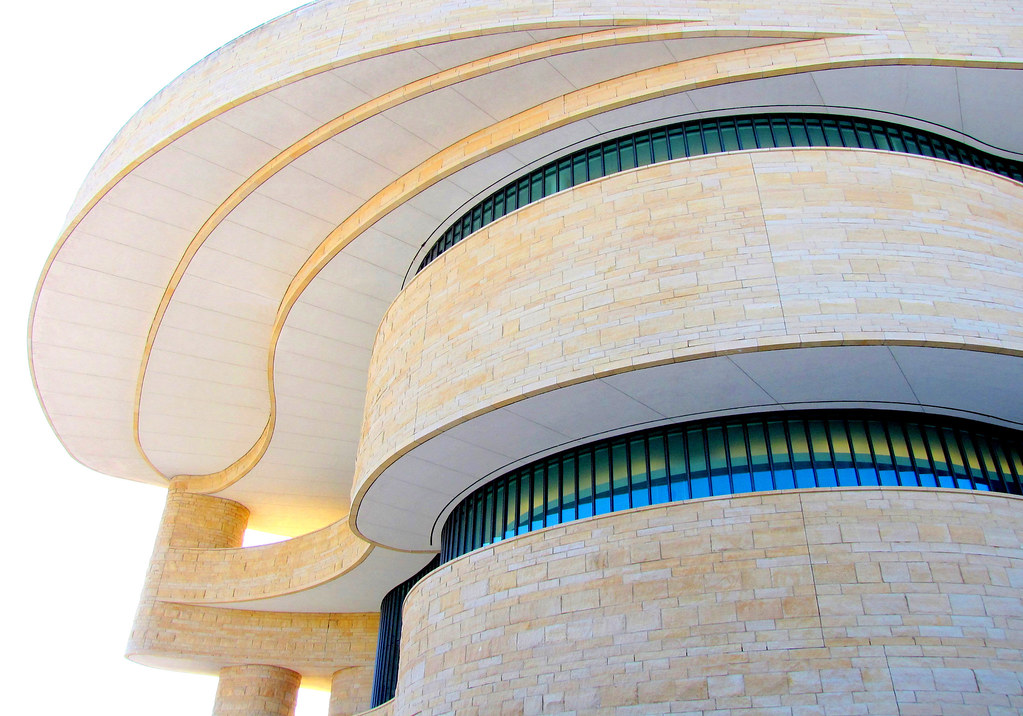
There is a moment, just after you step through the main entrance of the National Museum of the American Indian on the National Mall, when the building itself stops you cold. The curvilinear limestone exterior, carved to evoke wind-sculpted canyon walls, gives way to a soaring interior atrium flooded with natural light. It does not feel like any other museum in Washington. That is entirely the point.
Opened in 2004 and nestled at the eastern end of the Mall near the Capitol, the museum is a Smithsonian Institution gem that draws far fewer crowds than its neighbors — which means you can actually breathe, linger, and think. The architecture alone, designed in collaboration with Native architects and community members, communicates something important before you ever read a single placard: this space was built with intention, with consultation, and with deep respect for the living cultures it represents.
The permanent collection spans more than 12,000 years of history and encompasses the histories, traditions, and contemporary lives of Indigenous peoples from across the Western Hemisphere — not just North America, but Central and South America as well. What strikes you immediately is how the museum refuses to freeze Native peoples in the past. The exhibits move fluidly between ancient ceremonial objects, colonial-era treaties, and present-day Indigenous artists, athletes, and activists. You leave understanding that these are not historical communities but thriving, evolving cultures with urgent stories to tell right now.
One of my personal favorites is the Nation to Nation: Treaties Between the United States and American Indian Nations exhibition. Seeing original treaty documents under glass — many of them violated within years of being signed — is quietly devastating in the best way a museum experience can be. It reframes American history in ways that stick with you long after you leave the building.
Plan to spend time in the Mitsitam Native Foods Café on the lower level, which is genuinely one of the most interesting dining experiences on the Mall. The menu rotates through regional Indigenous cuisine traditions — think frybread tacos, cedar-planked salmon, posole, and three-sisters stew. It is casual, affordable, and surprisingly thoughtful. Grab a window table and watch the outdoor native plantings sway along the reflecting pool outside.
The museum also hosts rotating special exhibitions, seasonal cultural demonstrations, and frequent weekend programming that can include live music, dance performances, and hands-on workshops. Check the calendar on the museum’s website before you visit, because stumbling upon a drum circle in that luminous atrium is the kind of unexpected afternoon that Washington delivers when you go looking for it.
Admission is free, as with all Smithsonian museums, and the location on Independence Avenue SW makes it an easy addition to any Mall itinerary. But do yourself a favor: do not treat it as a quick stop between monuments. Give it a full morning. The stories inside deserve that much.