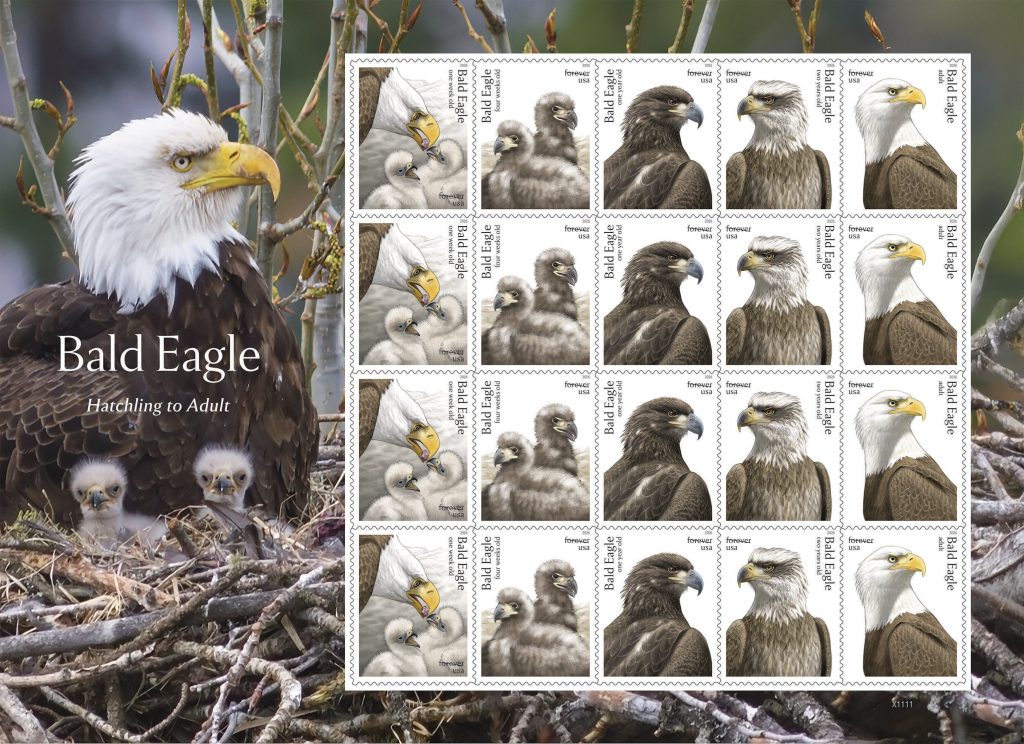
A new stamp series captures the bald eagle in striking detail, tracing the bird from a downy hatchling to the white-headed adult that has become a symbol across the United States. The visuals draw you into five distinct life stages and invite collectors, students, and casual observers to think about wildlife up close. These images show how a single species changes over time, and why the bald eagle still matters in our national story.
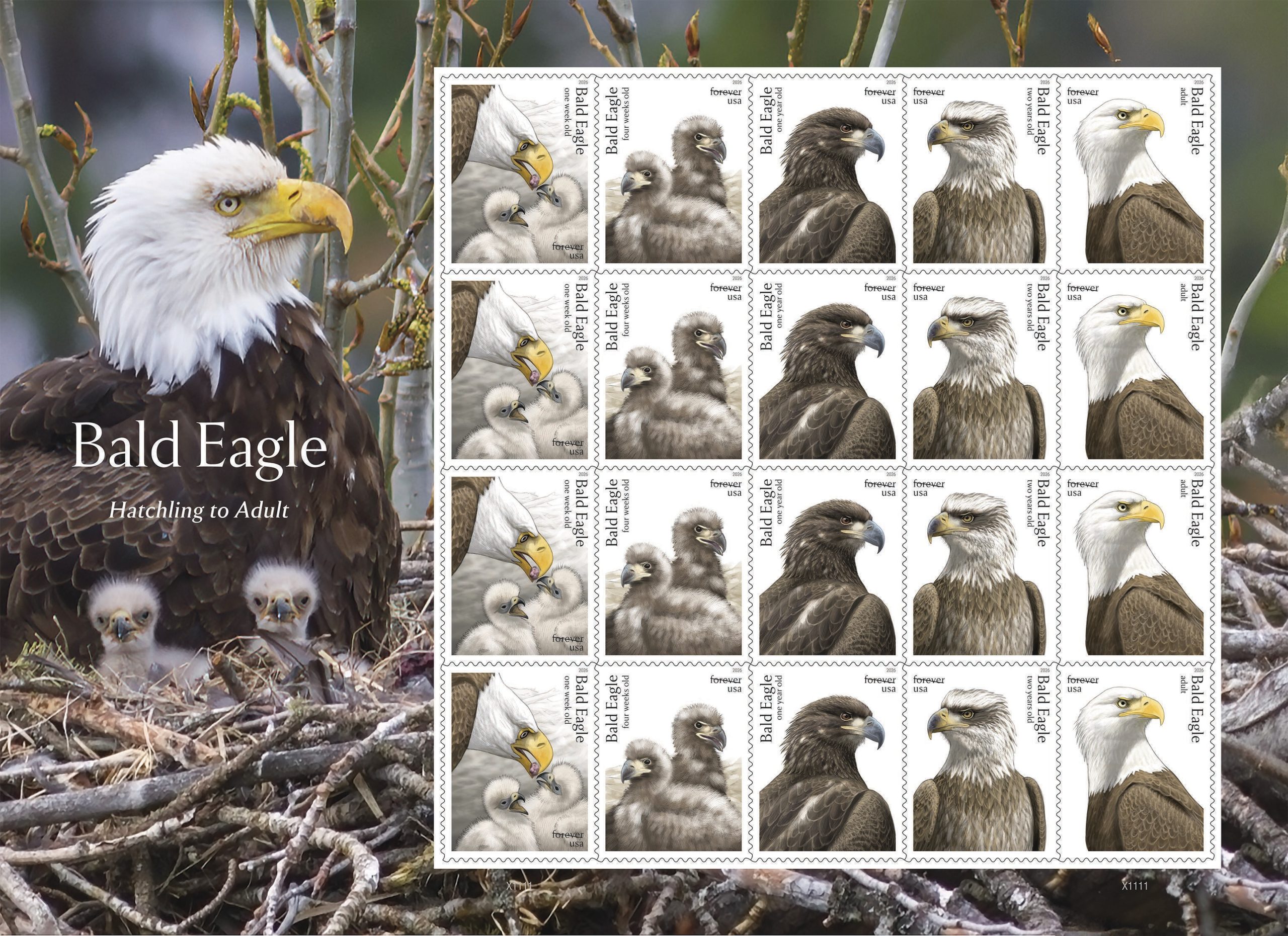
The artwork on these stamps doesn’t just look nice. Each vignette is a short lesson in biology, behavior, and survival, giving people a sequence they can follow and recognize. Seeing the hatchling, the growing juvenile, and the full adult side by side makes the life cycle feel immediate and human in scale. That kind of clarity is rare in small-format art, and it makes the stamps useful beyond the mailbox.
Designers leaned into realism while keeping the images bold enough to read at a glance. That balance matters when an image has to carry meaning at about one square inch. Colors are richer, feather textures are clear, and the contrast between the young bird’s mottled plumage and the adult’s white head is deliberately dramatic. The result is a miniature gallery that still tells a strong story from the first glance.
For collectors, these stamps are a tidy narrative set. A single sheet becomes a timeline you can hold, frame, or trade, and that physicality matters in a digital age. Stamp enthusiasts will note variants and print runs, and casual buyers will still find something to admire. The way the series is grouped encourages people to keep them together, which helps preserve the intended sequence.
There’s a conservation message tucked under the art. By showing the full arc of growth, the series quietly points to the challenges a young bird must overcome to reach adulthood. People who grew up with the bald eagle as a national symbol can watch that transformation and think about habitat, food sources, and the human choices that affect survival. It’s an effective nudge toward awareness without feeling preachy.
Teachers and parents can use the stamps as a hands-on tool to explain development in nature. A simple activity of lining the stamps in order can kick off a lesson about food chains, nesting behavior, or migration. That practical classroom value gives this issue a life beyond philately and can spark curiosity in kids who might not otherwise notice the natural world outside their screens.
Technically, the challenge of printing tiny, detailed images is worth noting. Achieving fine feather detail and subtle shading at postage-stamp scale required careful color separations and precise presses. That technical skill is part of what makes modern stamps interesting: they are small feats of graphic engineering as much as they are pieces of art. When the print quality matches the ambition of the design, the stamps end up pleasing both eyes and hands.
The choice of the bald eagle also taps into deeper cultural resonance. As an emblem, the bird carries weight, and these images use that weight to invite reflection rather than demand it. You don’t have to be a naturalist to appreciate the sequence, and you don’t have to belong to a club to be moved by the sight of a fledgling taking its first flight. That universal readability helps the series connect with a wide audience.
Last, this set is a reminder that small everyday objects can carry meaning and spark conversation. A piece of mail becomes a moment of encounter with nature, and a stamp sheet can be a bridge between curiosity and learning. Whether they end up on envelopes, in albums, or framed on a wall, these stamps do something rare: they use ordinary materials to tell a quietly powerful story about growth and endurance.