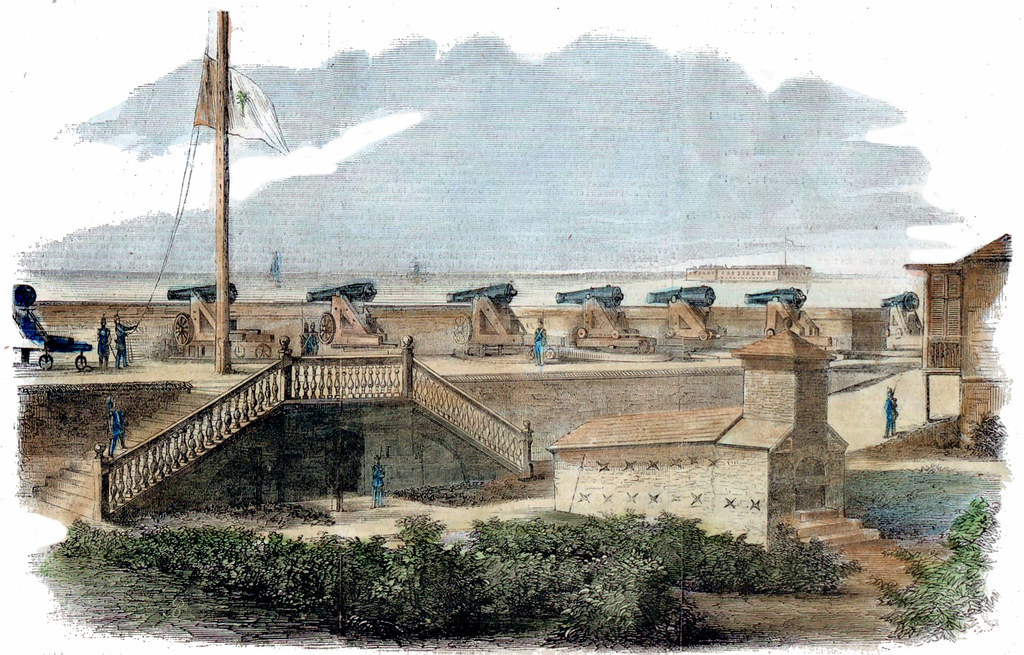
There is a moment, standing on the salt-swept ramparts of Fort Moultrie on Sullivan’s Island, when the Atlantic stretches out before you and three centuries of American history press quietly against your back. It is the kind of moment that reminds you why you travel in the first place — not just to see new places, but to genuinely feel them.
Fort Moultrie National Historical Park sits just across the harbor from downtown Charleston, a short drive over the Ben Sawyer Bridge onto Sullivan’s Island. It is managed by the National Park Service and, remarkably, admission is either free or just a few dollars per person — an almost absurd bargain for what you get. The fort is part of the larger Fort Sumter and Fort Moultrie National Historical Park network, but while Fort Sumter tends to draw the bigger crowds, Moultrie is where you can linger, explore, and really absorb the layered story of this coastline.
The site spans nearly three hundred years of coastal defense history, from the original palmetto-log fort that famously repelled a British naval assault in June 1776 — a victory so unlikely it became one of the sparks of American Revolutionary confidence — all the way through World War II gun batteries that still loom impressively over the dunes. You can walk through each distinct era of the fortification, watching the architecture and engineering shift with the times. There are massive Civil War-era earthworks, sleek Endicott-period concrete batteries, and interpretive exhibits inside a well-designed visitor center that put everything in context without overwhelming you.
What makes Fort Moultrie genuinely special, beyond the history, is the setting. Sullivan’s Island is one of those rare places where the natural environment and the historical weight of a site amplify each other. Sea oats sway along the edges of the fortifications. Brown pelicans glide past. The air smells like salt and warm pine. On a clear day, you can see Fort Sumter sitting in the middle of the harbor, and the visual connection between the two sites gives you an almost visceral sense of how this harbor shaped American history.
Edgar Allan Poe was stationed at Fort Moultrie in the late 1820s, and the island inspired his short story The Gold-Bug. There is something wonderfully strange about standing where Poe once stood, looking at the same water he looked at, knowing this quiet barrier island sparked his imagination. The park acknowledges this piece of literary history, which adds yet another layer to an already rich visit.
Plan to spend at least two hours here, more if you are the type who reads every interpretive panel (no shame in that — they are genuinely well-written). Wear comfortable shoes because the grounds are expansive and the terrain varies. Bring water, especially in the warmer months, and consider arriving in the morning before the South Carolina sun climbs too high. After your visit, Sullivan’s Island’s small commercial strip is just a short walk or drive away, with a handful of low-key restaurants and the kind of beach town atmosphere that feels refreshingly unhurried.
Fort Moultrie does not shout for your attention the way some Charleston attractions do. It simply stands there, patient and extraordinary, waiting for visitors who are curious enough to make the short trip across the harbor. Once you go, you will wonder why it took you this long.