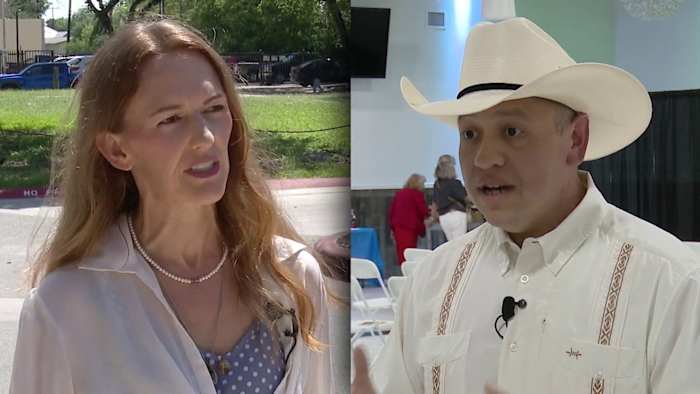
Maureen Galindo and Johnny Garcia are locked in a heated Democratic runoff for U.S. Congressional District 35 in Texas, a race now tangled in allegations of antisemitism and arguments over who best represents Jewish voters. The newly redrawn district covers San Antonio and nearby cities including Cibolo, Converse, Schertz, Seguin, New Braunfels and Floresville, and both campaigns are scrambling to win hearts and clarify the new lines before early voting starts May 18 and Election Day on May 26.
The back-and-forth between the candidates has moved beyond policy and into personal accusations, with Galindo leveling sharp claims about outside influence and Garcia firing back with rejects and warnings. Galindo has been explicit in her rhetoric, saying, “I stand with Jews, and the Jews are saying that Zionists are not real Jews.” That line set off alarm bells and pushed the debate into questions about where criticism ends and prejudice begins.
Galindo has gone further in accusing her opponent of being financially beholden to what she calls powerful outside interests, saying, “He’s funded by the Zionists who control San Antonio.” She added a provocative claim: “I know that that sounds like a conspiracy theory, but we have the Epstein files now. We have all of the evidence.” Those words have stirred concern among voters who want politics without conspiracy mongering.
Johnny Garcia has been blunt in his reply, calling Galindo’s assertions conspiracies and labeling the comments antisemitic. He told supporters, “It just goes to show her growing conspiracy theories and her antisemitic theories as well,” and warned that such language has no place in the party. Garcia went further to emphasize norms and democracy, saying, “We cannot allow this in our party. We need to stand up and condemn this type of rhetoric as we see antisemitic attacks on the rise throughout the nation, and more so than anything it’s undemocratic.”
From a Republican viewpoint, fights like this are a reminder that candidates must be accountable for the words they use and the divisions they sow, no matter their party label. Voters care about bread and butter issues and honest representation, not conspiracy theories that target entire communities. When the debate slips into scapegoating, people lose faith in public life and turnout suffers.
The Jewish Federation of San Antonio weighed in to condemn what it called the spread of damaging tropes, writing in part, “Divisive and hateful rhetoric targeting the Jewish community has no place in our civic life.” That community response put pressure on local activists and party officials to push back against rhetoric that inflames rather than explains. For many residents, the immediate worry is restoring a basic decency to campaign discourse.
Beyond the tension over words, both campaigns face the practical challenge of educating voters about the redrawn district. Garcia pointed out how quickly confusion can spread, noting, “Just a couple of days ago, I encountered somebody that didn’t know they were redrawn into this district.” With new lines and new neighborhoods included, candidates are trying to introduce themselves and outline their platforms while also answering these explosive accusations.
Local organizers and party officials are urging calm and a return to issues as the calendar tightens. Early voting begins May 18 and Election Day arrives on May 26, dates that focus attention on outreach and basic voter information. In a competitive Democratic runoff, these final days will test which candidate can turn concern into votes while convincing ambivalent residents that the campaign can govern without descending into further division.