Amazon launched Amazon Now, a new 30-minute delivery option that promises grocery staples and urgent items in minutes. The rollout already covers cities like Atlanta, Dallas-Fort Worth, Philadelphia and Seattle, with expansion moving into Austin, Houston, Minneapolis, Orlando, Phoenix, Denver and Oklahoma City. Prime subscribers and non-members face different fees, and the program leans on compact fulfillment sites near neighborhoods to speed things up. This article breaks down how Amazon Now works, what it carries and what it costs so you can judge whether 30-minute delivery fits your life.
Amazon Now is Amazon’s fastest consumer-facing shipping tier to date, built for people who want essentials without waiting. Orders appear at your door in roughly half an hour thanks to a network of smaller fulfillment points placed close to dense residential and business areas. That proximity is the point: shorter travel from shelf to doorstep means faster handoffs and fewer delays.
The service is live in several major metropolitan markets, including Atlanta, Dallas-Fort Worth, Philadelphia and Seattle, while dozens more cities are on the expansion list. Places singled out for rollout include Austin, Houston, Minneapolis, Orlando, Phoenix, Denver and Oklahoma City. If you live in one of those areas, you may already see the 30-minute option when you shop on the Amazon app.
Amazon says it gets packages to customers quickly by running compact inventories out of these neighborhood locations rather than huge, distant warehouses. Those sites hold the fast-moving goods customers typically need in a hurry so couriers can pick up small orders and hop straight to local addresses. This model reduces transit time but also requires dense coverage to be reliable across an entire metro area.
Pricing is straightforward but favors Prime members. Prime shoppers pay a $3.99 fee for the 30-minute service, while non-members face a $13.99 charge for the same speed. Orders under $15 incur a small-order fee: $1.99 for Prime members and $3.99 for non-members. For many households the math points to Prime if you expect to use ultrafast delivery regularly; a Prime subscription runs $14.99 per month or $139 per year.
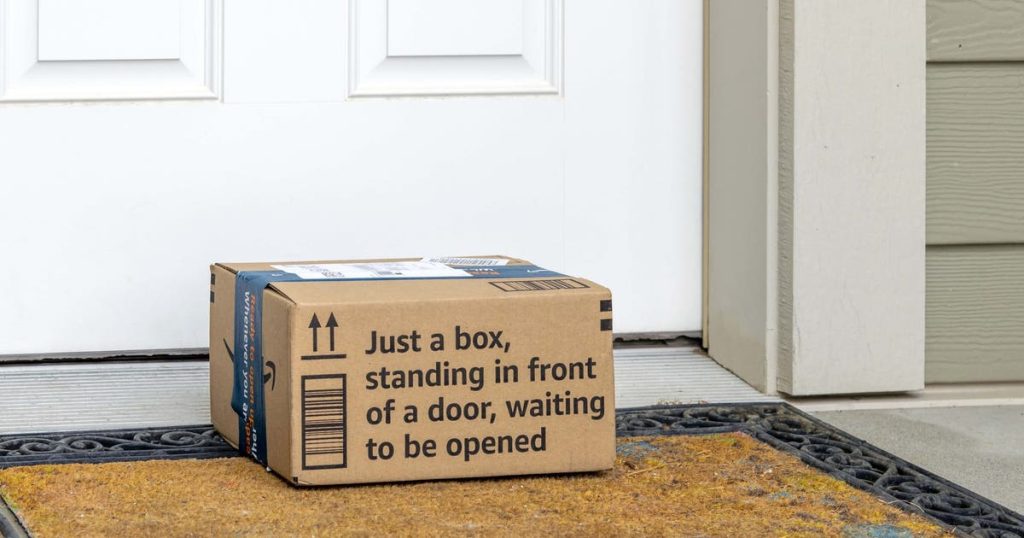
Inventory focuses on urgent, everyday items rather than big-ticket purchases or bulky home goods. Categories include dairy and eggs, fresh produce and bakery, health and personal care, baby and pet supplies, some electronics, and alcohol where local law allows. You might recognize the familiar scene of a delivery left on a porch as “just a box, standing in front of a door waiting to be opened” — Amazon Now is built to make that moment happen much sooner.
Amazon already operates other fast options alongside this new 30-minute window, including 1-hour and 3-hour deliveries in select spots and drone experiments in a handful of locations. Same-day delivery remains available in thousands of cities and towns, so Amazon Now slots in as the top speed for people who value immediate access. The suite of choices means customers can trade price for speed depending on how urgently they need something.
There are practical considerations beyond convenience. Ultrafast delivery can change shopping patterns, nudging people to order single items more frequently instead of bulk shopping. That may be handy for forgotten ingredients or an unexpected need, but it can also increase packaging and delivery traffic in neighborhoods. Households and local planners will need to weigh those trade-offs as the service spreads.
For shoppers thinking about whether to use Amazon Now, focus on two things: what you buy and how often you buy it. If you regularly need last-minute groceries or emergency supplies, the modest Prime fee can pay off fast. If you only occasionally need something in a hurry, compare the delivery charge and small-order fee against the cost and frustration of running to a store.
Amazon’s expansion of 30-minute delivery is a big bet that many consumers will pay for speed. If Amazon can keep the promise of consistent rapid arrivals in more cities, this will change how people shop for everyday items. Keep an eye on availability in your metro and on how the service adjusts fees and inventory as it scales.