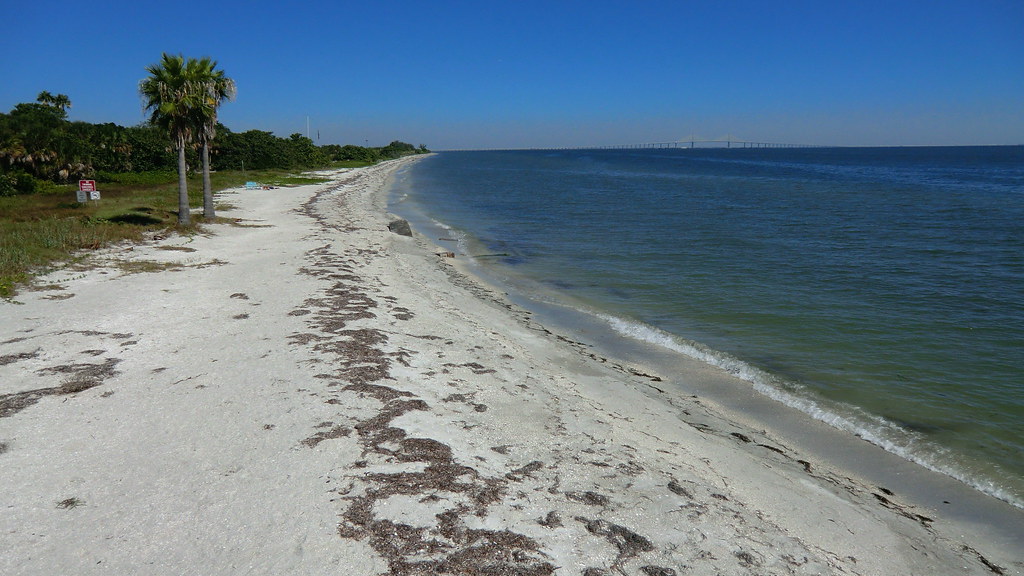
There are places you visit once and spend the rest of your life trying to describe to people who weren’t there. Fort De Soto Park, tucked into the southern tip of Pinellas County about 25 minutes from downtown St. Petersburg, is exactly that kind of place. It has a way of making you feel like you’ve stumbled onto something the rest of the world hasn’t quite figured out yet — even though it consistently ranks among the top beaches in the entire country.
The park sprawls across five interconnected keys at the mouth of Tampa Bay, totaling over 1,100 acres of preserved coastal wilderness. When you drive across the causeway and feel the salt air hit you for the first time, something shifts. The skyline disappears behind mangroves. The pace drops. You’re no longer on the way somewhere — you’ve arrived.
The North Beach swim area is the crown jewel, and it earns every bit of its reputation. The sand is powdery white and fine in a way that seems almost unfair, and the Gulf water runs clear and shallow for a long way out, making it ideal for families with small children or anyone who simply wants to wade in without a care in the world. There’s no resort backdrop here, no row of beach bars competing for your attention. Just open sky, gentle waves, and the occasional pelican cruising low overhead like he owns the place — which, frankly, he does.
But Fort De Soto is much more than a beach. The park contains over seven miles of paved multi-use trails winding through coastal scrub and along the waterfront, making it one of the finest cycling and walking routes in the entire Tampa Bay region. Rent a bike at the park’s own rental concession near the ferry dock and spend a few hours exploring at your own pace. You’ll pass tidal flats alive with shorebirds, historic gun batteries from the Spanish-American War era, and quiet fishing piers where locals cast lines in companionable silence.
Speaking of fishing — the two fishing piers here are serious business. The Bay Pier and the Gulf Pier attract anglers year-round chasing snook, redfish, flounder, and sheepshead. No boat required, just a Florida fishing license and a little patience.
The park also sits along one of the most significant migratory bird corridors on the Gulf Coast. During spring and fall migration, the trees practically shimmer with warblers, tanagers, and orioles passing through. Birders come from across the country for it, and if you’re not a birder yet, a morning walk through the hammock area here might just convert you.
There’s a well-maintained campground on site too, with both tent and RV sites, and reservations fill up fast — especially in winter and spring. If you can swing a night or two, do it. Waking up with nothing but birdsong and the smell of salt water is the kind of reset your nervous system has probably been asking for.
The entrance fee is modest — just a few dollars per vehicle — and the park is open every single day of the year. Whether you come for a full beach day, a sunset paddle in a rented kayak, a history lesson among the old fort ruins, or simply a long walk with nowhere in particular to be, Fort De Soto delivers something genuine. This is Florida the way it used to be, and somehow, remarkably, still is.