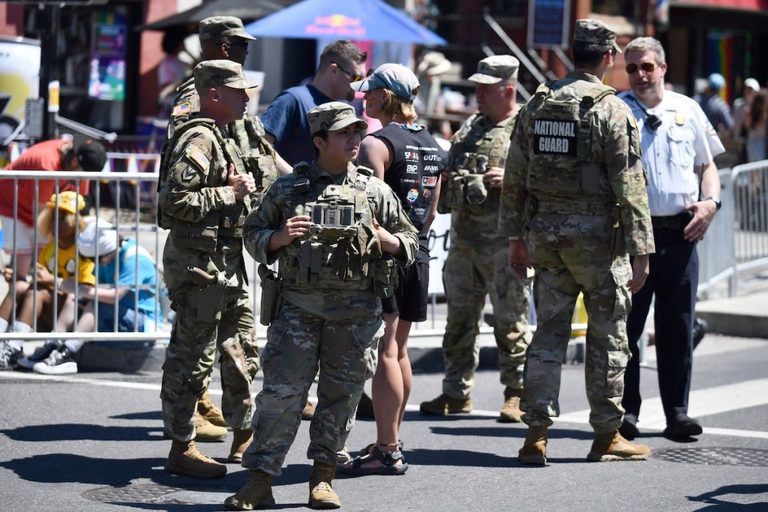
A Washington, D.C. think tank’s research reveals that President Donald Trump’s deployment of the National Guard to the nation’s capital did not make the city safer. The study, conducted by the Niskanen Center, found that the deployment of thousands of soldiers last August did not reduce crime rates, but rather accelerated a downward trend already in place due to local policing efforts.
Deployment Strategy
The National Guard’s presence was focused on high-visibility public spaces, such as tourist corridors, transit hubs, federal buildings, monuments, parks, and public spaces. However, this strategy did not align with the geography of violent crime, which is more deeply rooted in interpersonal dynamics and social network conflicts.
According to the study, the National Guard’s deployment was not a form of hotspot policing, but rather a large, sudden, and independently operated surge in uniformed presence. This approach was not informed by crime data and was instead concentrated in areas where the public life of the city takes place.
Local Reaction
Local residents and officials have expressed concerns about the National Guard’s presence, citing a lack of improvement in public safety and a sense of unease among community members. Advisory Neighborhood Commissioner Matthew Holden stated that the National Guard’s presence makes residents feel uncomfortable and that there is no clear purpose or local oversight.
Other residents, such as John-Paul Perotta and Joy Masha, have also expressed their dissatisfaction with the National Guard’s presence, describing it as feeling like living under occupation and causing anxiety.
Cost and Effectiveness
The study notes that the National Guard’s deployment costs nearly $1.65 million per day, with an estimated annual cost of over $602 million. In contrast, the approved operating budget for local police is $599 million. The study concludes that the National Guard’s presence did not have a significant impact on reducing crime rates, and that the city’s decline in crime is more closely related to the strategic placement of police officers.
Original reporting: The Washington Informer — read the source article.