On June 28, 1776, the Declaration of Independence finally reached Congress. Delegates read the draft, then ordered it to “lie on the table.” No final vote. No adoption. No signatures.
War Erupts
In Philadelphia, Congress received the words that would explain independence to the world. In New York, Thomas Hickey went to the gallows. In Charleston Harbor, British warships opened fire on Fort Sullivan.
The Declaration entered the room on June 28. The Journals of the Continental Congress for June 28 say the committee appointed to prepare a Declaration of Independence “brought in a draft,” which Congress read and ordered to lie on the table.
Historic Context
For more than two weeks, Thomas Jefferson’s draft had moved through a small circle that included John Adams and Benjamin Franklin. On June 28, the document reached the full Congress.
The Library of Congress describes the scene in one historical image: Jefferson places the draft on the table, Franklin sits nearby, John Hancock sits behind the table, and Adams, Roger Sherman, and Robert R. Livingston stand behind Jefferson.
Congress would not take up the independence question again until Monday, July 1. After Congress read the draft and ordered it to “lie on the table,” delegates turned back to the business already in front of them.
The Journals of the Continental Congress record that Congress added Francis Hopkinson to the committee preparing a plan of confederation, directed the Secret Committee to sell 300 pounds of powder to Salem County, New Jersey, and appointed a committee to speak with Anthony Mosengeil about manufacturing sulphur.
Congress also advanced up to $100,000 to Pennsylvania’s Committee of Safety, roughly $3.8 million today under one CPI-based estimate, and dealt with appointments tied to small-denomination currency.
Then Congress adjourned until Monday.
New York and Charleston Harbor
In New York, Washington’s warning from the day before became reality. Thomas Hickey, a former member of Washington’s Life Guard, was executed on June 28 after a court-martial convicted him of mutiny, sedition, and treachery.
Washington’s June 28 general orders called it “The unhappy Fate of Thomas Hickey” and said he had been “executed this day.”
Washington wanted the army to learn from it. The general orders said he hoped Hickey’s death would serve as a “warning to every Soldier.”
A note in Founders Online cites a New York newspaper report saying the execution took place near Bowery Lane in front of “near 20,000 spectators.”
This was not a private punishment. It was a public message to an army waiting for the British to arrive.
Washington also wrote John Hancock on June 28 and described the plot more carefully. He said Congress had likely heard about the plot “forming among many disaffected persons” in New York to help the King’s troops when they arrived.
Washington said the matter traced back to Gov. William Tryon and that New York Mayor David Mathews appeared to be a “principal agent” or go-between.
Then Washington put the danger closer to home. “The plot had been communicated to some of the Army, and part of my Guard engaged in It,” Washington wrote in his June 28 letter to Hancock.
He said Hickey had been tried, sentenced to die, and would face execution that day at 11 o’clock.
Washington also said he hoped the example would “deter others from entering into the like traiterous practices.”
That was the point of making the execution public. Washington wanted soldiers to see the cost of treacherous contact with the enemy as New York waited for Britain’s next move.
Charleston Harbor
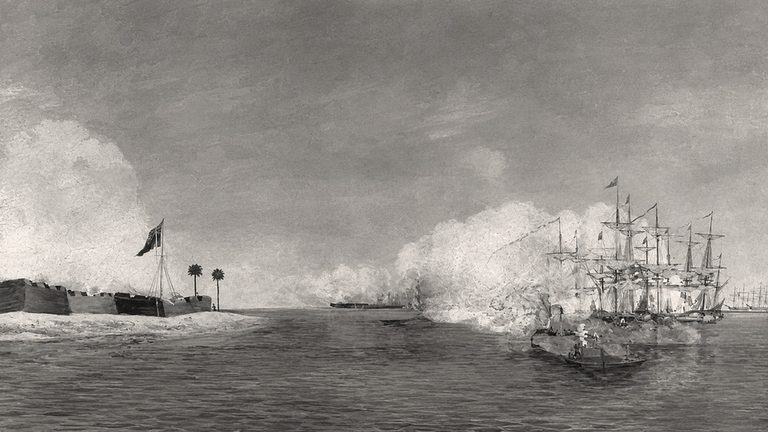
June 28 also brought a major fight in the South. British warships attacked Fort Sullivan in Charleston Harbor.
The National Park Service calls the Battle of Sullivan’s Island the first decisive Patriot victory over the British Royal Navy.
The fort was unfinished. South Carolinians and enslaved Africans had built it from palmetto logs and sand. Col. William Moultrie and the 2nd South Carolina Regiment defended it.
On June 28, British ships moved toward the fort and opened fire. The palmetto walls held.
A British account later printed in the Middlesex Journal captured how surprising the defense looked from the fleet. The writer said British ships sat before the battery for nine hours and had to retire “with great loss.”
He wrote that the Provincials held their fire until the ships came within “point blank shot,” then fired slowly but with effect.
“I can scarcely believe what I saw on that day,” the writer said.
The NPS says the soft, spongy palmetto trunks absorbed cannon fire instead of shattering. British ships failed to break the fort, and Charleston stayed in Patriot hands.
So while Congress read Jefferson’s draft in Philadelphia, Americans in South Carolina proved British naval power could be stopped.
Original reporting: The Dallas Express — read the source article.