There is a moment, just before you step inside the Modern Art Museum of Fort Worth, when the building itself stops you cold. You are standing at the edge of a perfectly still reflecting pond, and the long, low pavilions of glass and concrete seem to float on the water like something conjured rather than constructed. Tadao Ando, the legendary Japanese architect, designed this place, and he understood something fundamental: the experience of art begins before you ever cross the threshold.
The Modern, as locals simply call it, sits in the city’s Cultural District — a compact, walkable neighborhood off Camp Bowie Boulevard where world-class institutions stand shoulder to shoulder. Parking is easy, the campus is beautifully landscaped, and the whole area has the unhurried energy of a place that takes culture seriously without taking itself too seriously. This is Fort Worth, after all.
Step inside and the scale of the permanent collection will genuinely surprise you. The museum holds more than 3,000 works spanning the mid-twentieth century to the present day, and the curatorial team has a gift for hanging them in ways that feel revelatory rather than dutiful. A massive Anselm Kiefer canvas dominates one gallery with the brooding gravity of a thunderstorm. Around the corner, a Diane Arbus photograph catches you completely off guard, intimate and unsettling in equal measure. Mark Rothko, Cindy Sherman, Jackson Pollock, Richard Serra — these are not reproductions in a textbook. They are the real things, and they are right here in Texas.
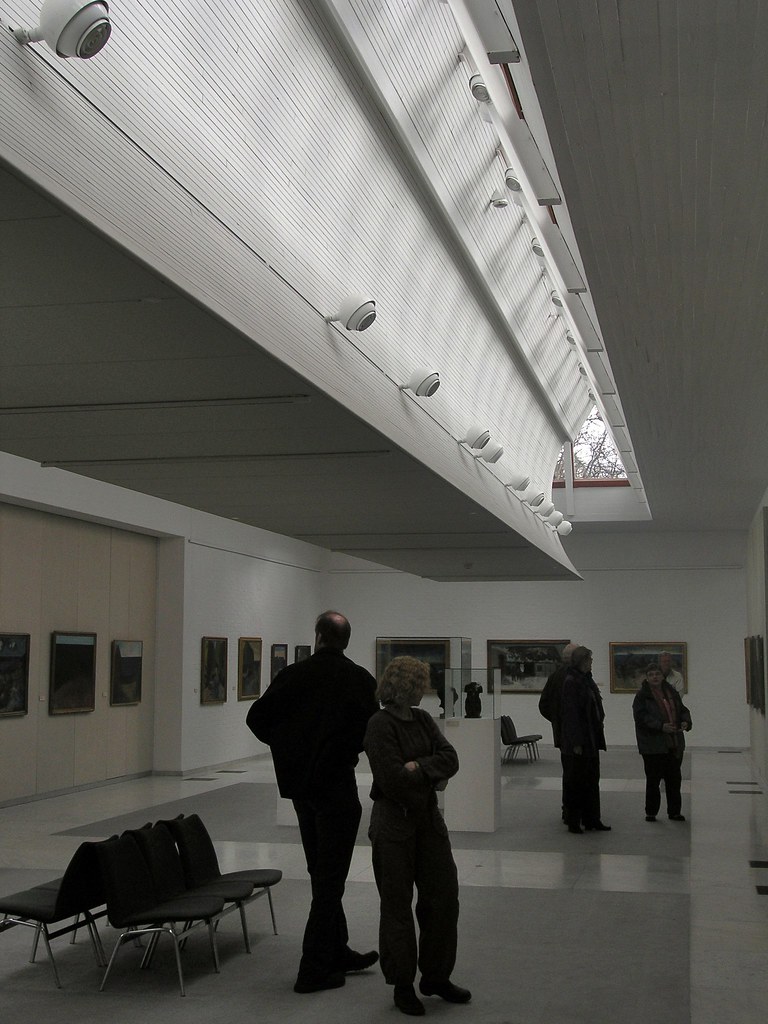
What sets the Modern apart from so many art museums is the quality of light. Ando designed the roof systems to filter natural daylight into the galleries, so the works breathe and shift throughout the day depending on the sky outside. Come on a bright autumn morning and the place practically glows. Come on an overcast afternoon and the mood turns contemplative in the best possible way. Either visit rewards you differently.
The on-site restaurant, Cafe Modern, overlooks the reflecting pond and serves a thoughtful lunch menu that goes well beyond typical museum fare. It is a genuinely good meal in a genuinely beautiful setting, and reservations are worth making in advance on busy weekends.
Admission is quite reasonable — free on Sundays, which is a remarkable gift to the community — and the museum regularly hosts lectures, film screenings, and late-night events that draw a lively, mixed-age crowd. First-time visitors often arrive planning to spend an hour and find themselves still wandering two and a half hours later, which is exactly as it should be.
Fort Worth has earned its reputation as one of the great art cities of the American South, and the Modern is a primary reason why. Do not let another trip to this city pass without giving it the afternoon it deserves.