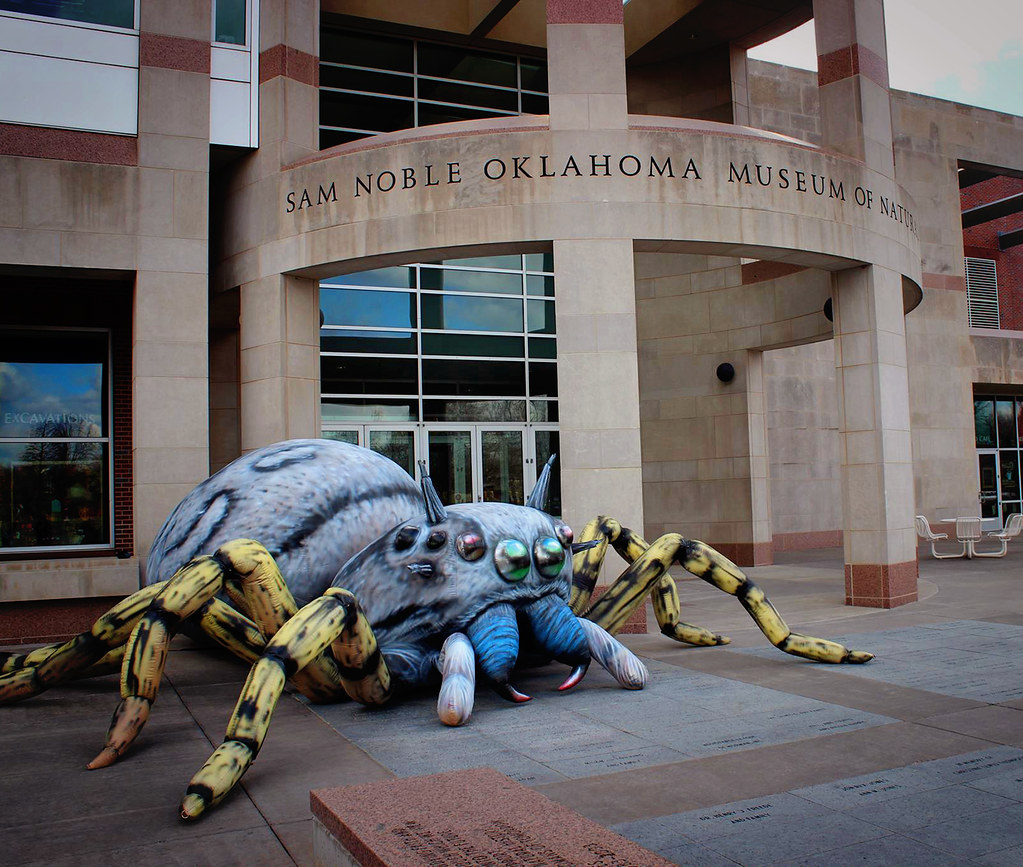
There are museums that check a box, and then there are museums that genuinely stop you in your tracks. The Sam Noble Oklahoma Museum of Natural History, tucked onto the rolling campus of the University of Oklahoma in Norman — just a 20-minute drive south of downtown Oklahoma City — falls squarely into the second category. The moment you walk through those doors and find yourself face-to-face with the largest Apatosaurus skeleton ever discovered, you understand immediately that Oklahoma has been quietly sitting on one of the great natural history collections in the entire country.
The museum opened its current state-of-the-art facility in 2000, but the collections it houses go back well over a century, built on decades of scientific fieldwork across the Great Plains and beyond. Today it holds more than ten million artifacts and specimens — fossils, minerals, cultural objects, biological samples — making it the largest university-based natural history museum in the United States. That statistic alone should make your jaw drop a little.
The Hall of Ancient Life is the crown jewel, and rightfully so. Walking through it feels like moving through geological time itself. That Apatosaurus I mentioned? It stretches an almost comical 110 feet in length, dominating the room with a quiet, ancient authority. Nearby, a Pentaceratops skull — enormous, ornate, borderline absurd in its beauty — reminds you just how strange and spectacular prehistoric life on this continent really was. The exhibits are thoughtfully designed, mixing dramatic fossil displays with clear, engaging interpretation that works for an eight-year-old and a geology PhD alike.
Beyond the dinosaurs, the Hall of People of the Plains offers a genuinely moving and respectful look at the Indigenous cultures that have called this region home for thousands of years. It is one of the better permanent exhibitions of its kind in the southern Plains states, and it adds real cultural depth to what could otherwise be purely a paleontology experience.
Admission is remarkably reasonable — adults run around ten dollars, and children are even less — which makes this an easy choice for families, solo travelers, or couples looking for a meaningful afternoon away from the typical tourist circuit. The museum sits within easy walking distance of other Norman landmarks, and the campus itself is beautiful, particularly in spring and fall when the trees are doing their best work.
Plan for at least two hours, though three is better if you want to linger in the gem and mineral hall or catch one of the rotating special exhibitions. The gift shop is genuinely good — thoughtful, science-forward, not kitschy — and the staff are the kind of enthusiastic, knowledgeable people who clearly love what they do.
Oklahoma City draws visitors for its Western heritage, its food scene, its revitalized urban core. But Norman and the Sam Noble Museum deserve a place in that conversation. It is the sort of place that reminds you why curiosity is worth following, and why the ground beneath your feet holds more stories than you ever imagined.