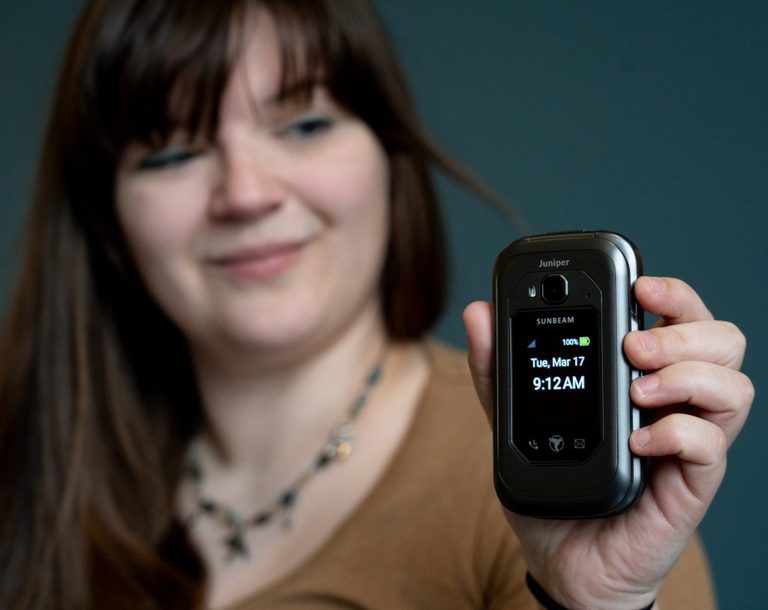
Brooke Williams, a 22-year-old recent environmental studies graduate at Kent State University, made a drastic change in March when she replaced her iPhone with a flip phone that has no access to the internet. Her screen time plummeted to 20 minutes a day, from over nine hours.
A Growing Trend
Williams represents a growing number of young adults who are pushing back against what they consider excessive time on smartphones. In 2025, 46% of teens said they are online almost constantly, according to the Pew Research Center. But in another 2024 study, more than a third of teens ages 13 to 17 said they have cut back on their phone screen time, and 72% said they feel peaceful when they don’t have their smartphone.
Williams said she realized she cared more about what people thought of her online than she cared about herself in real life. She was spending hours curating and playing a person that wasn’t her to serve to other people. By getting rid of her smartphone, Williams said, she’s able to keep the internet in one place.
Benefits of Reduced Screen Time
Since becoming more intentional about her screen time, Williams said her mind has become much clearer and her memory sharper. She has been replacing screen time with reading, studying or talking to people. She stopped bringing her phone into her bedroom, to class or to appointments.
Other young adults, like Jessica Greene, a 21-year-old psychology student at the University of Akron, are also trying to disconnect from the online world. Greene said she doesn’t want to rely on technology to live her day-to-day life. She has started printing school-related work when she can, taking paper notes, keeping her phone in her bag during class and staying off her phone for the first hour she’s awake every morning.
Original reporting: Signal Akron — read the source article.