There are nights in Huntsville when the sky does something almost unfair. The Milky Way stretches out like a brushstroke across the dark, and Saturn’s rings snap into focus so clearly you half-expect to hear them hum. Those are the nights you want to be standing on the grassy hill at the Von Braun Astronomical Society Observatory on Monte Sano Mountain — eyepiece pressed to your face, jaw somewhere near the ground.
The Von Braun Astronomical Society, or VBAS, has been operating this observatory since 1954, making it one of the oldest continuously operating amateur astronomy clubs in the entire country. That longevity is no accident. Huntsville has always had a deep, almost spiritual relationship with the cosmos — this is, after all, the city that sent human beings to the Moon — and the VBAS embodies that spirit in the most approachable, community-centered way imaginable.
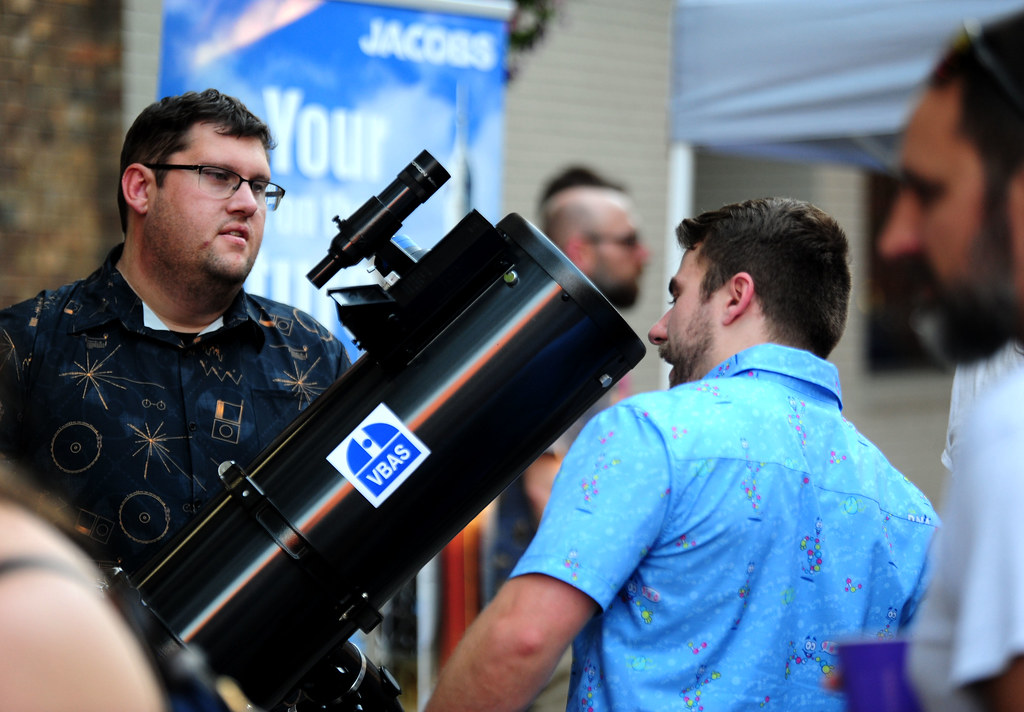
The facility sits at the top of Monte Sano, tucked inside Monte Sano State Park at 2000 Monte Sano Blvd. The elevation and the relative darkness of that ridge make a genuine difference. On a clear Friday night, you can attend one of their free public viewing sessions, held most Fridays after dark when weather cooperates. Volunteers — passionate, knowledgeable, and refreshingly enthusiastic — rotate guests through multiple telescopes, including their impressive 16-inch Ritchey-Chrétien reflector housed in the main dome. One moment you’re peering at a lunar crater close enough to count its ridges; the next, a volunteer is swinging the scope toward a distant galaxy cluster that has been traveling toward your eyes for millions of years. The scale of it is quietly staggering.
What sets this place apart from simply downloading a stargazing app is the human element. These are real amateur astronomers who genuinely love sharing the sky. They’ll answer every question without a trace of condescension, explain what you’re actually seeing in plain language, and if you’re lucky, get into a spirited debate about whether Pluto deserved its demotion. Bring the kids — younger visitors especially tend to leave with wide eyes and a sudden, urgent interest in physics.
Dress in layers even in the warmer months, because the mountain air cools quickly after sunset. Arrive a few minutes early to let your eyes begin adjusting to the dark. And leave the flashlights at home, or cover them with red film — your fellow stargazers will appreciate the courtesy.
There’s something quietly profound about standing in a city named for a rocket scientist, looking up at the same universe that inspired him, guided by neighbors who simply love the sky. The Von Braun Astronomical Society Observatory isn’t just a place to look at stars. It’s a reminder of why looking up matters in the first place.
Check the VBAS website at vbas.org for the current schedule, weather cancellations, and information about their monthly member meetings. Admission to public nights is free, though donations are warmly welcomed and help keep those telescopes pointed skyward.