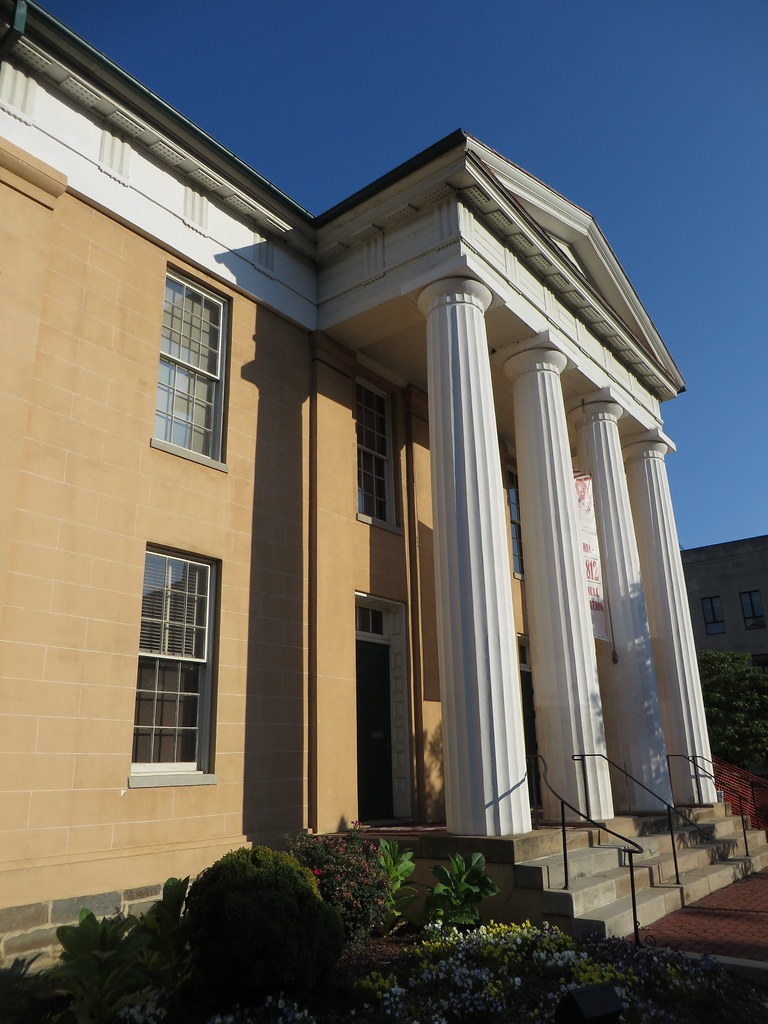
There is a building on South Washington Street that stops people mid-stride. Its Greek Revival columns rise from the sidewalk with quiet authority, and the moment you push open the front door, you understand that you have just walked into something genuinely special. The Lyceum: Alexandria’s History Museum is one of those rare places that manages to be deeply educational and thoroughly enjoyable at the same time — and somehow, it remains one of the most underappreciated gems in the entire city.
Tucked into the heart of Old Town Alexandria, the Lyceum sits just a short stroll from King Street’s shops and restaurants, making it an effortless addition to any afternoon in the neighborhood. The building itself dates to 1839, when it was constructed as a cultural and civic center — a place where Alexandrians would gather for lectures, concerts, and community debate. That original spirit of curiosity and conversation is still very much alive inside.
The permanent collection walks you through Alexandria’s layered, sometimes complicated, always fascinating history. You will find beautifully preserved silver, ceramics, Civil War artifacts, and period textiles that tell the story of a port city that served as a crossroads of American life for more than three centuries. The displays are thoughtfully curated — detailed enough to satisfy history enthusiasts, but approachable enough that first-time visitors never feel overwhelmed. Labels are clear, context is generous, and the staff are genuinely knowledgeable and happy to chat.
One of the things that sets the Lyceum apart is how it handles difficult chapters of local history with honesty and care. The museum does not shy away from Alexandria’s role in the domestic slave trade — one of the largest in the country during the antebellum period — and that willingness to engage seriously with the full arc of the city’s past gives the Lyceum a credibility and depth that makes every exhibit feel more meaningful.
Beyond the permanent galleries, the Lyceum hosts a rotating calendar of temporary exhibitions, lectures, and special events throughout the year. Whether the current show focuses on Alexandria’s Revolutionary War connections, its Civil War occupation, or its vibrant 20th-century neighborhoods, there always seems to be something new to discover on a return visit.
Admission is free, which feels almost too good to be true given the quality of what is inside. The museum is open Tuesday through Saturday, and parking is manageable for a city neighborhood. Plan to spend at least an hour and a half — you will likely want more time than you expected.
If you think you already know Alexandria, the Lyceum will kindly prove you wrong. It is the kind of place that sends you back out onto Washington Street with a longer view of the city beneath your feet — and a strong urge to come back again soon.