A twin-engine turboprop bound from Marsh Harbor to Freeport went down about 80 miles off Melbourne, Florida, leaving 11 Bahamian adults stranded at sea before they were rescued by Air Force reservists and Coast Guard crews; Maj. Elizabeth Piowaty, Capt. Rory Whipple and Lt. Col. Matt Johnson described a tense, miraculous recovery and the survivors were taken to Melbourne Orlando International Airport in stable condition.
The aircraft issued a distress call around 11 a.m. and went into the ocean roughly 80 miles off Melbourne, forcing everyone aboard into a life raft. Rescuers found the group after several hours, and the scene turned into a race against time, weather and fuel limits. The survivors spent about five hours in the raft before being pulled to safety.
The craft went down about 80 miles from Melbourne and all 11 people on board “are accounted for,” according to a . The beacon from the plane’s emergency locator transmitter was crucial; without it, finding a small life raft in open water would have been pure chance. That ELT signal is what guided aircraft from the area to the survivors’ position.
Air Force Maj. Elizabeth Piowaty, who spoke with reporters, called the outcome nothing short of extraordinary. “And from what I’ve seen, I mean, for all those people to survive is pretty miraculous,” she said, and her team’s training in the area put them in position to respond quickly. Those training flights became a lifeline for people who had no idea help was on the way.
https://x.com/USCGSoutheast/status/2054275564207210944
A team of Air Force reservists training nearby answered the call and located the raft, then coordinated with an Air Rescue Wing HH-60W Jolly Green helicopter to perform the hoist. That helicopter is part of the 920th Rescue Wing at Patrick Space Force Base and is set up for exactly this sort of work: find survivors, make a safe pickup, and get them to definitive care. The hoist operation brought all 11 people aboard and back to shore.
Capt. Rory Whipple painted a picture of exhausted, frightened people who had been fighting exposure and uncertainty. “They had already been in the water, in the raft, for about five hours and you could tell just by looking at them that they were in distress, physically, mentally, emotionally,” Capt. Rory Whipple said. He emphasized that the psychological toll of waiting for rescue is as real as the physical strain.
Rescuers dropped food, water and survival gear to the raft before they arrived so the survivors could hold on a little longer. “They were able to spread out their food and water and some basic survival tools,” Piowaty said, pointing out how airdropped supplies can stabilize a situation until a physical pickup is possible. The tarp the group used for shelter and the basic supplies likely made the difference between life and a worse outcome.
Whipple noted how disorienting it was for the survivors to suddenly realize they were being rescued from above. “They didn’t even know that we were coming until we were directly overhead,” Whipple said. “So you have to imagine the emotional injuries that they sustained out there and not knowing if someone’s going to rescue them.” That moment of relief on realization is something rescue crews see often and never take for granted.
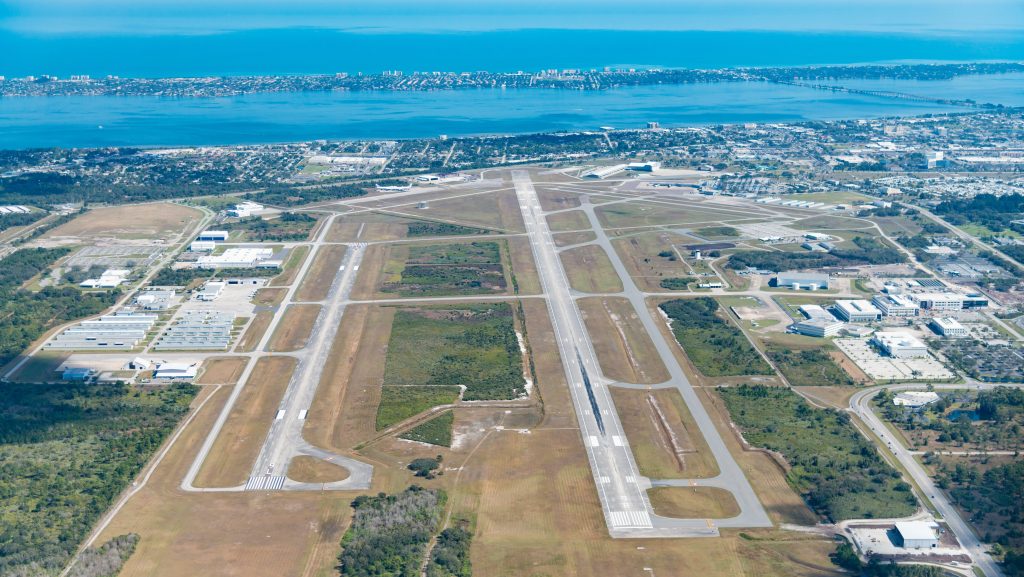
After the extraction, all 11 Bahamian adults were flown to Melbourne Orlando International Airport and listed in stable condition, according to officials. Medical teams stood by to assess hypothermia, dehydration and other issues tied to exposure and time in the water. Being stable doesn’t erase the trauma, but it is a major step toward full recovery.
Fuel management became a serious concern during the rescue, a reality the crews call “bingo time,” when pilots must decide whether to refuel or return to base. Lt. Col. Matt Johnson explained how experience and calm decision-making matter in those moments. “All of us deployed together in previous times on active duty as well,” Johnson said. “We know our job is efficient and expeditious, pick up of the survivors and get them back to higher medical care, and then let the those doctors fix them up.”
For the reservists involved, the mission mattered on a personal level as well as a professional one. Whipple summed up that mix of duty and gratitude plainly: “As a reserve airman, I truly believe that we have the best job in the world,” he said. “On someone’s worst day we’re at our best, bringing everyone home. And then at the end of the day, as a reserve airman, we get to go home to our families as well.”