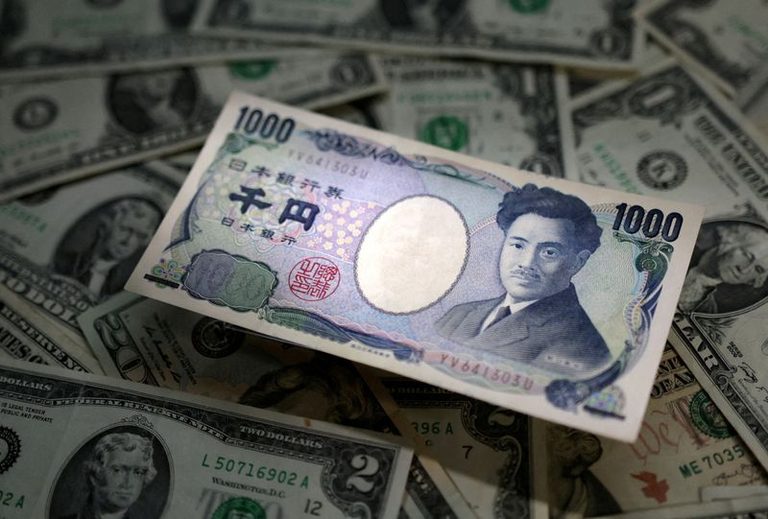
Tokyo – The yen’s recent climb to a seven‑month high has put the once‑profitable yen carry trade under fresh scrutiny. The strategy, which involves borrowing yen at historically low rates to invest in higher‑yielding assets, is now being challenged by expectations that the Bank of Japan (BOJ) may raise rates as early as its upcoming meeting.
How the carry trade works
Investors borrow yen—or any currency with similarly low interest rates—and use those funds to purchase higher‑yielding currencies such as the U.S. dollar, Mexican peso, New Zealand dollar, or other emerging‑market currencies. The borrowed yen is then repaid after a short‑term investment period, with profits coming from the interest‑rate differential.
Historically, the yen has been the funding currency of choice because Japanese rates have been near zero or negative. Annualised returns on a dollar‑yen carry trade have typically ranged from 2.5% to 3.5%, compared with the 5%‑6% returns seen in 2024 when the spread was wider.
Size of the market
Estimating the total volume of yen‑funded carry trades is difficult, but proxies suggest it is substantial. Cross‑border yen borrowing hit a record 360 trillion yen (about $2.34 trillion) in March, according to a Jefferies analysis of Bank for International Settlements data – the largest build‑up in three decades.
U.S. Commodity Futures Trading Commission data showed net short positions on the yen at 92,227 contracts in the week to September 1, a one‑third weekly increase but still below the two‑year high of 163,412 contracts recorded in early July.
Why the trade may be winding down
Recent yen‑buying interventions by Japanese and U.S. authorities in late July appear to have prompted some carry‑trade investors to shift their funding to the Swiss franc, which offers a similarly low‑cost borrowing base.
The yen carry trade originated in 2013 under Prime Minister Shinzo Abe’s quantitative and qualitative easing program, which coincided with rising U.S. rates and a weakening yen. The trade expanded dramatically in 2022‑2023 as the Federal Reserve raised rates to combat inflation while the BOJ kept short‑term rates negative, further widening the yield gap.
Potential market impact
While the exact size of the yen‑funded carry trade remains uncertain, a rapid unwind could have significant repercussions for global markets. A similar scenario unfolded in July 2024 when the BOJ delivered an unexpected rate hike, sending the yen from roughly 154 per dollar to the 141 level within days. The resulting unwind contributed to a 12.4% one‑day drop in Japan’s Nikkei index and broader equity sell‑offs.
Current BOJ officials have been signaling that a rate hike is imminent and that further increases may be necessary. So far, there is no clear evidence of a sudden unwind, and equity markets have largely absorbed the tightening signals without major disruption.
What investors should watch
Analysts note that recent moves in the yen have been orderly, suggesting a shift in investor mindset ahead of the BOJ’s next policy meeting. Market participants should monitor the BOJ’s statements, any further currency interventions, and the relative performance of alternative funding currencies such as the Swiss franc.
For investors who rely on the yen carry trade, the key question is whether the yield differential will remain attractive enough to justify the borrowing risk. As the BOJ moves toward a more hawkish stance, the trade’s profitability may continue to erode, prompting a reallocation of capital to other low‑cost funding sources.
Original reporting: Appleton, WI News Feed (HLL/CB) — read the source article.