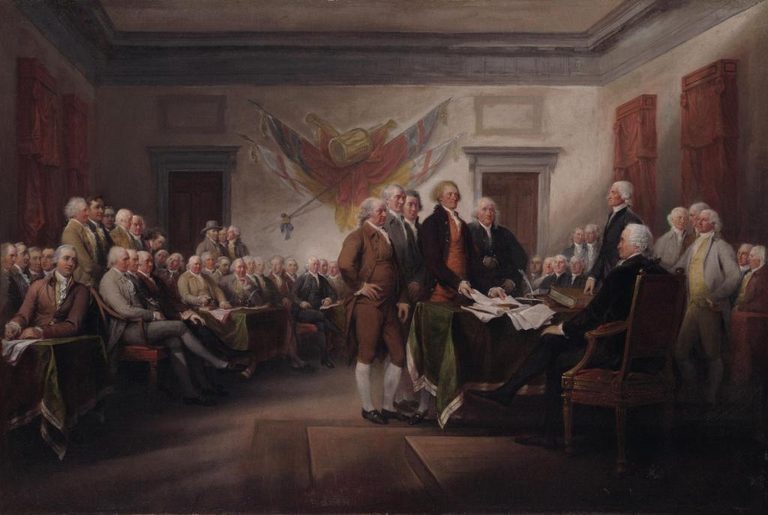
As the nation celebrates its 250th anniversary, a visit to the Yale University Art Gallery is a must, particularly to see John Trumbull’s iconic painting, The Declaration of Independence, July 4, 1776. This masterpiece, which has become synonymous with American democracy, is a testament to Trumbull’s skill as an artist and his commitment to preserving the faces and stories of the Revolutionary War generation.
Trumbull’s Mission
Trumbull, who had been an aide-de-camp to George Washington and witnessed the Battle of Bunker Hill, was driven to create a visual record of the war and its key figures. His painting of the Declaration’s signing, though not entirely accurate in terms of details, captures the essence and emotion of the moment. It was a collaborative effort, with Thomas Jefferson himself providing input and sketches to ensure the accuracy of the individuals depicted.
Trumbull’s work was not limited to this one painting. He traveled extensively, creating miniature portraits of the signers and other key figures, which were later incorporated into his larger works. This dedication to accuracy and preservation has made his paintings an integral part of American national memory, with his Declaration of Independence being one of the most recognizable and revered images in American art.
A Legacy of Art and History
Today, Trumbull’s original Declaration of Independence can be found at the Yale University Art Gallery, surrounded by other works from the Revolutionary War era. The gallery also features smaller, framed groups of portrait studies and miniatures, showcasing Trumbull’s meticulous approach to capturing the likenesses of the founding fathers. These images, while not always historically precise in terms of setting or event, embody the spirit and ideals of the time, making them invaluable to understanding America’s founding story.
Original reporting: New Haven Independent — read the source article.