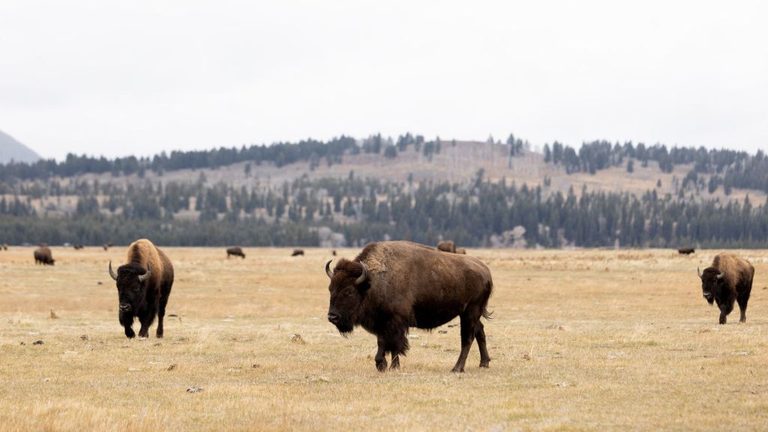
Wyoming State Archaeologist Spencer Pelton at the University of Wyoming (UW) was involved in a new study on the history of North American bison, which has been published in the journal Science. The research includes the years-long slaughter of bison herds across the West in the 1800s, which nearly led to their extinction.
Genetic Diversity and Cattle Ancestry
Researchers from over 30 institutions and organizations sequenced 115 ancient and 45 modern bison genomes from across the continent to show how the iconic mammal has evolved over the past 20,000 years. Bison bones collected at Wyoming archaeological sites, and housed at UW, offered genetic material for the study.
According to a summary of the study on UW’s website, two major findings emerged from the investigation. Notably, researchers found that before the human-driven population collapse, bison ranged widely across the continent and were genetically connected. Genetic diversity remained prominent until populations became isolated in attempts to conserve the species. Additionally, scientists found limited cattle ancestry in modern bison herds, despite previous assertions that almost all bison have some cattle ancestry from breeding experiments.
The team of researchers found cattle ancestry in just 32% of the 97 modern plains bison samples that were analyzed. The new findings are mostly encouraging, the researchers said, because the anticipated consequences of the near extinction — widespread loss of genetic diversity and pervasive cattle genetics — appear to be less pronounced than previously believed.
Original reporting: Buckrail (Jackson WY) — read the source article.