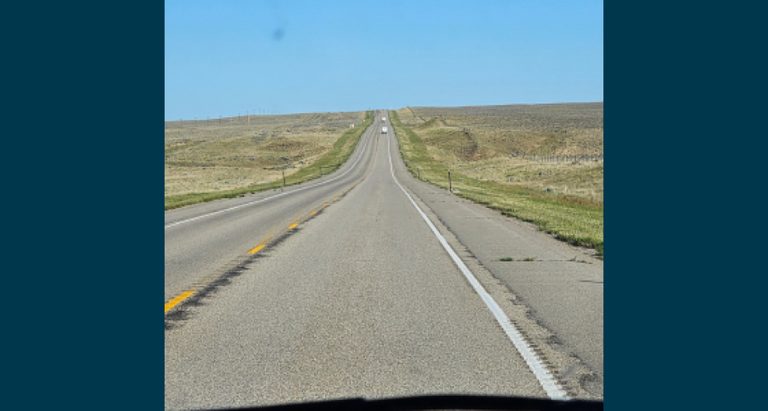
The Wyoming Game and Fish Department has issued a safety reminder for motorists as prolonged drought conditions across the state create an unintended green highway system. Wildlife biologists are reporting a surge in big game animals clustering along highways and rights-of-way, driven by a search for food and water.
Dangerous Wildlife Crossings
When the prairie and mountain forage browns out, the asphalt infrastructure of Wyoming roadways creates an unintended oasis. Roadsides and barrow pits are engineered to drain water away from highways, holding onto critical moisture much longer than the surrounding arid landscape. This creates a stark contrast as vegetation on the open range is dry and curing out, while tempting green vegetation grows directly adjacent to high-speed traffic.
Wyoming is nationally recognized for its pioneering Wildlife Crossing Initiative, utilizing highly successful overpasses, underpasses, and game-proof fencing to safely guide migrating herds across major highways. However, during an intense drought, traditional movement patterns may change, and not all wildlife is lucky enough to find a designated crossing structure along their route, leaving them to cross unprotected stretches of high-speed roadways.
How Motorists Can Help
Slow down and scan: Lower your speeds, particularly when traveling through rural or open-range country. Actively scan the green ditches or area between the roadway and the right-of-way fence where animals are often actively feeding. Expect a crowd: If you see one pronghorn or deer cross the road, immediately slow down, and assume there are several more to follow. Use caution during dusk and dawn: Big game animals are most active during the cooler hours of early morning and late evening.
Original reporting: Sheridan Media (Sheridan WY) — read the source article.