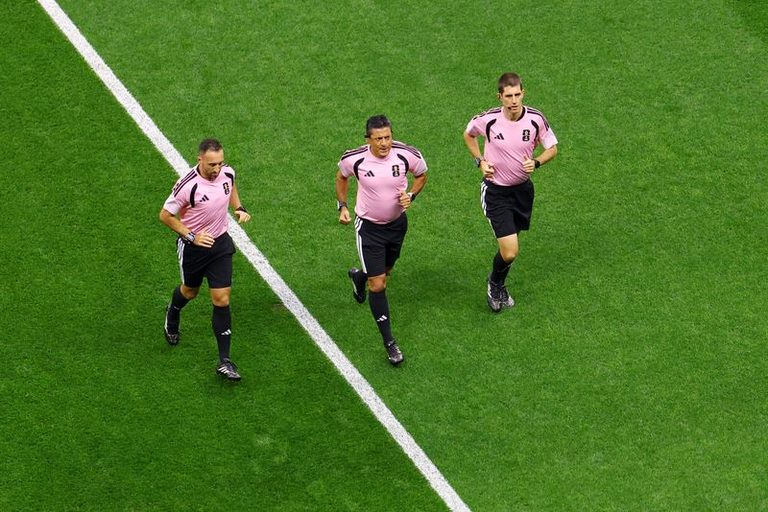
When a World Cup match turns on a split-second decision, the referee is expected to be in the right place at the right time. To achieve this, referees undergo rigorous training, similar to elite athletes. FIFA prepares officials for the sport’s biggest stage with repeated physical assessments and training that ramps up sharply in the six months before the tournament.
Physical Demands
Referees typically cover 12 to 13 kilometers per match, a distance comparable to many outfield players. The challenge extends far beyond distance, as referees may spend one match battling humidity in Miami and another chasing play at high altitude in Mexico City.
FIFA uses game-like simulations to train referees’ endurance, strength, speed, agility, and acceleration. Performance experts scrutinize every sprint, heartbeat, and recovery cycle to ensure referees arrive at every decisive moment before controversy does.
Recovery and Preparation
The three days prior to matches feature simulated match sessions, along with short, explosive acceleration and speed work. Afterwards, recovery takes center stage, with active recovery training, massages, and cryotherapy to achieve a faster and more effective recovery.
FIFA has also introduced hydration supplements and redesigned training schedules to limit exposure to direct sunlight. The World Cup officiating team consists of 52 referees, 88 assistant referees, and 30 video match officials from 50 member associations, all living in an environment built around training, nutrition, recovery, and technical preparation.
Original reporting: Appleton, WI News Feed (HLL/CB) — read the source article.