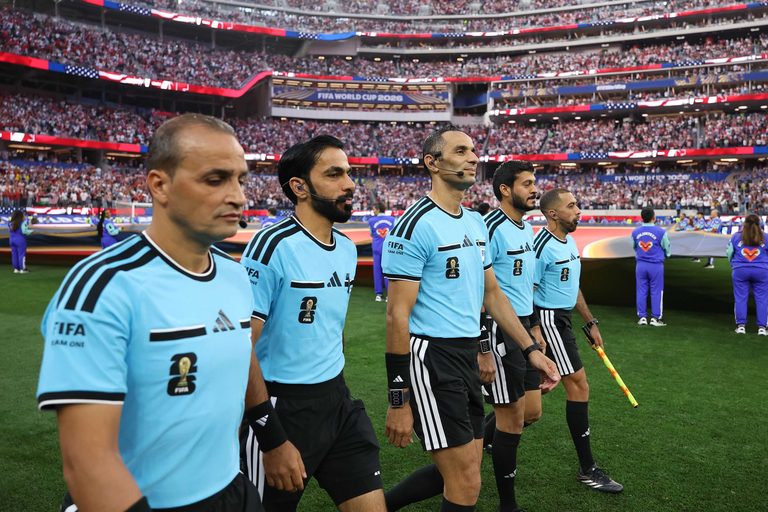
The World Cup is not just about the 48 nations competing, but also about the 170 referees, assistant referees, and video assistant referees who have been selected to officiate the tournament.
Selection Process
The selection process for the World Cup began immediately after the 2022 tournament in Qatar. Candidates were required to attend seminars, undergo fitness tests, and have prior FIFA tournament experience.
Referees come from 50 FIFA member nations across all continental confederations, with eight representing the United States. Among them are also six women, following FIFA’s historic move to include female referees at the last edition in Qatar.
Challenges Faced by Referees
Referees face a high level of pressure and responsibility, and many have to juggle their refereeing duties with a full-time job. The role of a referee is not just about making decisions on the field, but also about understanding the teams they are officiating and being aware of the players’ characteristics and tactics.
Former assistant referee Renato Faverani recalls his experience at the 2014 World Cup, where he officiated the final between Germany and Argentina. He says that being a referee requires a high level of physical fitness, as well as the ability to stay focused and composed under pressure.
Personal Costs
Referees often have to make significant personal sacrifices in order to pursue their careers. Many have to balance their refereeing duties with a full-time job, and some have even had to sacrifice their family life.
Leif Lindberg, a former referee, says that many referees have been through at least one divorce due to the demands of their job. He also notes that referees have to be prepared to make difficult decisions, and that they often face criticism and scrutiny from fans and the media.
Original reporting: KCCI Des Moines — read the source article.