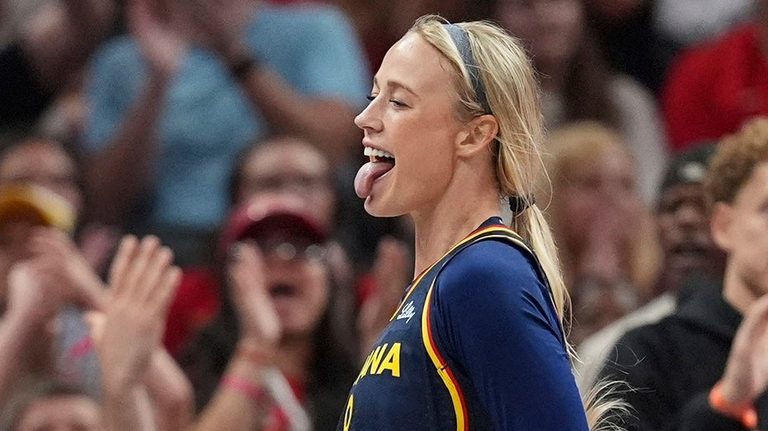
Indiana Fever guard Sophie Cunningham has become a flashpoint in the national conversation about preserving women’s sports. After publicly stating that biological males should not compete against females, Cunningham was labeled a “MAGA Barbie” by some fans and faced boos in venues such as Seattle. Despite the backlash, she posted on Instagram that she will not back down, writing, “I said what I said.”
Why Cunningham’s stance matters
Cunningham’s comments align with a growing chorus of athletes and commentators who argue that allowing biological males to compete in women’s events undermines fairness for female athletes. The WNBA, like other women’s leagues, has seen increasing pressure from advocates who emphasize the need to protect opportunities for women and girls. By refusing to apologize, Cunningham signals that she believes courage in the face of online outrage is essential for preserving the integrity of women’s competition.
Contrast with Chris Simms’ apology
In a separate incident, NBC Sports football analyst Chris Simms faced criticism after analyzing a helmet‑to‑helmet hit that knocked Oregon quarterback Dante Moore out of a game. Simms described the incident as a “Debbie Downer” moment and offered advice on avoiding big hits. Fans and commentators argued that his analysis downplayed the seriousness of the injury. Simms later posted an apology on social media, stating, “I clearly did not show enough sympathy for the situation. I mishandled the situation and I was wrong. I’m sorry for that.”
While Simms’ apology was intended to address concerns about player safety, many observers see his concession as a surrender to the “outrage mob,” a term used by commentators who believe that public pressure is increasingly dictating how athletes and analysts respond to criticism.
Other recent examples
Recent weeks have produced similar patterns. Texas quarterback Arch Manning was forced to apologize after sharing an AI‑generated meme that mocked ESPN reporter Holly Rowe. In July, Toronto Tempo coach Sandy Brondello apologized for describing WNBA star Angel Reese as a “protected species,” a phrase common in Australian sports slang but deemed offensive in the United States. Even NFL receiver Amon‑Ra St. Brown issued an apology after performing a dance that some linked to former President Trump.
These incidents illustrate a trend where public figures in sports feel compelled to issue mea culpas, often after brief periods of online criticism. Critics argue that such apologies erode personal accountability and diminish the respect athletes earn through performance.
What the debate reveals
The core of the debate centers on two questions: Should athletes be allowed to express controversial opinions without fear of forced apologies, and how should the sports community balance free expression with respect for all participants? Pro‑life advocates and many parents argue that protecting women’s sports is a matter of fairness and safety, while some progressive voices contend that inclusion policies reflect broader societal values.
From the perspective of the HyperLocal Loop, the principle of individual liberty supports the right of athletes like Cunningham to voice their convictions, especially when those convictions are rooted in protecting traditional family values and the integrity of women’s competition. At the same time, the platform acknowledges that respectful dialogue, rather than hostile mobbing, should shape public discourse.
Looking ahead
As the season progresses, the sports world will likely see more instances where athletes must decide whether to stand firm or apologize. The outcomes of these choices will influence how fans, sponsors, and leagues navigate the balance between free speech and community standards. For now, Cunningham’s refusal to retreat stands as a clear example of standing up for what she believes benefits women’s athletics.
Original reporting: Fox News (HLL/CB) — read the source article.