In northeast Wisconsin, extreme weather has moved from headlines to front‑yard concerns. Residents have endured a record 26 inches of rain in the first half of the year, followed by drought and smoky air from distant wildfires. Scientists say the pattern is unmistakable and urge candidates to make climate resilience a central campaign issue.
Local experts stress urgency
“Climate change is going to affect everybody. It is important to bring it back to the forefront,” said Bart De Stasio, professor emeritus of biology at Lawrence University in Appleton. De Stasio warned that fossil‑fuel and methane emissions are driving warmer temperatures and that the state must seek alternative energy sources while mitigating pollution.
Steve Vavrus, director of the Wisconsin State Climatology Office and co‑director of the Wisconsin Initiative on Climate Change Impacts, added that storm‑water infrastructure – much of it a century old – cannot keep pace with increasingly torrential downpours. “It’s in everybody’s interest, regardless of how people vote, to make sure our environment is in good shape,” Vavrus said.
Community impacts felt at home
Jeff Budish, a homeowner in the town of Peshtigo, described the weather as a wake‑up call. “The weather is talking to us. Mother Nature is telling us, ‘Hey, wake up,’” he said, noting that gas‑powered vehicles and contaminated groundwater from nearby industrial sites compound local health risks.
Long‑time Green Bay science teacher Charles Frisk observed that warming rivers threaten prized walleye and trout populations, while fewer cold‑weather days could hurt winter tourism such as cross‑country skiing and ice fishing. He warned that his granddaughters, ages 3 and 11, may inherit a landscape that is increasingly unlivable in some densely populated areas.
Health concerns from wildfire smoke
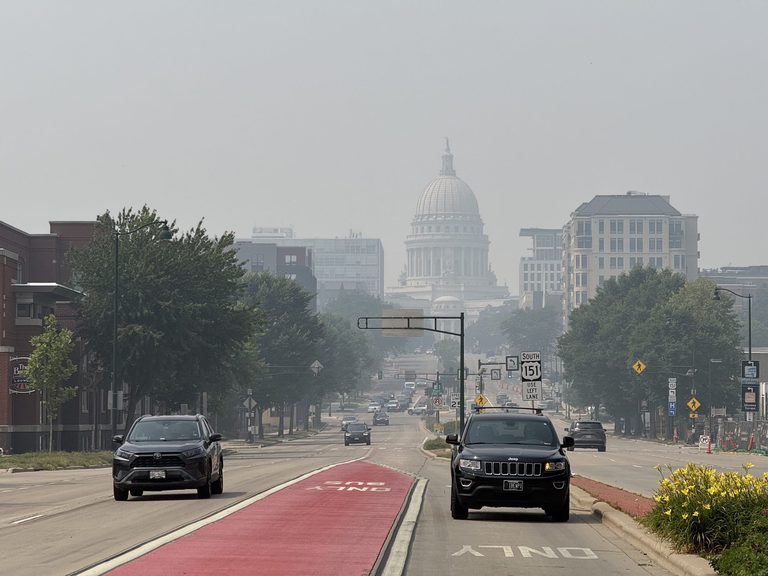
Summer wildfires in Canada and Minnesota have sent fine particulate matter (PM2.5) into Wisconsin, raising the Air Quality Index above 200 on several occasions. The U.S. Environmental Protection Agency classifies such levels as unhealthy for outdoor activity. Researchers at Carnegie Mellon University linked wildfire smoke and prescribed burns to 20,000 premature deaths and $200 billion in damages, disproportionately affecting older adults, Native Americans and African Americans.
“Around a bonfire, you may get a blast of smoke in the face, but you’re not exposed to the sustained smoke,” said Nicholas Muller, professor of economics, engineering and public policy at Carnegie Mellon. He emphasized that prolonged exposure, like the haze that lingered over Green Bay in July, poses a serious health risk.
Local government steps forward
Village officials in Allouez are planning an eighth retention pond in Riverside Park, slated for construction in 2027 at an estimated cost of $800,000. The pond will help capture storm‑water runoff and protect waterways from pollution. Public works director Sean Gehin noted that recent street flooding has already damaged basements and municipal facilities.
Allouez trustee Jean Marsch, a 50‑year resident, highlighted that flooding is a statewide issue. “You can tell flooding is happening all over. You see it and hear about it and know people who have experienced this kind of flooding,” she said, urging additional state funding for flood‑resilience grants like Wisconsin Act 265, passed in 2024.
What voters can expect
As the November election approaches, affordability remains a top concern for many voters, but a growing chorus of scientists and residents is demanding that candidates address climate‑related infrastructure, clean‑water protection and air‑quality measures. Candidates who articulate clear plans for modernizing storm‑water systems, reducing reliance on fossil fuels and supporting community‑based mitigation efforts are likely to resonate with constituents who have already felt the impact of extreme weather.
Community groups continue to encourage personal actions such as using rain barrels, keeping streets clear of leaves and grass clippings, and avoiding phosphorus‑rich fertilizers. “Everybody has a role to play in maintaining the safety and health of our community,” Marsch affirmed.
Original reporting: Wisconsin Watch — read the source article.