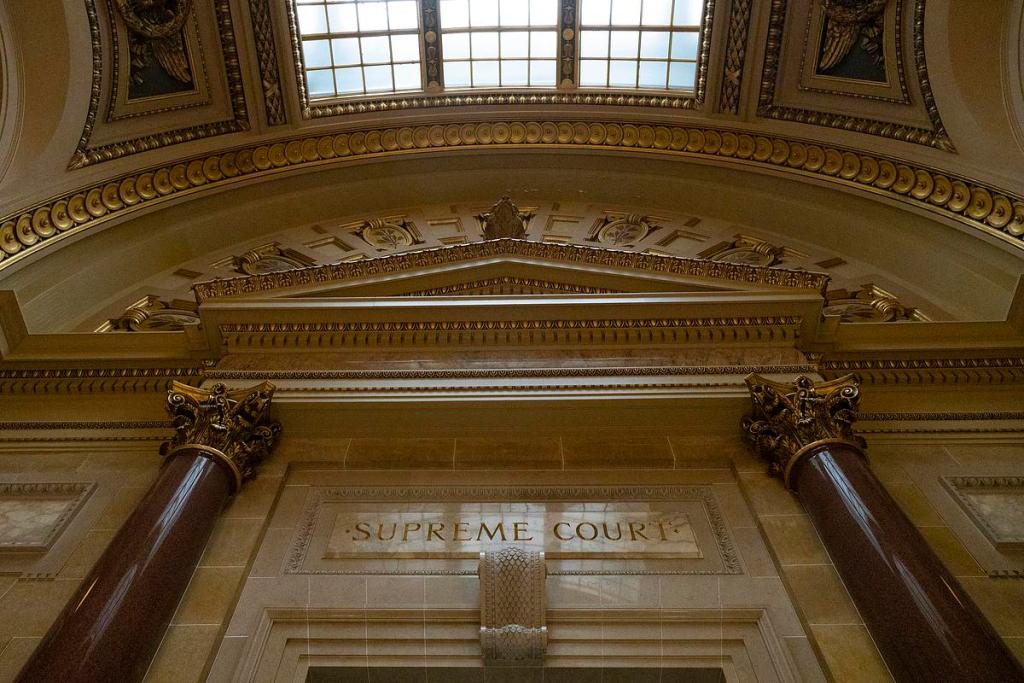
The Wisconsin Supreme Court is set to hear public comments this week regarding a proposal that would require judges to recuse themselves from cases if past campaign donations or support could affect their impartiality. However, immediate changes to the recusal rules appear unlikely.
Public Input and Advisory Committee
Several legal organizations and research groups have advised the court to reject the immediate proposal and instead form an advisory committee to study the issue further. This includes the five retired circuit court judges from Dane, Milwaukee, and Monroe counties who initially proposed the changes. They, along with groups like Law Forward and the Wisconsin Association for Justice, suggest that a comprehensive study could lead to a more effective recusal standard.
Rachel Snyder, policy counsel for Law Forward, emphasized the importance of solid judicial recusal standards, stating, “More brain power and more thoughtful consideration … could produce a better workable recusal standard that meets the goals of ensuring confidence in the judiciary.”
Historical Context and Current Debate
The debate over recusal rules is part of a long-standing discussion about the influence of money in Wisconsin’s nonpartisan, yet increasingly political, state Supreme Court races. The current rules, adopted in 2010 by a conservative-majority court, state that judges do not have to recuse themselves due to campaign donations. These rules were crafted following record spending in the 2007 and 2008 elections, which led to conservative control of the court.
Former Dane County Judge Richard Niess, one of the petitioners for change, expressed support for the idea of a study committee, noting that it could provide a balanced approach to addressing concerns about timing and effectiveness.
Next Steps
The Wisconsin Supreme Court will hold an open conference after the public comment period to decide on the next steps, which could include voting on the proposal or forming an advisory committee. This decision comes ahead of the next state Supreme Court election in 2027, with two candidates already campaigning for the upcoming election.
As the court considers these changes, the broader question of judicial recusal remains crucial for maintaining the integrity and impartiality of the judiciary. Derek Clinger, senior counsel for the State Democracy Research Initiative, highlighted the importance of this issue, stating that independence and fairness are what give the courts legitimacy.
Original reporting: Wisconsin Watch — read the source article.