Madison, Wis. – Wisconsin Democrats are set to assume control of the governor’s office and both legislative chambers on Jan. 4, 2027 with a projected $4.18 billion state surplus. The financial picture could not be more different from the last time the party held a full trifecta in 2009‑10, when the Great Recession left the state with a $6.6 billion deficit and unemployment above 7%.
Historical contrast
In the 2008 presidential election cycle, Democrats flipped the Assembly for the first time in more than a decade and, together with Gov. Jim Doyle, secured a brief period of unified control. That era coincided with deep budget cuts, furloughs and layoffs as the state grappled with the nation’s worst economic downturn since the 1930s.
Former Rep. Spencer Black, who served from 1985‑2011, recalled the difficulty of governing without a solid majority. “We had a couple of Assembly members who were really almost Republican. One eventually became an independent and the other voted with Republicans, so getting a majority was always very tricky,” he said.
Lessons from the past
Former Assembly Speaker Mike Sheridan, also a Janesville native, noted that the 2009‑10 session lacked the “wiggle room” needed to pass ambitious policies. “If people just can’t support a certain bill or an issue, they have some wiggle room there. We didn’t have any wiggle room,” he explained.
Key missed opportunities included a renewable‑energy bill that Black believes could have created green jobs, and a push for nonpartisan redistricting that Gov. Tony Evers later described as a “huge mistake.” State Rep. Chris Sinicki, who led the Assembly’s labor committee, remembered that even raising the minimum wage was off the table because of the fiscal crisis.
What the new Democratic leadership promises
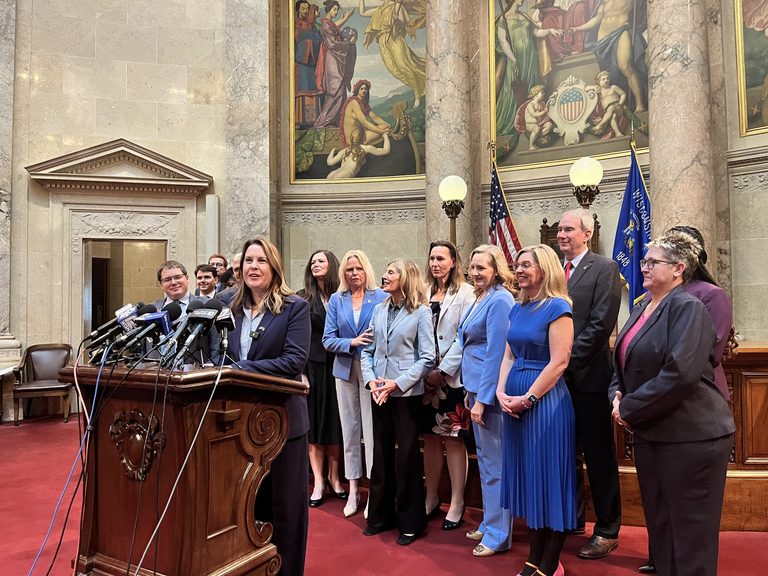
Incoming Senate Majority Leader Dianne Hesselbein and Speaker‑elect Greta Neubauer emphasized unity and a “transformative session” aimed at making life more affordable for Wisconsinites. Neubauer said, “We are united and we are ready to govern.”
With a surplus in hand, the new majority plans to revive policies stalled under years of Republican control, including investments in renewable energy, expanded workforce training, and infrastructure projects. The surplus, however, is not unlimited. Former Republican strategist Bill McCoshen warned that “big swings that might increase spending could result in another change election like the one that swept Republicans into power in 2010.”
Fiscal realities and political dynamics
While the surplus provides flexibility, former Rep. Black cautioned that “there’s a lot more who want what’s there than there is in the surplus.” The Democratic caucus will need to balance competing priorities among its own members and manage expectations from constituents who have endured years of budget restraint.
Republicans, who will move into the minority, are likely to scrutinize any large‑scale spending proposals. The 2011 Act 10 law, which limited collective‑ bargaining for public‑sector unions, remains a flashpoint, and Democrats will need to navigate that legacy while pursuing their agenda.
Looking ahead
As the new administration prepares to take the oath, the contrast between a $4.18 billion surplus and the $6.6 billion deficit of a decade ago underscores how dramatically Wisconsin’s fiscal landscape has shifted. Whether the Democratic majority can translate that financial cushion into lasting policy gains will depend on their ability to maintain cohesion, negotiate with the Republican minority, and address the concerns of a electorate that voted for change in 2026.
Wisconsin voters can expect the first budget proposals from the Crowley administration in the coming weeks, setting the tone for what many hope will be a period of responsible growth and renewed investment in the state’s families and communities.
Original reporting: Wisconsin Watch — read the source article.