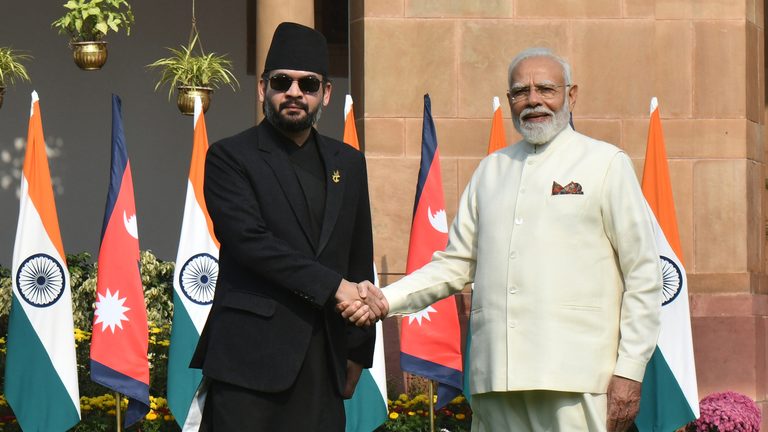
In a significant display of regional cooperation, India unveiled a $1.62 billion economic assistance package for Nepal on Monday. The aid is intended to jump‑start the reconstruction of infrastructure and homes destroyed by the catastrophic floods that struck Nepal on Aug. 26.
Flood damage and the need for aid
The monsoon floods devastated roads, bridges, power plants, farms and residential areas, resulting in an estimated $4.7 billion in losses, according to Nepali authorities. The disaster claimed 1,500 lives and left more than 5,200 people missing. The United Nations Fund for Responding to Loss and Damage also pledged roughly $20 million to supplement Nepal’s recovery efforts.
India’s commitment
Prime Minister Narendra Modi announced the assistance after meeting Nepalese Prime Minister Balendra Shah in New Delhi. Shah, on his first official visit to India since taking office in March, highlighted the urgency of rebuilding critical infrastructure and restoring livelihoods for displaced families.
Modi emphasized that the package will fund the repair of damaged roads and bridges, the reconstruction of power generation facilities, and the rebuilding of homes and farms. He framed the aid as a concrete expression of India’s long‑standing friendship and responsibility toward its Himalayan neighbor.
Joint projects reinforce ties
During the same meeting, the two leaders virtually inaugurated several cross‑border projects: a new hydropower plant, an oil storage facility, an oil pipeline, and a cross‑border train service linking the two nations. These initiatives underscore a growing economic interdependence, with India importing about 1,200 MW of electricity from Nepal while Nepal relies on India for fuel and essential supplies.
Strategic context
Nepal shares an open border with India, allowing citizens to cross without passports or visas. While India has traditionally wielded considerable influence in Nepal, recent years have seen increased Chinese investment in Nepali infrastructure, including airports, highways and additional hydropower projects.
Despite China’s expanding presence, Nepal remains heavily dependent on India for energy and trade. The new aid package and joint infrastructure projects aim to reinforce that partnership, offering a counterbalance to external influences and promoting stability in the region.
What this means for the region
By providing swift, large‑scale assistance, India not only helps Nepal recover from a humanitarian disaster but also strengthens its strategic foothold in the Himalayas. The aid package signals a commitment to regional stability, economic cooperation, and shared prosperity, reinforcing the long‑standing bond between the two countries.
Original reporting: Allentown News – 6abc Philadelphia — read the source article.