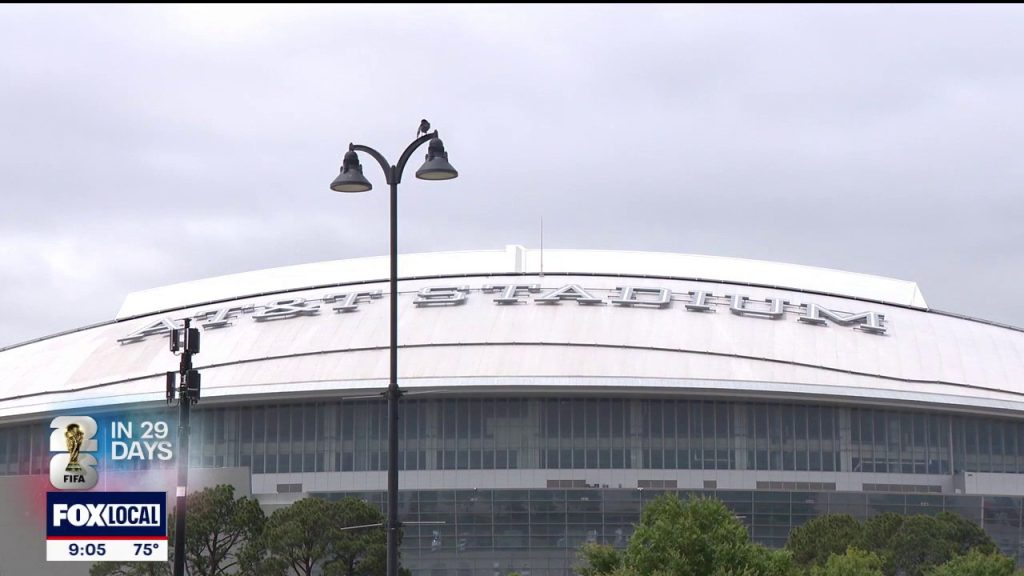
Fox 4 reporter Vania Castillo has been asking a simple but consequential question: could the grass FIFA is installing for World Cup matches at AT&T Stadium in Arlington stick around after the tournament? The story matters to NFL players who have pushed for grass playing surfaces for years and to Cowboys fans watching how the stadium adapts. This piece looks at the logistics, the motives, and the likely outcomes for AT&T Stadium and the broader conversation about turf versus natural grass.
The requirement from FIFA that World Cup matches be played on grass has forced AT&T Stadium to bring in a temporary lawn, a move that solves an international rule but creates local headaches. NFL teams like natural grass for player safety, while stadium operators prize flexibility and durability. That tension sits at the heart of what will happen once the final whistle blows on the tournament.
Installing a temporary grass surface in a retractable-roof, domed venue is a major undertaking, both technically and financially. The turf has to be laid on a protective base, maintained under lights, and then removed without damaging the permanent floor. All of that adds cost and complexity for the stadium, which must balance short-term international needs with long-term NFL operations.
NFL players and their unions have long argued that natural grass reduces the risk of certain injuries and offers a softer playing surface compared with synthetic turf. That advocacy has nudged some teams and owners to consider permanent grass solutions or hybrid systems. Bringing in FIFA-grade grass gives local players a preview of what their season might feel like if the change became permanent.
From a Cowboys and AT&T Stadium perspective, the calculation is financial and practical. Permanent grass in a climate like North Texas requires investment in drainage, sunlight or grow-light systems, and ongoing maintenance that a domed stadium was not originally designed to support. Owners weigh those ongoing costs against potential benefits like player satisfaction and marketing goodwill tied to hosting major international events.
Community reaction has been mixed, with some fans excited about a natural playing surface and others worrying about how a grass field might affect concerts and other big events. Stadiums are multipurpose, and operators must ensure that a grass field does not become a bottleneck that limits revenue from concerts, college games, and shows. That pressure often favors synthetic turf or moveable systems rather than a permanent lawn.
There are technical middle grounds, like hybrid surfaces that combine natural grass with synthetic reinforcement or fully modular systems that can be rolled in and out. Those solutions can satisfy FIFA for specific events while preserving the stadium’s ability to switch surfaces quickly. But they come with their own price tag and maintenance profile that owners must accept.
Another factor is optics: hosting World Cup matches on natural grass can boost a stadium’s prestige and local pride, making a permanent change more politically attractive to owners and local leaders. For Arlington and the broader Dallas-Fort Worth area, demonstrating that the stadium can meet FIFA’s standards was a statement about regional capability. That moment can create momentum for longer-term investments, especially if fans and players respond positively.
Logistics also include scheduling. The NFL season overlaps with other major events, and any move to maintain grass year-round would require careful calendar management. Transition windows between events are already tight, and adding the needs of a living field raises the stakes for turnaround crews. That reality can tilt decisions back toward turf if operators prioritize operational ease.
Economic impact is another lens. Installing temporary FIFA-grade grass for the World Cup may bring a short-term spike in maintenance employment and local contracting work. A permanent grass system could sustain jobs longer, but local taxpayers and team owners will want to see a clear return on that investment. The calculus will depend on event bookings, player availability, and whether the move attracts more high-profile matches in the future.
Decision-makers will also watch injury data and player feedback closely after the World Cup games at AT&T Stadium. If players report better performance and fewer issues on the grass, that qualitative input can be persuasive. Hard data on injuries and maintenance costs, collected over seasons, will ultimately determine whether the grass stays.
In short, keeping FIFA’s grass at AT&T Stadium is possible but far from guaranteed. The city of Arlington, stadium operators, the Cowboys organization, and the NFL will all weigh costs, community sentiment, scheduling, and player health before making any permanent change. For now, the grass is a temporary bridge between global soccer rules and local football reality, and everyone involved is watching how it plays out on the turf.