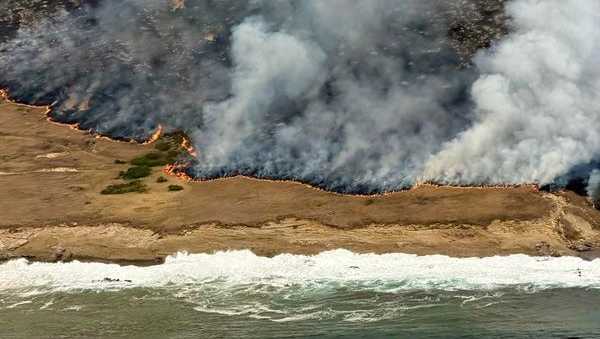
Santa Rosa Island in Channel Islands National Park, off the coast of California, has suffered a major wildfire that charred nearly a third of the island, threatening the unique plants and animals that live there and drawing a swift response from park staff and firefighting teams.
The flames raced across remote slopes and coastal scrub, consuming areas that support dozens of rare plants and animals, including some found nowhere else in the world. Officials described the loss as significant because this island holds pockets of habitat that cannot be replicated on the mainland. The wildfire’s footprint touches ecosystems that took centuries to assemble and are fragile to sudden, intense fire.
Fire crews from federal and state agencies, along with Channel Islands National Park personnel, moved quickly to protect what they could, using aircraft drops and ground crews where terrain allowed. Access to the burned zones remains limited because of safety and the island’s rugged geography, so efforts have focused on perimeter containment and protecting buildings and cultural sites. Investigators are working to determine the cause, with both natural and human-start scenarios being considered.
For scientists and managers, the immediate worry is how endemic species will fare in the aftermath. Many island species evolved without frequent large fires and are not adapted to recover rapidly from widespread burns, which means population declines could follow. At the same time, some plant communities might rebound if seeds in the soil survive and invasive competitors are kept in check.
One long-term concern is the role of invasive grasses and shrubs that can fuel more frequent blazes, turning a rare event into a recurring threat. Where nonnative plants take hold after a fire, they can create a feedback loop of increased flammability that undermines recovery of native species. Park restoration plans will need to prioritize removal of invasives and reestablishment of native plants to break that cycle.
Wildland fire in island settings poses a different set of management questions than on the mainland, because every hectare often holds rare life forms or archaeological resources. Managers have to balance letting natural processes proceed with active restoration and protection of critical populations. That balancing act will shape the island’s recovery and influence how the park prepares for future seasons.
Monitoring teams are already lining up surveys to assess plant mortality, animal displacement, and soil impacts, while biologists plan to check known populations of rare species for survivors. Data from those assessments will guide whether assisted recovery, such as transplanting or seed sowing, is necessary. The park will also look for changes in erosion and watershed function that can follow the loss of vegetation.
Visitors and researchers can expect temporary closures and restricted access as crews work and scientists gather data, a precaution aimed at both public safety and minimizing disturbance to fragile recovery areas. The park’s priority is stabilizing the landscape and preventing additional damage from people or vehicles before restoration can begin. Public updates will come from Channel Islands National Park as assessments clarify the scope of ecological impacts.
Funding and coordination between park authorities, conservation groups, and state and federal partners will be crucial for a durable recovery effort that protects the island’s unique biodiversity. That collaboration will determine how quickly restoration actions are mounted and how aggressively invasives are tackled. The coming months will be decisive for Santa Rosa Island’s plant and animal communities.
As work moves from emergency response into recovery, the focus will be on preserving genetic diversity and preventing the converted landscape from favoring nonnative, fire-prone species over the island’s native life. Lessons from this event will inform fire planning across the Channel Islands and other offshore refuges. The goal is to restore functioning ecosystems while keeping rare and endemic species from slipping toward extinction.