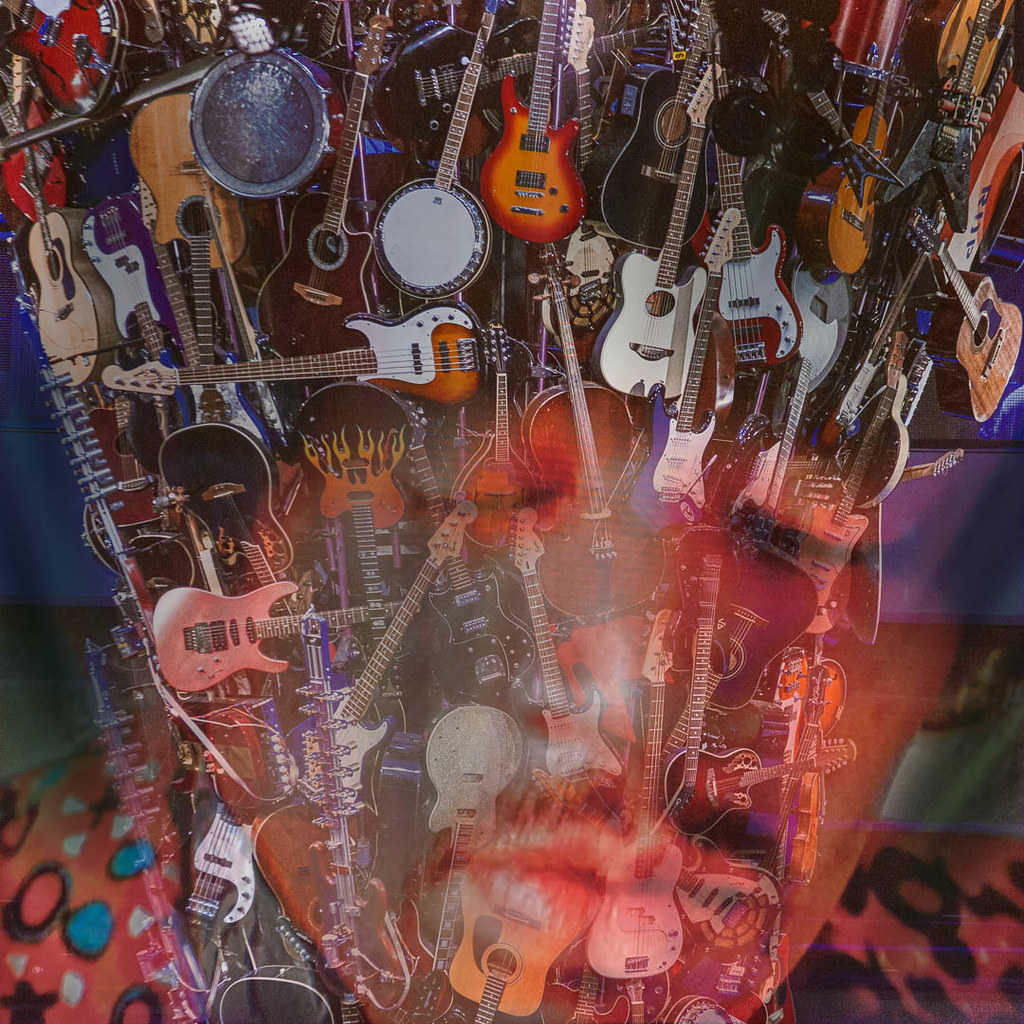
There is a building at the foot of the Space Needle that looks like it was designed by someone who crumpled up a handful of electric guitar bodies and decided to call it architecture. That building is the Museum of Pop Culture — MoPOP to locals — and the moment you see its shimmering, color-shifting steel facade catching the light off Puget Sound, you already know you are about to experience something unlike any other museum on Earth.
Sitting in the South Lake Union and Seattle Center neighborhood, MoPOP is easy to reach whether you ride the monorail from downtown or simply walk over from the Space Needle plaza. The structure itself was designed by Frank Gehry, and it is absolutely worth pausing outside to take it in before you even buy a ticket. From certain angles it looks like a crashing wave; from others, like something a very talented five-year-old built out of metallic modeling clay. It is wild. It is Seattle. You will love it.
Once you step inside, the scale of the place genuinely surprises you. The central atrium soars overhead, and right in the middle of it stands the Sky Church — a vast, cathedral-like hall anchored by a massive LED screen that plays music videos and concert footage on a loop. Standing beneath it while Jimi Hendrix plays feels like a legitimate religious experience, and given that Hendrix was born right here in Seattle, there is something deeply fitting about that.
The permanent collections are where MoPOP earns its reputation. The Hendrix Gallery is among the finest exhibits dedicated to a single musician anywhere in the world, featuring handwritten lyrics, personal effects, and guitars that will make any music fan go a little quiet with reverence. The Science Fiction and Fantasy Hall of Fame pulls in artifacts from beloved films, novels, and television series — costumes, props, original manuscripts — displayed with genuine curatorial care rather than the dusty afterthought treatment such items sometimes receive elsewhere.
What sets MoPOP apart from flashier tourist traps is how thoughtfully it treats its subjects. Pop culture is presented here as legitimate art, as social history, as a mirror held up to who we are as Americans and as human beings. Rotating exhibitions keep the experience fresh; recent years have brought deep dives into horror films, hip-hop history, and indie game design.
Budget roughly two to three hours if you want to do it justice, and wear comfortable shoes — there is a lot of ground to cover. Tickets run around thirty dollars for adults, with discounts for kids and seniors, and the museum is open daily. On weekday mornings it is calm enough to linger at every display without bumping elbows with anyone.
Seattle has no shortage of world-class attractions, but MoPOP occupies a category entirely its own. It is loud, joyful, intellectually serious, and completely unforgettable. Go once and you will find yourself already planning the return visit before you reach the parking lot.