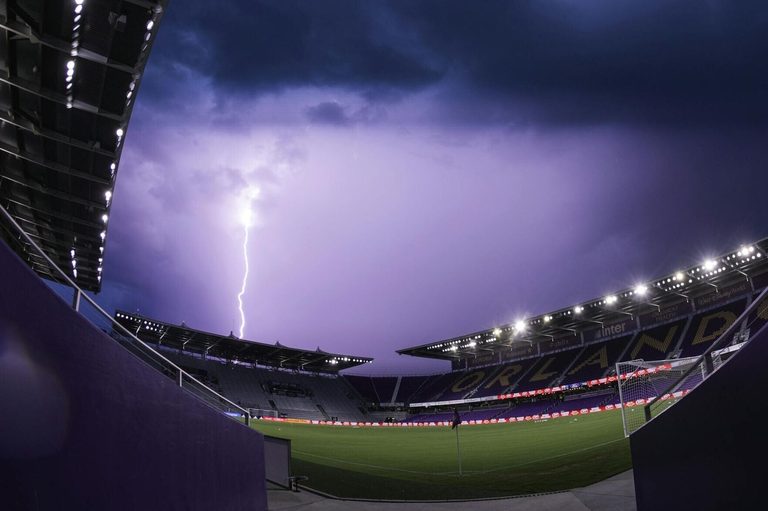
When a thunderstorm rolls near a stadium, the sight of a clear blue sky can be misleading. On Sept. 19, 2026, several high‑profile college football games—including Florida State at Alabama and North Carolina at Clemson—were temporarily halted because lightning was detected within eight miles of the venues. Social‑media users voiced frustration, especially at Bryant‑Denny Stadium where the sky remained dry.
Science Behind the Delay Rules
College football has followed lightning‑safety protocols for nearly three decades. First published in 1997 and updated regularly in the NCAA Sports Medicine Handbook, the rules require a game pause when lightning is detected within an eight‑mile radius of the stadium. This distance accounts for “bolts from the blue,” where a strike can occur far from the parent thunderstorm.
After the last lightning flash, officials must wait 30 minutes before resuming play. The clock resets with each new strike, ensuring that lingering electrical charge in the clouds has dissipated. A 2018 study of 136 college football and NFL games delayed between 2010 and 2015 found that half of the delays occurred while the game was already underway, and most were resolved in under 90 minutes.
Real‑World Risks
Lightning is a proven threat to both spectators and athletes. The open‑air design of stadiums and the concentration of people in metal bleachers create a hazardous environment. A strike to the bleachers could conduct electricity through seats, injuring dozens. A bolt hitting the turf can send ground current across the field, endangering players, coaches, and officials.
Between 1970 and 2023, researchers documented 262 football‑related lightning deaths and injuries in the United States. Notable incidents include 12 injuries at Raymond James Stadium in Tampa after a 2014 NFL game and about 40 high‑school players and coaches hurt during a 2004 practice in Grapeland, Texas. Internationally, a 2024 soccer match in Peru saw one player killed and eight injured, underscoring that lightning danger is not limited to the United States.
Why Fans Should Support the Delays
Rain is a poor indicator of lightning risk. Most injuries occur before rain begins or after it ends, when people mistakenly assume the storm has passed. By adhering to the eight‑mile rule and the 30‑minute wait, stadiums dramatically reduce the chance of a tragic incident.
Many programs now employ dedicated event meteorologists who monitor radar and lightning data in real time. Their expertise helps keep delays as brief as possible while maintaining safety. As longtime ESPN analyst Lee Corso recalls, his rental car was struck by lightning outside Lane Stadium in Blacksburg, Virginia, before a 2000 game—an event that led to the cancellation of that contest.
Looking Ahead
The NCAA is considering moving the start of the college football season a week earlier beginning in 2027. An earlier kickoff would place more games squarely in the peak of the late‑summer and early‑fall lightning season, potentially increasing the frequency of delays. Nonetheless, the established safety protocols will continue to protect fans, families, and athletes.
While a pause in play can be inconvenient, the alternative—exposing thousands of spectators and players to a lethal natural force—is unacceptable. The next time a game is delayed, remember that the rule is there to safeguard lives, aligning with the values of family, community, and personal liberty that we hold dear.
Original reporting: KTBS 3 (Shreveport) — read the source article.