There is a moment, standing inside the National Historic Trails Interpretive Center on the north side of Casper, when the sheer scale of American westward migration hits you all at once. You are looking out through sweeping windows at the same ridgeline that hundreds of thousands of emigrants saw from their wagon seats in the 1800s, and the Rattlesnake Range sits on the horizon just as it did then. That view alone is worth the drive.
Perched on a bluff above the North Platte River at 1501 North Poplar Street, this Smithsonian-affiliated museum tells the story of four of the most significant overland routes in American history: the Oregon Trail, the California Trail, the Mormon Pioneer Trail, and the Pony Express Trail. All four converged right here, near what is now Casper, making this patch of Wyoming ground one of the most historically layered landscapes in the entire country.
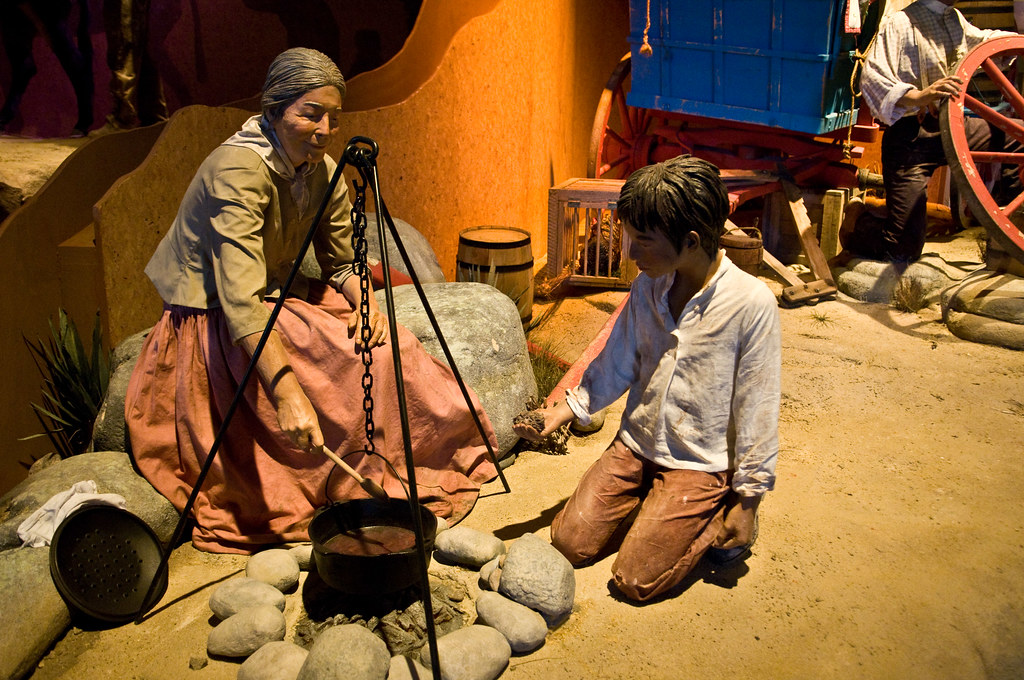
The exhibits are genuinely impressive, and that is saying something in a state where history museums can sometimes feel like dusty afterthoughts. Here, the designers clearly understood that history needs to be felt, not just read. Step inside a life-size covered wagon replica and feel how impossibly cramped it would have been for a family of six. Stand at a river-crossing simulation and listen to the rushing water while you read accounts from emigrants who lost livestock, belongings, and sometimes loved ones to those crossings. There is a fiber-optic map installation that traces the routes with quiet drama, and an entire gallery dedicated to the Pony Express that manages to make an eighteen-month mail service sound as thrilling as it actually was.
The center is operated by the Bureau of Land Management, which means admission is refreshingly affordable — just a few dollars for adults, and children under fifteen get in free. Plan for at least two hours, though it would be easy to spend an entire afternoon without feeling like you have exhausted the place. The staff and rangers are knowledgeable and approachable, happy to answer questions or point you toward lesser-known details tucked into the exhibits.
Outside, a short trail wraps around the bluff and connects to actual ruts left by emigrant wagons — shallow grooves pressed into the earth more than a century and a half ago and still visible today. Walking along them in the late afternoon light, with the Wind River Range glowing faintly to the west, is one of those travel experiences that quietly rearranges your sense of time and place.
Casper is often described as a gateway city, a place people pass through on the way somewhere else. The National Historic Trails Interpretive Center makes a compelling case that this city is not a stop along the journey — it is the destination.