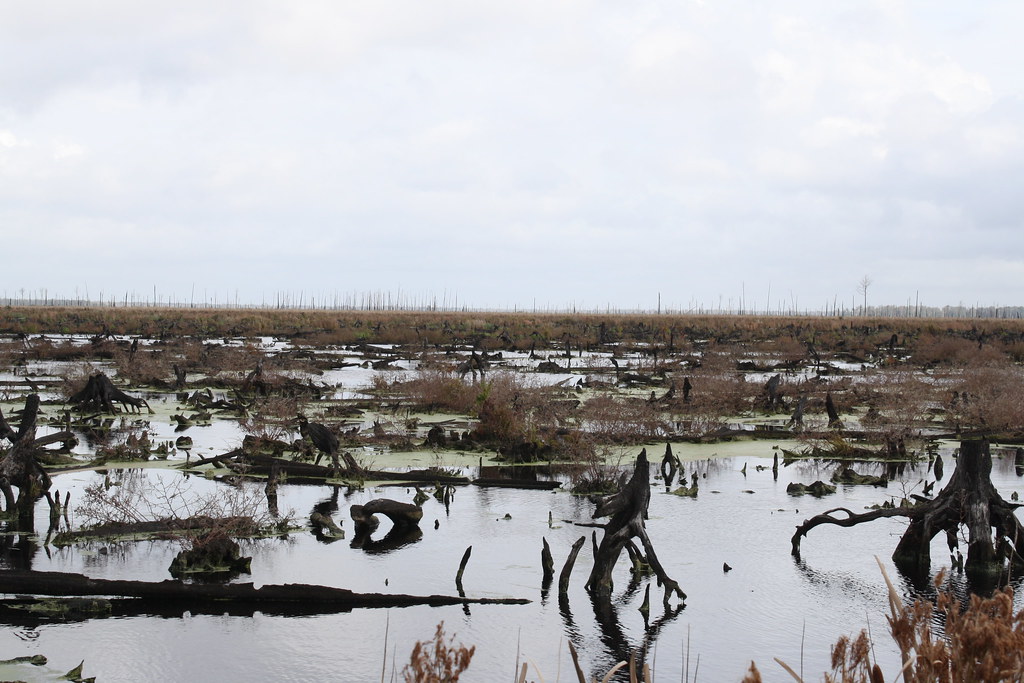
There is a moment, maybe ten minutes into paddling the Dismal Swamp Canal, when the traffic noise from Route 17 fades completely and you realize you are somewhere genuinely wild. The water turns the color of strong tea — stained deep amber by tannins leaching from cypress roots and peat — and a great blue heron lifts off the bank ahead of you with the slow, unhurried confidence of a creature that has never once worried about a deadline. That moment is worth every mile of the drive to Chesapeake’s South Norfolk corridor, where the Great Dismal Swamp National Wildlife Refuge stretches across more than 112,000 acres of ancient wetland.
The refuge sits right along the Virginia–North Carolina border, and the main entrance off Desert Road in Chesapeake is far easier to reach than the swamp’s forbidding reputation might suggest. Pull into the parking area on a weekend morning, unload a kayak or a canoe — or rent one from an outfitter nearby — and you step into a landscape that has been quietly absorbing history for centuries. George Washington surveyed this swamp. Harriet Beecher Stowe set a novel here. Escaped enslaved people found refuge in its depths. The trees don’t advertise any of that, but knowing it changes the way you listen to the wind in the Atlantic white cedars.
Lake Drummond, the dark, oval jewel at the heart of the refuge, is the payoff for those willing to paddle the feeder ditch about three and a half miles from the Chesapeake entrance. It is one of only two natural lakes in Virginia, and arriving at its open expanse after the enclosed tunnel of the canal feels like breaking the surface of something deep and old. Bring a picnic and drift for a while. The silence is extraordinary.
If paddling is not your speed, don’t let that stop you. The Washington Ditch Road offers a flat, shaded walking or cycling route through the heart of the swamp, roughly four miles one way, lined with towering loblolly pines and the occasional flash of a prothonotary warbler — a brilliant gold-and-gray little bird that nests in tree cavities above the water. The refuge hosts guided birding walks several times a year, and they fill up fast for good reason.
The best seasons to visit are spring, when wildflowers carpet the forest floor and migrating songbirds pass through in waves, and fall, when the swamp maples go red and the crowds thin noticeably. Summer is perfectly fine too; just bring insect repellent and go early in the morning before the heat builds.
Admission to the refuge is free. The parking areas off Desert Road and Washington Ditch Road are open from dawn to dusk daily. Pack water, wear shoes you don’t mind getting muddy, and leave the itinerary at home. The Great Dismal Swamp has been here for ten thousand years, and it will show you what it wants to show you at exactly its own pace. Trust it.