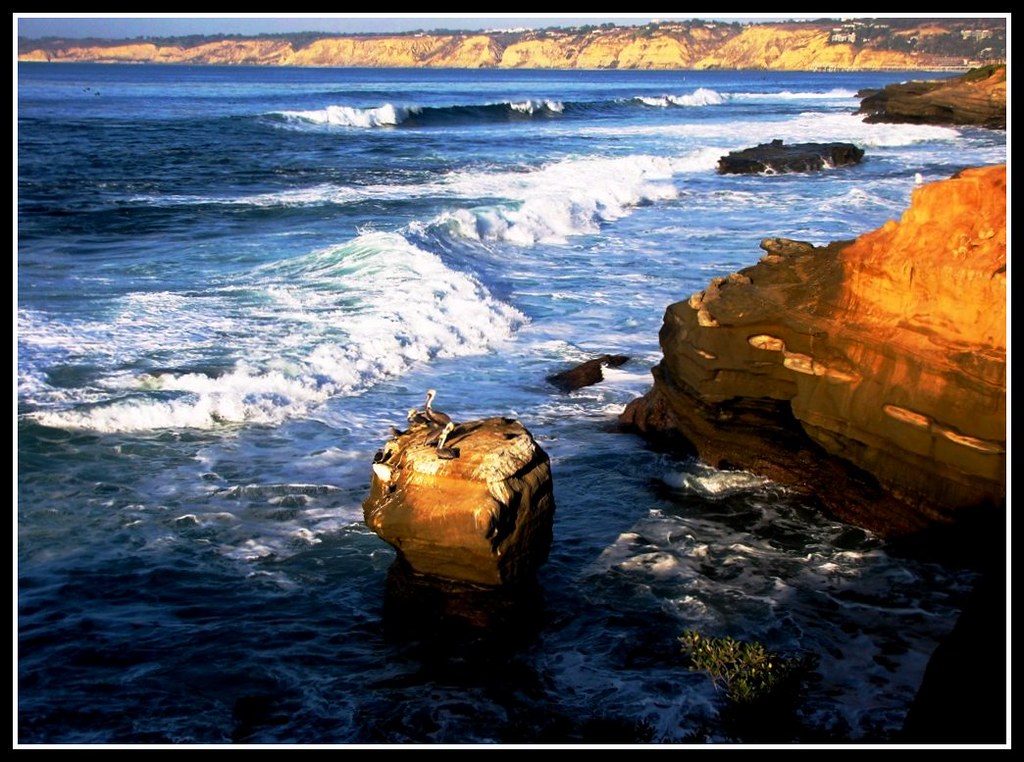
There are places in San Diego that feel almost impossibly cinematic, where the landscape arranges itself so perfectly that you half expect a film crew to emerge from behind a sandstone bluff. Torrey Pines State Natural Reserve, perched along the coast between La Jolla and Del Mar, is exactly that kind of place. And yet, despite being one of the most dramatic stretches of coastline in Southern California, it remains refreshingly unhurried — a genuine refuge where the Pacific stretches endlessly westward and the air carries the mingled scent of salt and pine resin.
The reserve protects one of only two native stands of the Torrey pine tree in the world. That alone should stop you in your tracks. These ancient, wind-sculpted conifers grow nowhere else on the planet except here and on Santa Rosa Island, about 175 miles northwest. They cling to the eroding bluffs with a kind of determined elegance, their branches twisted by decades of coastal wind into shapes that look hand-carved. Walking among them feels less like a hike and more like wandering through a living sculpture garden perched above the sea.
The reserve spans roughly 2,000 acres and offers about eight miles of trails ranging from gentle loop walks to more exposed ridge paths that deliver sweeping panoramic views. The Guy Fleming Trail is a favorite for its manageable distance — just under a mile — and the payoff of standing at a clifftop overlook with nothing but blue water and sky in front of you. For those who want a bit more distance underfoot, the Razor Point and Beach Trail combination winds down through eroded ravines toward the shoreline, where a secluded beach waits at the base of the cliffs. It is the sort of beach that reminds you why people moved to California in the first place.
The trailheads are accessed from North Torrey Pines Road in the community of Torrey Pines, just north of La Jolla. There is a day-use parking fee, which goes directly toward maintaining this irreplaceable reserve. Arrive early on weekends — the lot fills by mid-morning, especially in summer. On weekdays, particularly in the cooler months, you may find yourself sharing the trails with only a handful of other visitors, the low marine layer burning off as you walk.
The small visitor center near the lodge building offers interpretive exhibits about the reserve’s geology, flora, and wildlife. Docent-led walks are offered on weekends and are genuinely worth joining. The volunteer naturalists who lead them have a contagious enthusiasm for the park’s ecology, and you will leave knowing far more about coastal sage scrub and Pleistocene sea caves than you ever expected.
Torrey Pines is also a serious birding destination. Peregrine falcons nest in the cliffs, and the coastal chaparral supports a rich mix of songbirds. Bring binoculars if you have them. Mule deer are spotted regularly on the inland trails, and in winter months, gray whales can sometimes be seen from the blufftop overlooks during their annual migration.
What makes this place so compelling is the combination of wild, unglamorous nature with genuine accessibility. You do not need special gear or an early-morning alarm to experience something extraordinary here. A pair of decent walking shoes, a water bottle, and a few free hours are enough. San Diego has no shortage of beautiful places, but Torrey Pines is the kind of beautiful that stays with you — the kind you find yourself describing to people back home with a quiet insistence that they simply have to go.