Following the November 2026 elections, Texas faces a potential overhaul of its $1 billion school voucher program that was launched under Governor Greg Abbott. The program, which currently allows roughly 110,000 students to attend private schools with public funds, is now the focus of a concerted effort by the incoming Democratic leadership.
Election results set the stage for change
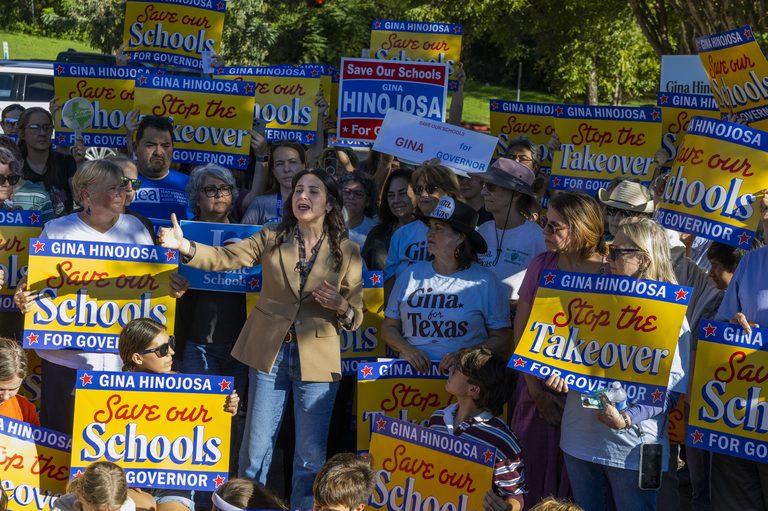
Governor‑elect Gina Hinojosa, a Democrat, announced her intention to reverse the voucher agenda that Governor Abbott championed. In a post‑election speech, Hinojosa said the administration will “work tirelessly to repair the damage of the Texas voucher scam” and pledged to replace Education Commissioner Mike Morath.
Democrats also reclaimed the Texas House for the first time in 24 years, though Republicans retain a Senate majority. This new balance gives the party the legislative leverage needed to propose reforms, though any repeal would still require Senate approval.
Key Democratic figures outline their approach
Sarah Eckhardt, a former state senator who voted against vouchers, will now head the state comptroller’s office that oversees the program. Eckhardt said she will push for greater accountability and transparency, promising rigorous audits and public reporting of how taxpayer dollars are spent.
Rep. Diego Bernal, vice chair of the House education committee, echoed the sentiment, stating that the voucher program will be “probably unrecognizable, if not extinct, by the time we’re done with it.” Bernal noted that some Republican colleagues had privately expressed reservations about the program but felt constrained by party leadership.
Rural backlash influences the political calculus
Abbott’s aggressive push for vouchers alienated many rural voters, a demographic that traditionally supported his administration. A Texas Tribune analysis highlighted that Abbott’s margin over Hinojosa narrowed by 16 points in rural counties and 20 points in ex‑urban areas compared to his 2022 race.
Former Republican representatives such as Dewayne Burns and Steve Allison described a sense of betrayal among their constituents, who felt the voucher push ignored the needs of public schools in their communities.
What the data shows about public opinion
Polling conducted by the University of Houston indicated a nuanced view among Texans: while two‑thirds expressed support for voucher legislation, an equal proportion worried that vouchers would divert funds from already struggling public schools.
These mixed sentiments suggest that any legislative action will need to address both the desire for school choice and concerns about public‑school funding.
Potential paths forward
Democratic lawmakers see two primary routes: legislative repeal or substantial restructuring of the program. Eckhardt’s office can initiate administrative changes, such as tighter auditing and increased transparency, but a full repeal would require new legislation passed by both chambers.
Republican candidates who supported vouchers, like former Rep. Marc LaHood, faced defeats in recent races, underscoring the shifting political landscape. In Bell County, Democrat Amelia Rabroker attributed her victory to voter frustration over the voucher push, while in San Antonio‑area District 121, Democrat Zack Dunn defeated pro‑voucher incumbent Hillary Hickland with 54 % of the vote, citing the “voucher scam” as a key issue.
Looking ahead
As the new administration settles in, the focus will be on how quickly and effectively the comptroller’s office can increase oversight. Eckhardt emphasized that her role is to “vigorously follow the money” and report back to the Legislature if the program does not deliver the intended outcomes.
The coming months will reveal whether Texas moves toward a restructured voucher system that balances parental choice with robust support for public schools, or whether the program will be phased out entirely.
Original reporting: Texas Tribune (HLL/CB) — read the source article.