What exactly do you do at a fish and wildlife management area? That’s the question most people ask right before they drive past the sign on Montauk Highway and keep going toward something with a parking lot and a hot dog stand. Their loss, honestly.
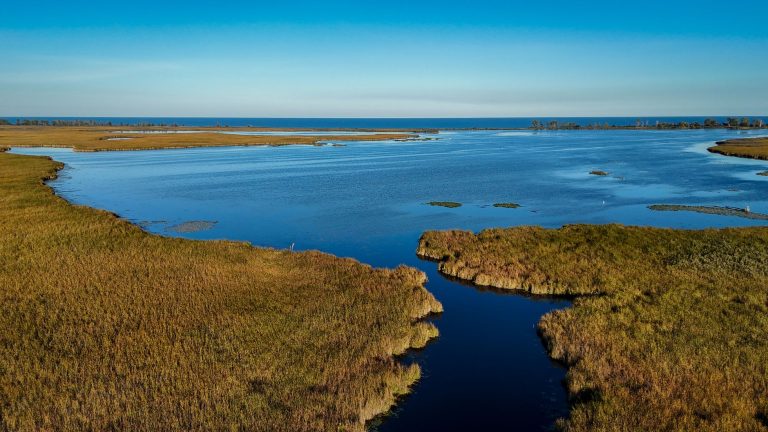
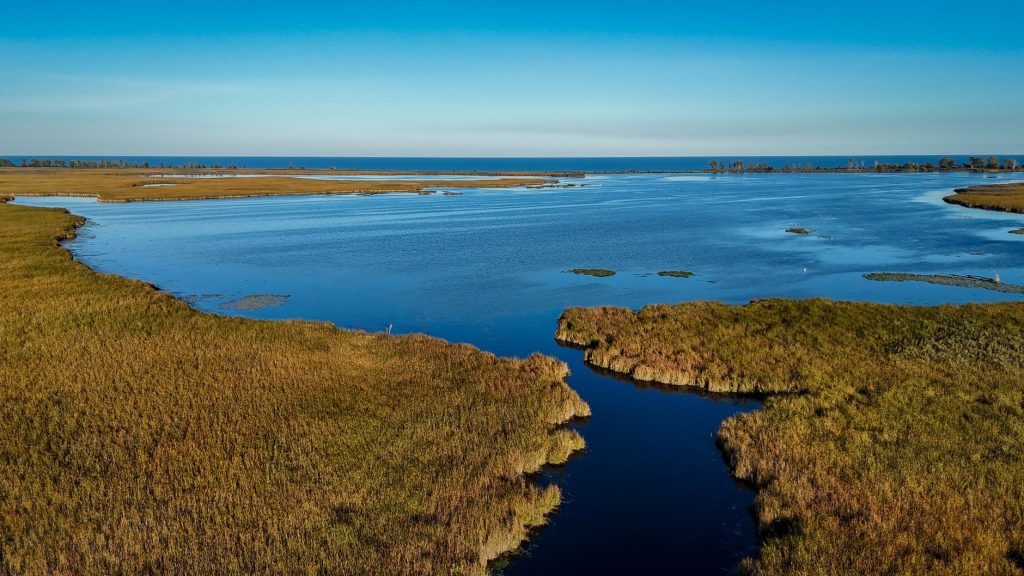
The Moriches Inlet Fish and Wildlife Management Area sits at the southern edge of Brookhaven Town, straddling the inlet where Moriches Bay meets the Atlantic. The New York State Department of Environmental Conservation manages it, which means it doesn’t have a gift shop, a trail map kiosk, or anyone cheerfully greeting you at the entrance. What it has is about 1,100 acres of barrier beach, salt marsh, and scrub-pine upland that most people on Long Island have never visited, partly because the name sounds bureaucratic and partly because it requires a little faith in your navigation.
Steve Ryder has been fishing the inlet since his father brought him out here in the mid-1980s. He’s the kind of guy who keeps a folding knife clipped to his belt and can read tidal current the way other people read a menu. Ask him why he keeps coming back and he’ll shrug. ‘Because nobody bothers me,’ he says, which is the highest compliment a certain type of Long Islander can offer a place.
Steve’s preferred access is off Neighborhood Road in East Moriches — there’s a small unpaved lot that fits maybe eight cars if everyone’s being cooperative. From there, a loose path winds south through the dunes toward the inlet itself. The walk is maybe fifteen minutes, uneven and sandy, and in summer the greenhead flies will remind you that nature has opinions about visitors. Bring long sleeves or bug spray or both.
The payoff at the inlet is real. Striped bass move through here on the right tides, and bluefish in fall can be almost embarrassingly cooperative. Surf casting is the main event, but the birding is quietly excellent — terns, oystercatchers, osprey, and during migration, all kinds of shorebirds working the exposed flats. The area is also a decent stop for people who just want to walk to the ocean without paying a beach fee or sharing sand with six umbrella vendors.
There’s no admission charge. The DEC requires a permit for certain activities during hunting season (the management area has a waterfowl component too), but casual hiking, fishing, and birdwatching are free and open year-round. Fall is when most locals consider it worth the trip — greenheads are gone, crowds are nonexistent, the light goes golden around four in the afternoon, and you can hear the surf from the parking lot.
Steve will be the first to tell you the inlet can be temperamental — the channels shift, access changes seasonally, and the DEC occasionally closes sections for resource management. Checking the region’s DEC page before you go is not optional advice; it’s practical. But if you time it right, what you get is a stretch of Long Island coast that feels genuinely undisturbed, which is a rarer thing than it used to be.
He was out there last October, standing in the wash at first light, casting into the channel while the inlet jetty stones turned pink behind him. Nobody else around. ‘That’s the thing,’ he said later. ‘People want the ocean but they don’t want to look for it.’